Mounting debt owed to municipalities is “becoming a pandemic” that has the department of corporate governance concerned.
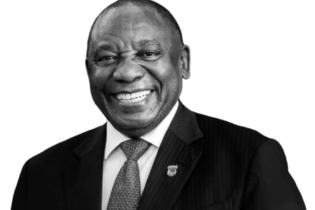
This was expressed by minister Des van Rooyen last week when he delivered his department’s 2017 budget speech in the National Assembly. He said his department was gravely concerned about the excessive growth of debt owed to municipalities which amounted to R117 billion as of last December.
“National departments owe municipalities R2.3 billion, while provincial departments owe municipalities R3.1 billion,” the department said in a statement. By December 2016, a total of R34.6 billion was owed by creditors, of which 77% was owed to Eskom and water boards.
However, van Rooyen said the national task team on government debt was making progress to recover historical debt. He also said government departments committed to paying off their current debts.
Van Rooyen said the culture of non-payment had also extended to municipalities, as some of them became persistent defaulters to their creditors.
“Poor revenue management has meant that payments due to creditors far exceed the revenue collected,” he said. “The department is working with municipalities to implement municipal specific revenue plans in order to ensure proper internal controls to protect revenue and improve collection.
“The focus of this project is to review municipal tariffs for electricity and water, which are not cost reflective, and to identify and put measures in place to curb the theft or losses of electricity, which equates to as much as 50% of purchases in some cases,” he added.
In 2016, the department drew up recovery plans and improved municipality payments to Eskom. However, this was only partially successful as it did not resolve all the challenges faced by municipalities.
Debt recovery task team
Several departments, including Cooperative Governance and Traditional Affairs, the South African Local Government Association, National Treasury, and Eskom have set up a task team to find solutions to the challenges faced by municipalities who owe Eskom.
Van Rooyen said an inter-ministerial task team was also attending to the Constitutional complication on the “dual competency” for Eskom and municipalities when it comes to electricity distribution and reticulation. Cuurently, both Eskom and municipalities can distribute electricity.
Municipal Infrastructure Grant (MIG)
During the last financial year, van Rooyen said 131,337 households benefitted from water infrastructure under the Municipal Infrastructure Grant (MIG), and 134,327 households benefitted from sanitation infrastructure.
Community lighting was also provided to 136,786 households, along with the upgrading of 2,150 kilometres of roads and storm water drainage, as well as 10 waste facilities and 76 public facilities.
“All this work created 161,697 jobs in the previous financial year,” van Rooyen said.
He added that the next financial year includes an amount of R900 million, which is allocated outside of the grant formula and earmarked for specific sport infrastructure projects identified by Sport and Recreation South Africa.
Municipalities are required to spend 4.5% on sport and recreation infrastructure, which is identified in their own Integrated Development Plans.