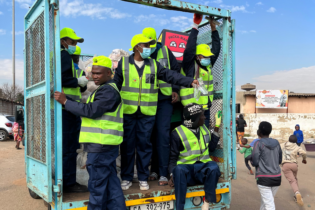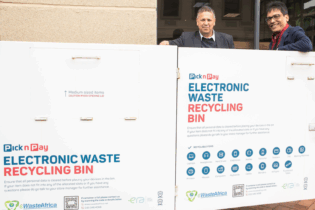
The City of Johannesburg’s mandatory separation at source programme is in full swing leaving many wondering what the programme entails.
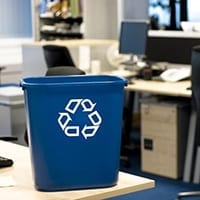
As of the 1 July 2018, the City implemented the mandatory separation at source of dry recyclables and garden waste in affected areas. What this means is that from the effective date it will be compulsory for residents in the affected areas who currently receive a recycling bag to place dry recyclables (such as paper, plastics, metal and glass) for kerbside collection by Pikitup or its service providers for further processing. Similarly for residents in the affected areas where there is typically a high generation of garden waste to will also be required to take their garden waste to the nearby drop-off sites (i.e. garden sites) for further processing.Why now?
While the separation at source programme was rolled out on a voluntary basis from 2009 in some areas of the City, the municipality decided to ramp up efforts by making it mandatory because it was not achieving the desired extraction rates for dry recyclables. “Based on a previous study done in 2004, we should be extracting an average of circa 13kg of dry recyclables per household per month, which we aim to reach by 2021. However, based on 2016/17 tonnages of dry recyclables collected, we extracted circa 4.5kg of dry recyclables per household per month in the areas where separation at source has been rolled out, which is far below the estimated extraction rates from the study,”Pikitup notes.