South Africa faces a decisive moment in its infrastructure journey, as challenges across power, water, transport and public services increasingly constrain economic growth and social stability.
These pressures form the backdrop to a media roundtable hosted by GIBB, a consulting engineering organisation, where industry leaders, policymakers and professionals examine how sustainability, governance reform and strategic investment can unlock long-term infrastructure development. Moud Maela, business development manager at GIBB, notes that South Africa has reached an inflexion point, observing that “the cost of inaction is visible every day”. This includes “delayed shipments, service interruptions, rising costs for households and businesses, and jobs that never materialise”. While these impacts dominate public discourse, the panel emphasises that infrastructure deficits also represent a platform for national growth if addressed through collaboration and ethical governance.Sustainability and economic transformation
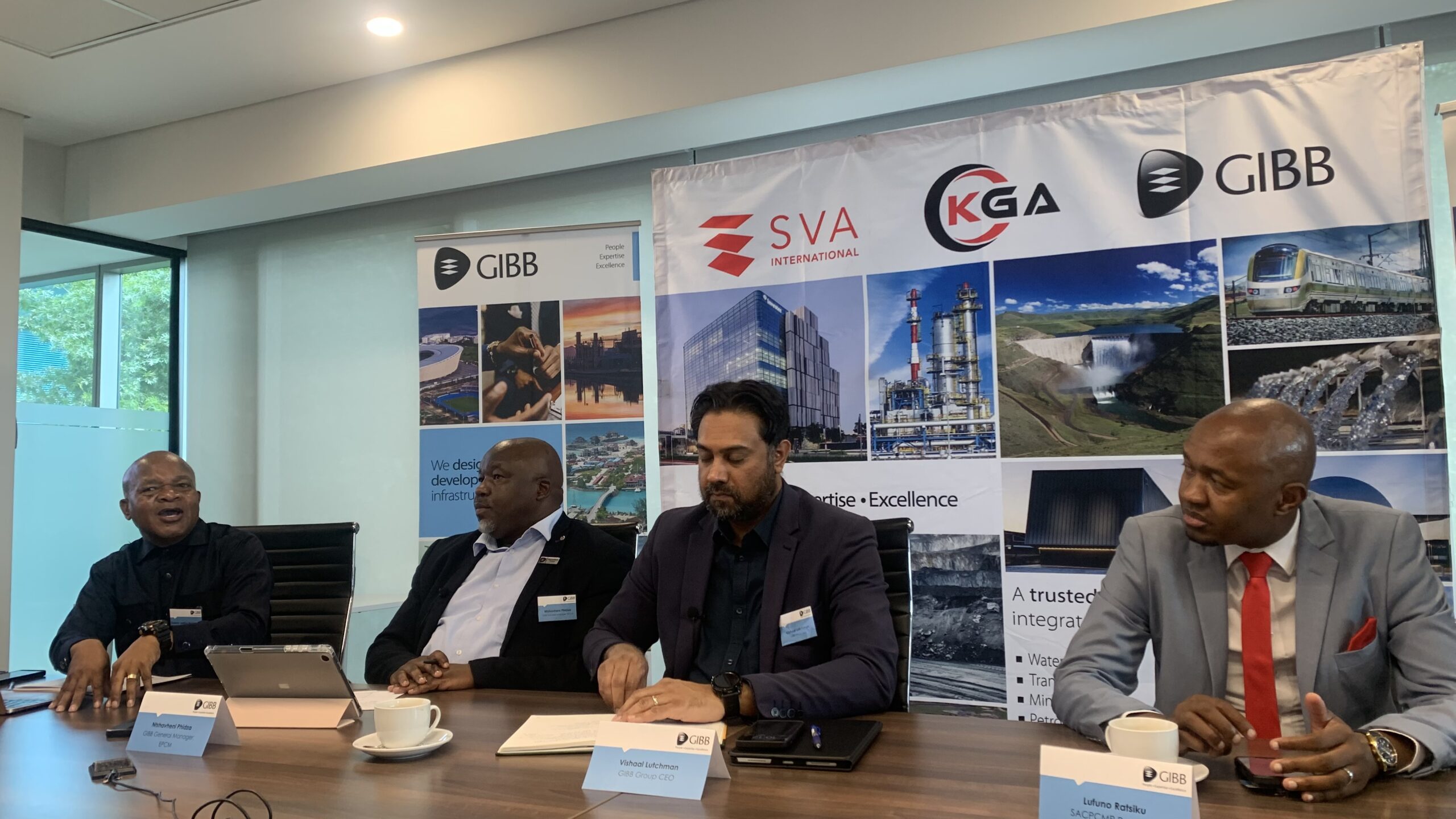
Left to right: Danny Lesiba Masimene, president of the Black Business Council in the Built Environment, Ntshavheni Phidza, EPCM general manager at GIBB, GIBB CEO, Vishaal Lutchman, and Lufuno Ratsiku, president of The South African Council for the Project and Construction Management Professions
“The reason why transformation is moving at a snail’s pace is that we decided to focus transformation only within government,” he says, adding that “we left a big chunk of the economy, which is the private sector, to do as it wishes”.While South Africa is past its 30 years of democracy, there are still huge inequalities that reflect the previous government’s racial segregation, Masimene adds. “Historically disadvantaged individuals do not have the chance to compete fairly, because they still don’t have equal access or ownership of production.” He notes that established construction companies retain control over supply chains, allowing them to undercut competitors while extracting profit elsewhere. Localisation policies are acknowledged but criticised for weak enforcement. Masimene points out that while locally manufactured cement is required on public projects, “there is no one to go out there to make sure that localisation is implemented”. Imported materials, he says, continue to displace local manufacturing, with significant employment consequences.
Policy uncertainty further undermines reform. Although new procurement legislation has been approved, Masimene observes that “the act cannot be implemented yet” due to pending regulations. This delay, he argues, stalls transformation and reinforces institutional inertia.
Transportation

South Africa will have to invest in its logistics infrastructure to facilitate the economic growth it needs
. “One cannot help to imagine the number of jobs which we can create if we turn South Africa into a construction site, a slogan pushed on the national level yet not realised”, says Phidza.South Africa’s economic growth is directly tied to its ability to move people and other logistic requirements. Phidza adds that rail and roads are critical to the economic growth of the country, and that the neglected ports will require investment to become enablers of the economy.
Governance and ethics
Lufuno Ratsiku, president of The South African Council for the Project and Construction Management Professions (SACPCMP), referring to declining infrastructure investment, warns that “opportunities are becoming fewer and fewer by the day”. This decline, he argues, has social consequences, including rising insecurity and public distrust. Governance is framed as a measurable discipline. “If you are serious about it,” Ratsiku says, “you need to make sure that people are measured through performance contracts”. Ethics, he adds, must carry consequences and cannot remain “packs of documents somewhere there during strategic sessions”. Professionalisation is also a key enabler within the sector, especially around issues of ethics and governance.“Why are we so okay with low-professionalisation when it comes to infrastructure development?” Ratsiku asks, comparing unregulated construction practices to medical malpractice.He warns that infrastructure failures can cost dozens of lives at once, underscoring the need for stricter standards and accountability. Across the discussion, a consistent message emerges. Sustainable infrastructure in South Africa will not be achieved through policy rhetoric alone. It requires implementation, accountability and leadership capable of aligning infrastructure delivery with social justice, economic inclusion and long-term resilience.