It is often said that when one door closes, another one opens. This is especially true in the case of the Mpumamanzi Group, writes Maryke Foulds.
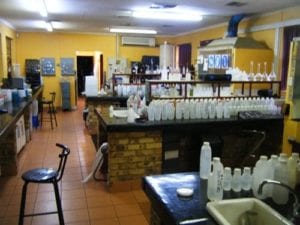
The company is the brainchild of Thusi Motsepe, analytical chemist, and founder member Rita Botha, who in 2001 decided to form their own laboratory to provide services to the water sector. According to Tony Bowers, who bought into the company in 2008, it was a difficult getting the company established. Growing it was even more onerous, but through funding from the Department of Trade and Industry (dti) and the Small Enterprise Development Agency (Seda) they are now up and running, and providing a crucial service to the water industry. “Mpumamanzi Laboratory Services was first established in 2001 by Motsepe and Botha, who had previously worked for SA Cyanamid Laboratory. When it closed its doors and withdrew from South Africa, these two entrepreneurs decided to open their own facility to provide services to the water sector. I joined the company in 2008, having bought Botha out. Initially, we only focused on the analysis of water and wastewater samples, but have since grown to include a diverse range of clients, including the mining sector. Work is focused around four areas: laboratory and environment, water engineering, geohydrology and mining, and Watercare. “The primary objective of the business is water and wastewater analysis. Initial development was slow due to the high cost and maintenance of the equipment. The intervention of Seda was quite substantial and this contributed to Mpumamanzi’s turnaround. Employees have increased from six in 2008 to 20 in 2013. 80% are black professional graduates ranging from analytical chemists, process technologists, chemical engineers, environmental scientists, geohydrologist and microbiologists. Mpumamanzi is passionate about equitable employment. The Watercare Division in Cape Town is run by paraplegic Caroline Bowers, and her expertise and dedicated has shown all of us that disabled people are capable of achieving success if given the space to develop and grow.” As a fully fledged black owned company there are still some challenges, says Bowers. “The biggest one facing emerging black professional companies is sustainability. A number of factors contribute to this, including too high salary demands by professionals; lack of skills within designated groupings; strict legislative control in terms of quality standards, which required huge administrative input; changing mindsets in terms of the capabilities of black water professionals and competing with multi-national and established companies with huge financial resources.” With its head office situated in Steve Tshwete (Middelburg) in Mpumalanga, it recently procured a state-of-the-art laboratory from BHP Billiton and the building also houses all divisions except for Watercare, which is situated in the Western Cape. The Laboratory & Environmental Division concentrates on waterand wastewater analyses as well as coal analysis. Bowers continues: “Our laboratory houses the most modern equipment and we are currently in the process of preparing for our SANAS accreditation. We are confident that this process will be finalised by July 2014. This division is managed by Wadzanai Matowanyika, who holds an MSc in Environmental Science from Wits University. The Geohydrology & Mining Division concentrates on borehole water monitoring and assessment of underground water associated with the mining sector. This division is managed by Mbinze Akwansioge, who has an MSc in Geohydrology from the University of the Free State.” The Water Engineering Division concentrates on all water engineering projects associated with the application of technologies to improve water quality and minimising bacterial risk. The standard of water in South Africa is very high and based on journal reports and South African’s level of transparency in terms of the Blue Drop Certification programme, South Africa is one of the few countries in the world where people can drink water directly from the tap. This division is headed by July Mngidi, who has a Chemical Engineering Degree from the Cape Town University of Technology. The Engineering Division is responsible for a range of water engineering products, varying from the optimisation of water and sewage works, the inspection and auditing of water and sewage works, trouble shooting of waterworks, auditing for blue and green drop compliances and responding to crisis in terms of bacterial contamination in reservoirs, JoJo tanks, dams, etc.
The division has a unique chemical disinfectant and equipment that is capable of accessing remote reservoirs and systems that are contaminated. “We also clean and certify potable water tanks. Contaminated systems are decontaminated and the water is then certified to drink. The division has been recently called out to successfully decontaminate remote reservoirs in the North West and Mpumalanga.”
It has also been appointed by Eskom to monitor the water quality of over 100 JoJo tanks at the Kusile site on a daily basis. Despite the risk associated with water quality management in a dusty area, Eskom has not recorded a single incident related to contamination since the project was implemented four years ago. The Watercare Division concentrates on the supply of bulk water treatment chemicals to municipalities primarily in the Western Cape region. The chemicals are sourced from various manufacturers and supplied in bulk to various municipalities and the private sector. Focusing largely on municipalities, water service institutes, mining houses and the wet industry, it currently operates in the Mpumalanga region, but hopes to expand to the other provinces, particularly the Western Cape, Free State,Eastern Cape and Northern Cape. When asked what the biggest challenges are facing the water sector, Bowers replies: “I would say it is poor sewage works. The lack of professional trained process controllers is a serious challenge. However, we are hoping that with the publication of the revised R2834, which regulates the management of waterworks, that the Cinderella status associated with sewage works will change. The outsourcing of waterworks services is, at the moment, given to people who are not properly trained and this gives the sector a bad name.” Mpumamanzi in a nutshell The group is wholly owned, professionally managed and operated black company. Its buy-in of women stands at 65% and is managed by Motsepe, who is group manager, and Bower, who is group manager of the legal and strategic departments. The group recently entered the market of coal analysis and is now looking for an international company to partner with in this highly competitive environment. It recently procured a 15 000 m2 premises with state-of-the-art equipment to conduct both water and coal analyses. Mpumamanzi has the capacity to assist in the training and knowledge transfer of students; however, it doesn’t not have the funding to accommodate the large number of unemployed graduated who need to gain experience in this sector. Mpumamanzi will provide the transfer of skills freely if there are companies willing to sponsor students.