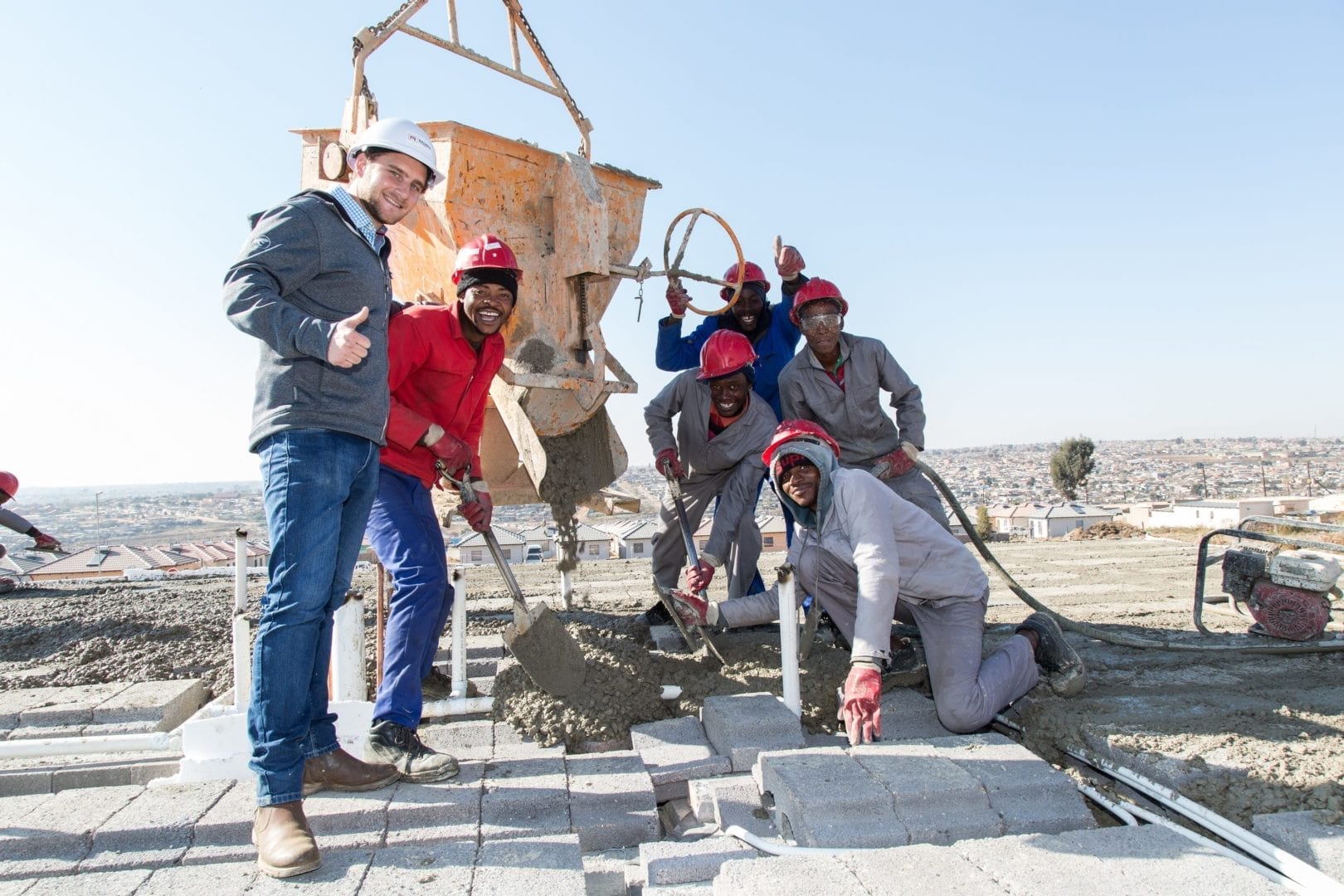
 AfriSam’s just-in-time readymix solutions are helping to accelerate delivery on a range of single- and multistorey residential projects.
Private sales
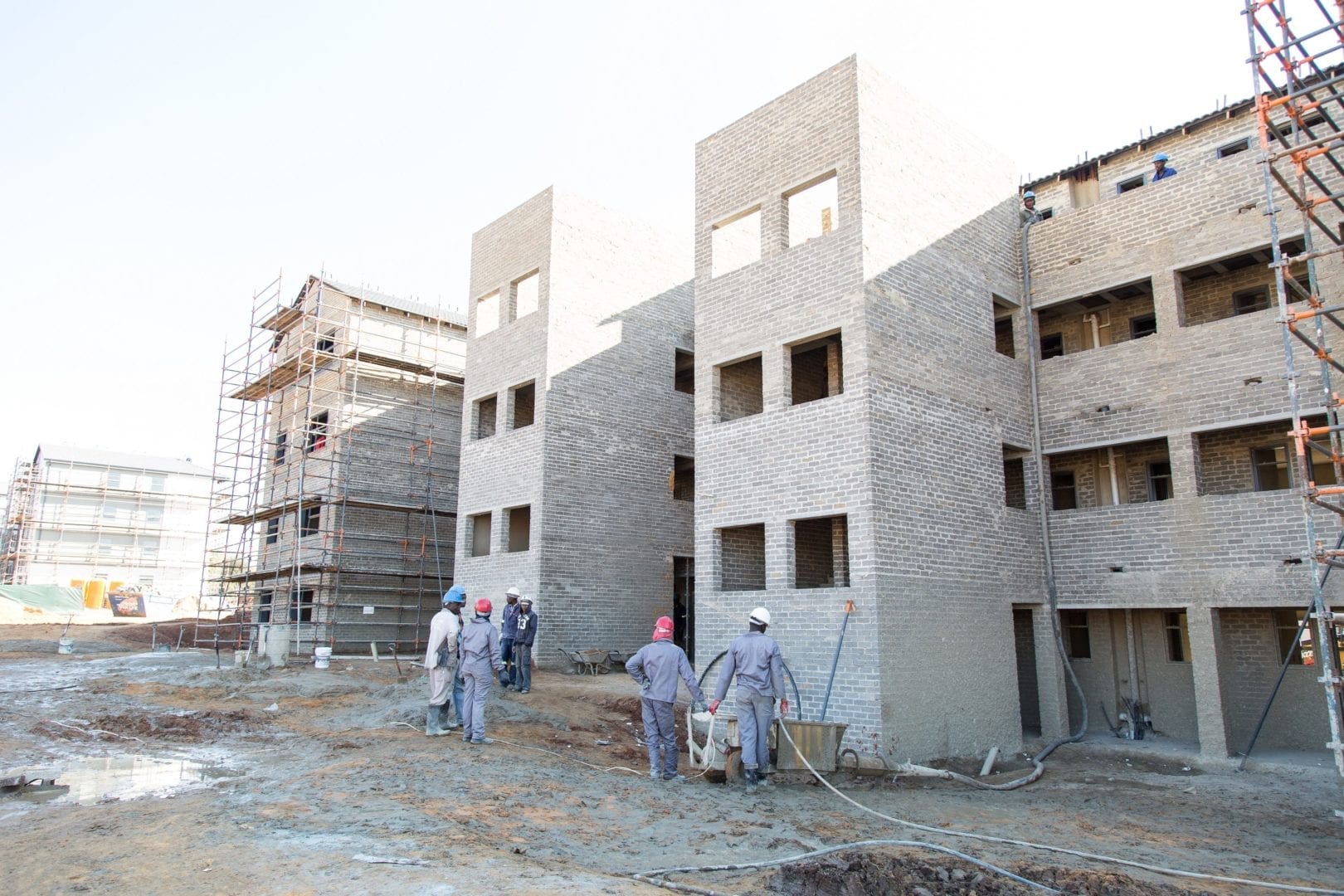
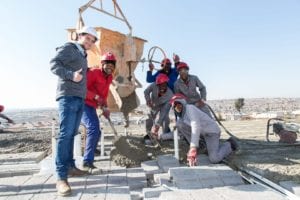
AfriSam supplied concrete for the 11 blocks as part of Phase 1 of the RDP flats
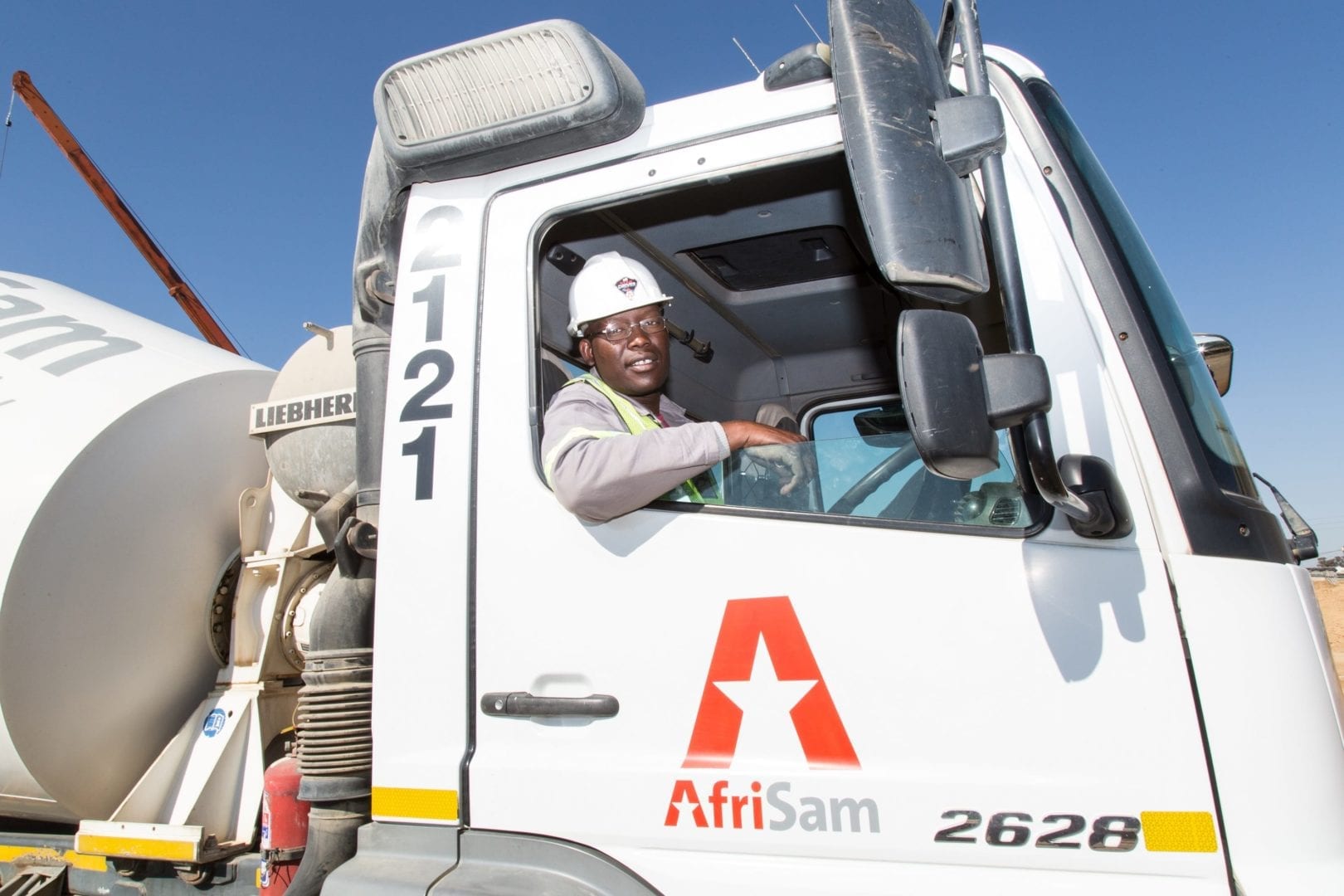
manager, AfriSam. “We delivered a total of some 7 000 m3 of readymix from our Olifantsfontein plant, which is only about 11 km from site,” says Wentzel. “This allowed us to keep costs to the customer at a minimum while meeting delivery deadlines. Our extensive footprint in the region allows us to coordinate alternative supply from another plant, if the need arises.”
First phase of RDP flats
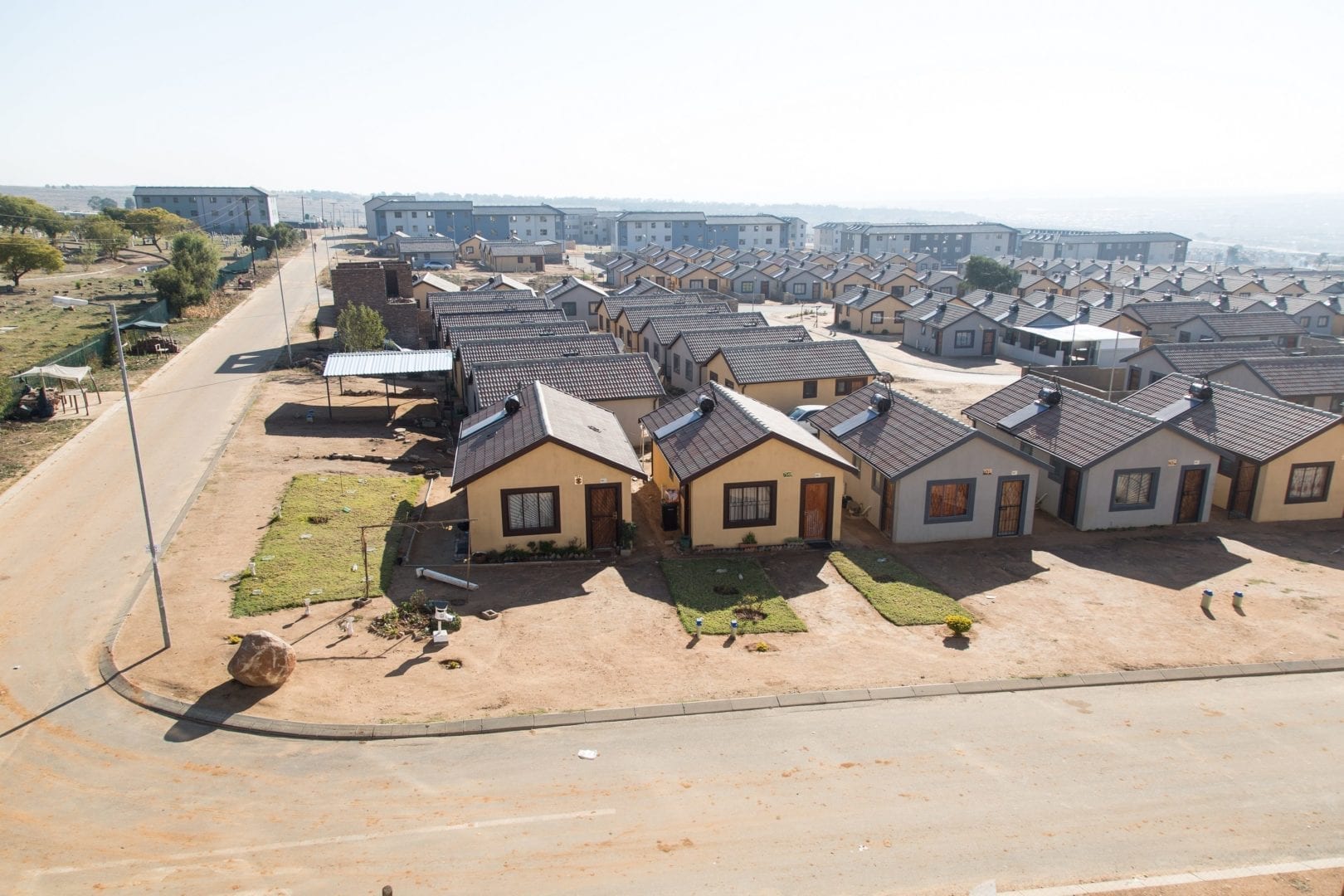
The new Valumax development in Clayville-Thembisa consists of both bonded properties for sale and government-funded RDP flats
500 m3 of the stronger, 25 MPa concrete. On the ground floor, the concrete was manually power-floated to obtain a smooth finish, while a 15 mm to 20 mm screed was put down on the upper floors to get the required finish on the rib and block slabs.
Second phase
Just 700 m down the road is the second phase of the RDP housing project, which will run until March 2018. Initially, Raubex was contracted to tackle 264 living units – a contract that was then expanded to 484 units. This time, the contract called for four-storey blocks, and a total of 18 will be built. The units in these blocks are also 40 m2 in size, and there are 20, 28, 32 or 36 units in each different-shaped block. About 1 800 m3 of 20 MPa readymix concrete will be delivered by AfriSam for the raft foundations by the end of this phase, as well as another 1 200 m3 for the rib and block slabs between levels.
Secure supply
“Contracts like these demand a reliable supply of readymix, as our work is highly structured and planned in detail,” says Rossouw. “AfriSam’s capacity is, therefore, important to us. If anything affects its production at one plant, it can ensure we get what we need from another of its operations.” He says it is also vital that the concrete is compliant with a range of quality requirements, as each pour must be tested and sent to independent laboratories – as part of company policy and contract requirements. Wentzel says AfriSam’s depth of expertise in cement and concrete technology allows the company to offer support to customers regarding testing and quality issues. “If requested, we can even offer skills training to customers’ employees on the processes for testing on-site and the various procedures to be followed,” she says. “AfriSam also conducts tests on-site for pours of over 50 m3 if the customer requires it.” She also highlights the importance of good systems and constant communication on both sides of this partnership, ensuring that each party knows what to expect, and when. Rossouw says Raubex Building appreciates the quick response from AfriSam’s control centre, which provides monitoring of all readymix trucks and operations so that any queries from customers can be answered efficiently and the required action taken.Concrete innovation
 The adoption of the waffle raft foundation design on this project has been an important innovation to leverage the versatility of concrete, while also enhancing the job creation capacity of the work. Developed by civil engineer Terry Pidgeon, this design provides load-bearing capacity in the foundation, even where the soils are expansive, rocky or hydro-collapsible.
The foundation is created by excavating a series of pod forms to create a grid of ribs. A continuous concrete pour creates concrete beams running throughout the footprint and perimeter of the foundation (with voids between) in one operation. The completed slab then sits on the ground, bearing on the ribs created between the forms, while the void areas underneath the slab allow for soil movement.
Strengthened with reinforcing bar, the waffle slab foundation is very stiff and can resist the impact of ground swelling due to surface drainage or flooding from any source.
The adoption of the waffle raft foundation design on this project has been an important innovation to leverage the versatility of concrete, while also enhancing the job creation capacity of the work. Developed by civil engineer Terry Pidgeon, this design provides load-bearing capacity in the foundation, even where the soils are expansive, rocky or hydro-collapsible.
The foundation is created by excavating a series of pod forms to create a grid of ribs. A continuous concrete pour creates concrete beams running throughout the footprint and perimeter of the foundation (with voids between) in one operation. The completed slab then sits on the ground, bearing on the ribs created between the forms, while the void areas underneath the slab allow for soil movement.
Strengthened with reinforcing bar, the waffle slab foundation is very stiff and can resist the impact of ground swelling due to surface drainage or flooding from any source.