Deep groundwater has re-emerged not just as a subject of scientific interest, but as a potential game changer in addressing water security, climate, and energy challenges. Globally, new frameworks are reshaping how we understand the water cycle, particularly the vast, ancient groundwater systems lying beneath the Earth’s surface.
Research into this so-called “hidden hydro geosphere” is challenging long-held assumptions that all groundwater eventually discharges to rivers, lakes, or oceans. These deep, often saline, and isolated waters, some dating back hundreds of millions of years, are untouched by modern recharge and may lose life adapted to extreme conditions. They also contribute to geochemical cycles and contain critical resources like helium, hydrogen, and lithium, increasingly vital to the global energy transition. As interest in carbon sequestration, radioactive waste disposal, and deep subsurface exploration grows, so too does the need to understand the rates and processes that govern these ancient (fossil formation) water systems. But for all its promise, this hidden hydro geosphere is also a potential Pandora’s box. Tapping into it without a clear understanding could risk contamination, irreversible changes to deep geological systems, or long-term environmental damage. What we do not know about deep groundwater may prove just as dangerous as what we do.
Research into this so-called “hidden hydro geosphere” is challenging long-held assumptions that all groundwater eventually discharges to rivers, lakes, or oceans
Pandora’s box
This is where the use of multiple tracers, both environmental and artificial, becomes necessary. Just as oceanographers have long used the concept of residence time for different dissolved components to understand ocean circulation, hydrogeologists are now adopting similar approaches to decipher the complex age structure of groundwater systems. Ages derived from physical flow models often differ from those derived chemically, and integrating these perspectives allows for more robust interpretations. Environmental tracers, including stable isotopes, radiocarbon, tritium, and noble gases, allow us to identify not only the “mean” age of a groundwater body but also its youngest and oldest components. It is often the youngest drop, not the average age of groundwater, that holds the key to understanding an aquifer’s vulnerability. Even so called ancient and safe aquifers may be at risk if young, potentially contaminated water is able to infiltrate through protective layers like the vadose zone and reach deeper groundwater systems. Conversely, noble gas isotopes such as ⁴He, ²¹Ne, and ¹²⁹Xe have revealed the presence of billion-year-old water in systems like Kidd Creek in Canada and Moab Khotsong in South Africa’s Witwatersrand Basin, offering a rare glimpse into Earth’s deep geologic past and even its prebiotic condition. This global conversation is particularly relevant to South Africa, where deep groundwater is typically defined as anything deeper than 100 to 300 meters. Despite this shallow definition compared to international contexts, we know surprisingly little about the nature, quality, and flow dynamics of these deeper zones let alone those at kilometre depths. This knowledge gap has major implications in a water-scarce country where pressures on surface water and shallow aquifers are intensifying. In this context, understanding deep groundwater should not be seen as a mere academic exercise but essential for national planning and policy. Deep aquifers could serve as strategic reserves during prolonged droughts, augment water supplies for remote or industrial regions, or support low-carbon geothermal energy systems. They also pose legal and regulatory challenges that South Africa’s water governance frameworks must begin to anticipate.Deep drilling
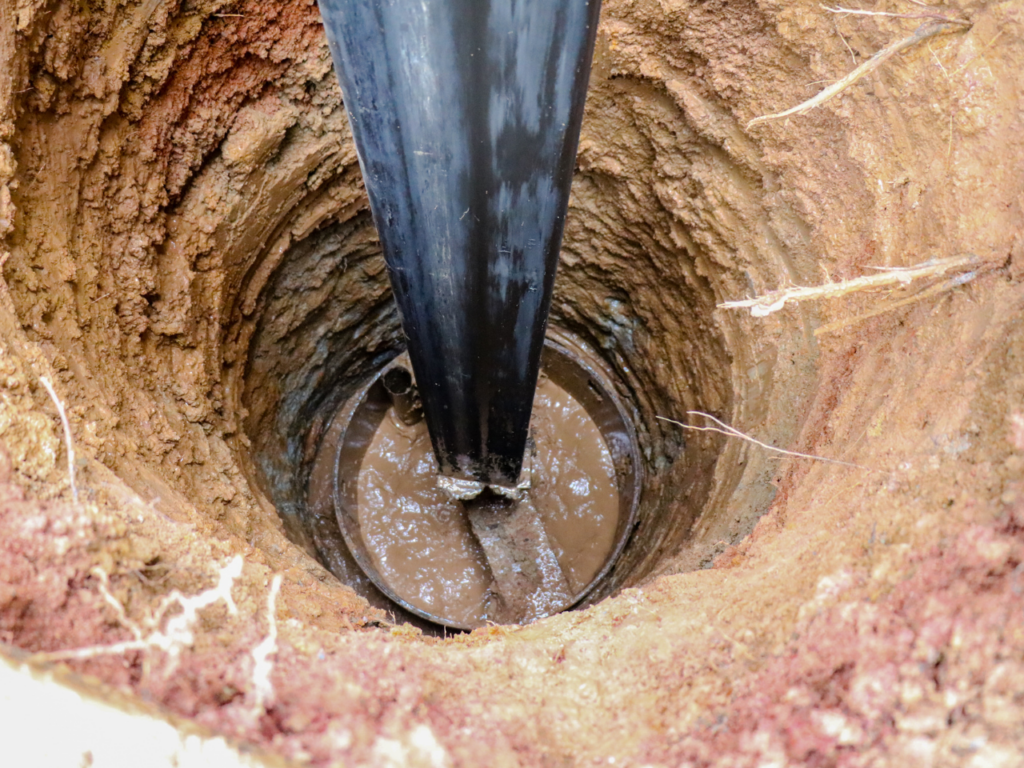
Deep groundwater is typically defined as anything deeper than 100 to 300 m


By Yazeed van Wyk, research manager, WRC