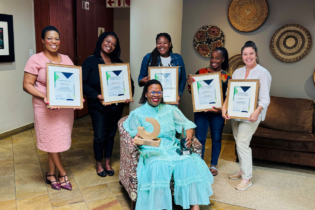
Kirsten Kelly speaks to Dr. Nthabiseng Motsoane, EnviroServ’s national technical manager, to discuss the challenges of leachate treatment and methods used to manage it effectively.

Dr. Nthabiseng Motsoane, EnviroServ’s national technical manager
The variable nature of leachate
Motsoane explains that each landfill or in EnviroServ’s case, integrated waste management facility, produces a unique type of leachate, which requires a tailored treatment approach.“The chemical composition of leachate differs from site to site depending on the waste streams accepted. Leachate at our Holfontein waste management facility differs to that at our Chloorkop waste management facility.”An added complexity is the changing chemical composition of leachate over time, with chemical oxygen demand (COD) and biological oxygen demand (BOD) levels diminishing as the leachate ages. Increased levels of salts, heavy metals, ammonia, and nitrogen may be observed during the later stages of leachate development. Each landfill must be assessed on a case-by-case basis, considering its operational history and the nature of the waste it has received – whether organic, inorganic, or a combination of both. The chemical composition of the resulting leachate should be thoroughly analysed for each site before deciding on a treatment option – keeping in mind that the end product after treatment must legally comply with discharge standards. These discharge standards often differ from province to province.
Treatment options
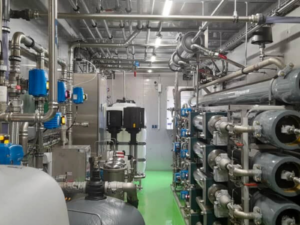
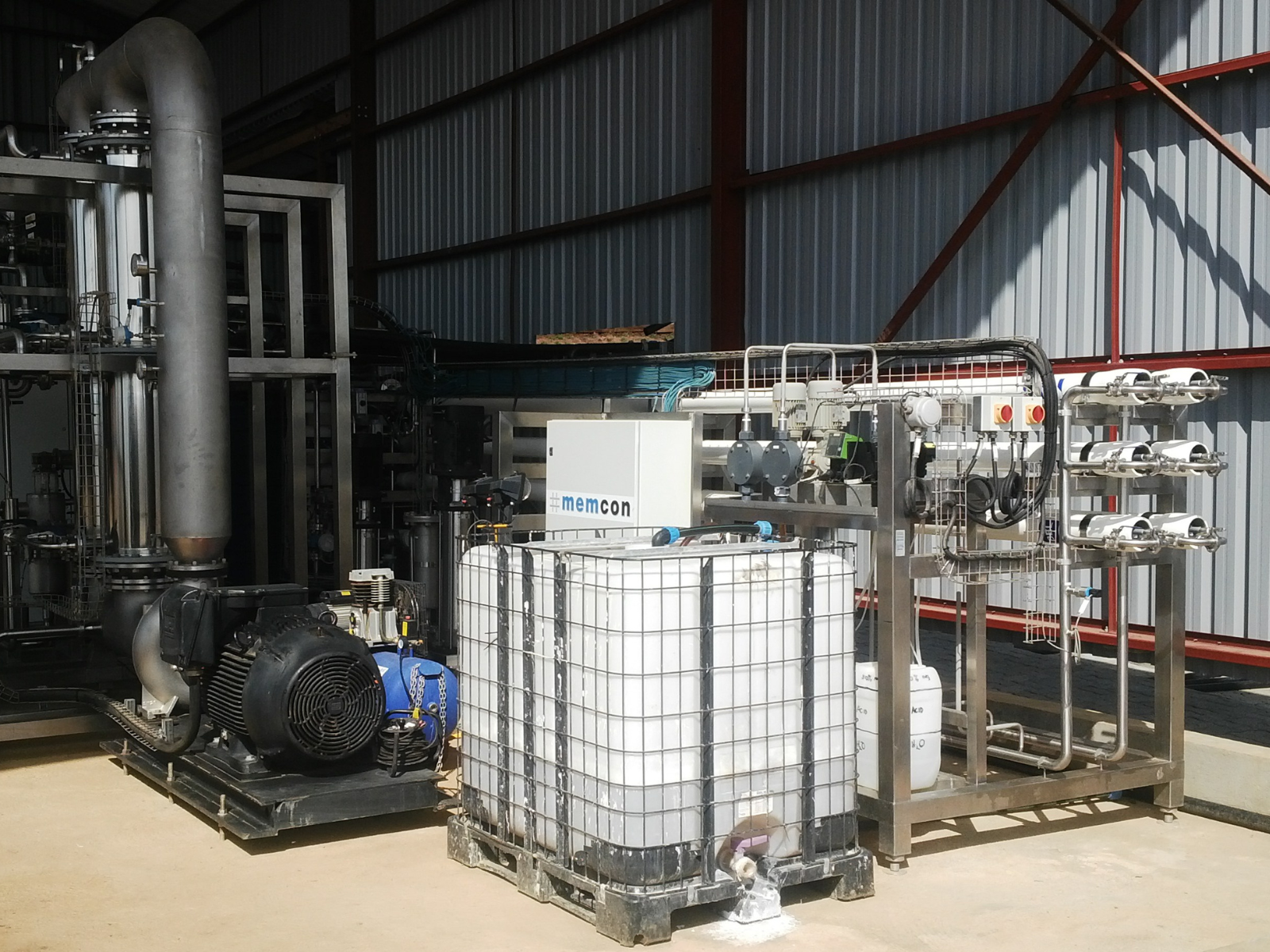 Motsoane strongly recommends the pretreatment of leachate before using reverse osmosis. “Typically, a biological treatment would be applied to leachate before using membranes where one would use micro filtration, followed by ultra-filtration, nano filtration and lastly reverse osmosis (RO). RO membranes are semi permeable, extremely sensitive and can easily foul. While RO membranes extract most salts, they cannot completely remove ammonia. Therefore, biological treatment should be used at the beginning to break down the nitrogen.”
A biological treatment method used by EnviroServ at one of their sites is an anaerobic sequencing batch reactor (SBR). This is well suited to leachate that is high is ammonia. The ultra-filtration membranes remove the suspended solids, and total dissolved solids (TDS).
“Other pre-treatment options (before RO) include chemical or physical precipitation. In Uganda we receive both water-based and synthetic-based slops from a client that we must treat before sending it to a landfill. We coagulate the water-based slops using a polymer and chemical, where the solids sink to the bottom and the water rises to the top and is then extracted. Synthetic-based slops that contain oil has a lighter density than water, so the water has to be extracted from the middle,” adds Motsoane. EnviroServ uses a leachate evaporation system as well as membrane technology at their sites. As a SUEZ company, EnviroServ has gained even more intellectual property, skills and knowledge into leachate management, with global references and broader expertise. “We engage with international technical experts on almost a daily basis,” says Motsoane.Leachate treatment plant in Uganda
EnviroServ recently commissioned a leachate treatment plant in Uganda in order to ensure high-quality water recovery while adhering to stringent National Environment Management Authority (NEMA) regulations. The facility utilises advanced two-stage RO technology, designed to process up to 450 m³ of wastewater per day. The recovered water is used for dust suppression and flushing toilets, providing significant value given the landfill’s remote location and limited water access. Some of the treated water is even sold to nearby businesses.“Although the water quality after the first RO treatment is already high and meets or exceeds discharge standards, we installed a second RO system to provide an additional level of assurance,” states Motsoane.This commitment to quality is matched by an equally strong focus on safety.
Safety first
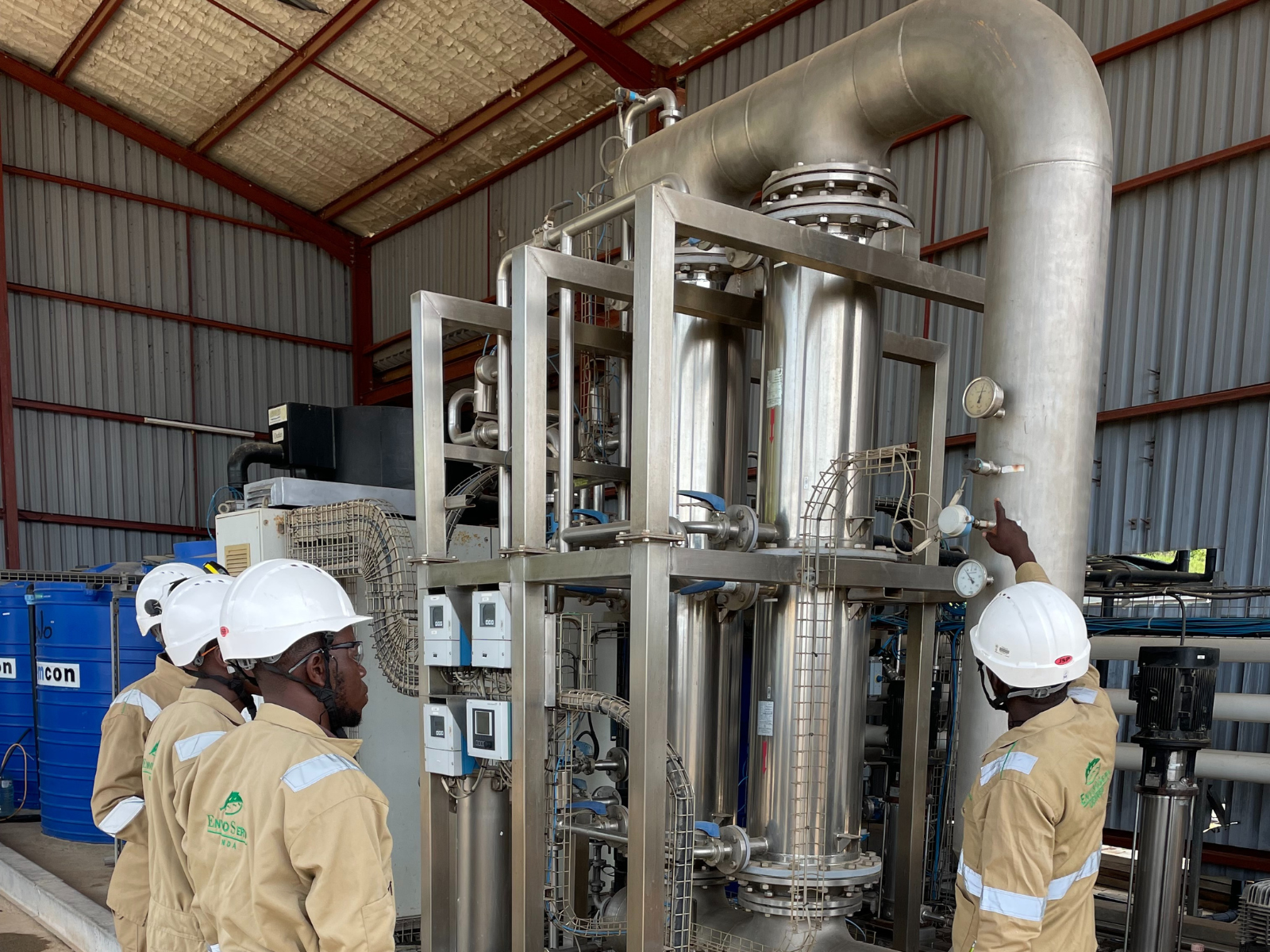 EnviroServ has an excellent health and safety record and is aligned with best-practice global standards.
“If untreated, leachate can be hazardous substance, and anyone handling it is trained accordingly and always wears the appropriate personal protective equipment. I am very focused on keeping all treatment plants clean, with everything clearly labelled. Safety incidents are usually caused by the simplest of errors, and a clean site is a safe site,” emphasises Motsoane.