Reducing landfill waste is a core focus for EnviroServ. Their onsite team applies innovation and technical expertise to help businesses reduce, reuse, and recycle more effectively. Kirsten Kelly speaks to Yolandi Holm, national onsite manager, about how they support businesses in shifting from linear to circular systems.

Yolandi Holm, national onsite manager, EnviroServ
EnviroServ’s onsite waste management team is the biggest in the country, and has the biggest pool of staff in the company, reiterating the company’s dedication to reducing waste to landfill.
“Whenever a new customer approaches us for assistance, we begin with a site assessment to understand how their waste is being generated, the volume produced, and its final destination. Next, we identify, analyse and classify waste streams. A waste management plan is then developed, with costing. Waste streams, like glass, plastic and cardboard, are the easiest to recycle, then there are other waste streams which are more complex, and therefore, relatively expensive to divert from landfill. EnviroServ typically has readily available solutions for most waste streams and with its wide network, will actively research alternative options where needed,” says Holm.
Different waste streams
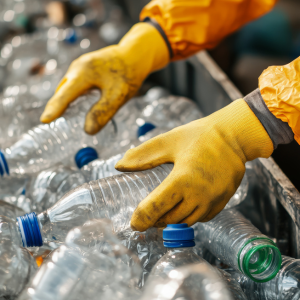
EnviroServ has case studies of diverting waste from landfills across industries, and recently helped a company in the petrochemical industry reduce its waste to landfill by 30%. Approximately 3 500 tonnes of waste that was sent to landfill on a monthly basis has now been diverted to a brick maker that can use that waste stream in their manufacturing process. Another example is diverting problematic plastic with high calorific value to a cement kiln. There is a small company that makes school bags and handbags from chip packets. EnviroServ is particularly strong within the fast-moving consumer goods markets, where food waste is diverted to animal feed companies.
Sometimes, through green procurement – the practice of purchasing goods and services that have a reduced environmental impact – can significantly reduce waste to landfill. Selecting products with minimal packaging, prioritising reusable, durable goods or using recyclable, compostable materials are some examples.
“A client of ours reduced a significant volume of waste by merely buying washable plates for their canteen instead of using polystyrene boxes,” says Holm.
“We always make a point of revisiting our existing customers’ waste streams as new technologies are developed. Often, achieving zero waste to landfill comes at a high cost. But that cost will be reduced as new solutions are developed, or become available closer to the source of the waste,” states Holm.
She adds that transporting a waste stream across the country to divert it from landfill would firstly be expensive and secondly have a larger carbon footprint than merely sending it to landfill.
“These are the types of options that need to be considered when creating a waste management plan. With that in mind, though, there are waste streams where landfills remain the only option, like asbestos.”
Separation at source
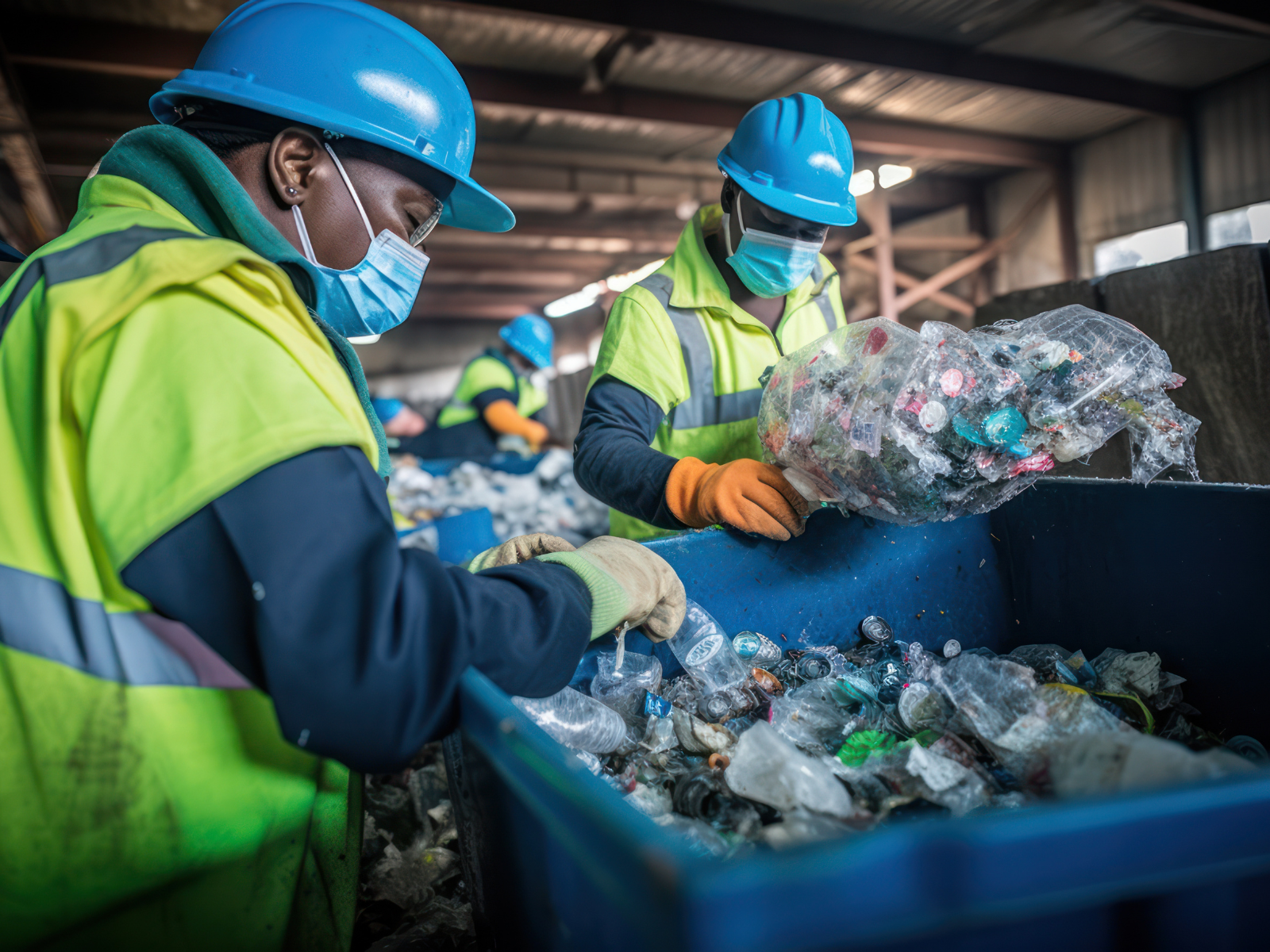
EnviroServ usually stations a full-time person at a customer’s site that is responsible for receiving all waste and correctly separating it
A successful recycling operation requires good, clean, uniform collections of segregated waste types. This is most effectively achieved by separating the waste streams close to the source, rather than at a waste treatment facility. EnviroServ, therefore, usually stations a full-time person at a customer’s site who is responsible for receiving all waste and correctly separating it. They act as the custodian for a customer’s waste management. Equipment is provided to ensure the correct handling (packing, labelling, loading), storage and transportation of waste streams.
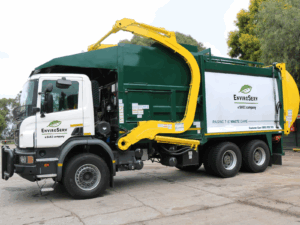
EnviroServ’s fleet of specialised waste transport vehicles provides a safe, efficient and compliant solution for moving liquid, sludge and dry waste from our customers’ premises to waste processing facilities.
“Part of our on-site waste management services includes a monthly sustainability report. In order to create a waste management plan, we need to understand a customer’s sustainability goals. They may want an annual improvement on their landfill rates, or they may set up an ambitious target of zero waste to landfill. We collaborate with our customers to establish key performance indicators and then track progress in meeting those targets. Then we measure everything and all of that data will be included in the monthly sustainability report that will show, for example, the amount of saved water, energy and landfill space saved,” explains Holm.
Waste avoidance and waste reduction are achieved through education and training, by improving efficiencies and making staff environmentally aware. EnviroServ’s onsite waste management team assists in incentivising and training a company’s staff to assist with these goals.
Compliance and expertise come first

EnviroServ is particularly strong within the fast-moving consumer goods markets, where food waste is diverted to animal feed companies
EnviroServ, as a waste management company operating in South Africa, must adhere to the National Environmental Management: Waste Act, 2008 (Act No. 59 of 2008) and support the National Waste Management Strategy (NWMS), which covers waste management from ‘cradle to grave’. Customers can therefore have peace of mind knowing that for years, EnviroServ has handled waste responsibly and continues to do so.
“We will only partner with recyclers that are fully licensed and compliant, we protect our clients’ reputation. Our company also has unmatched expertise in the industry,” concludes Holm.