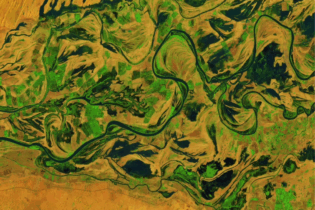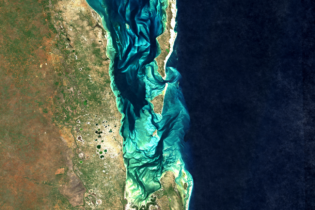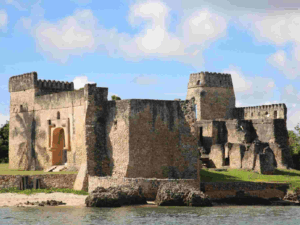
Over the last few decades, coastlines in Kenya, Tanzania and Senegal have undergone significant shifts, shaped by climate pressures and human development. Important heritage sites that include Swahili mosques, late stone age sites, ancient coastal trading settlements, and colonial-era buildings that once stood firm on solid ground are now threatened by erosion, rising seas, or burial under layers of silt. Some have already disappeared. For the communities living in these coastal areas, changing coastal conditions present clear risks to livelihoods and settlements. For the archaeological sites rooted in those same spaces, it poses a quieter, longer-term challenge that is only now beginning to come into focus.
Research, led by geospatial scientist and postdoctoral researcher at the British Institute in Eastern Africa, Dr Pamela Ochungo, along with a team of researchers, has taken a unique approach to better understand the preservation of African heritage sites; namely, to marry archaeology with satellite science. ”The goal hasn’t just been to map the evolving coastlines, but to understand how those changes intersect with sites along Africa’s coast that stand testament to the continent’s rich and diverse history,” says Ochungu.“The outcome is a new digital dataset that documents the distribution and characteristics of archaeological sites in Kenya, Tanzania, and Senegal, combining diachronic coastal change analysis using advanced remote sensing.”
Preserving Africa’s coastal heritage
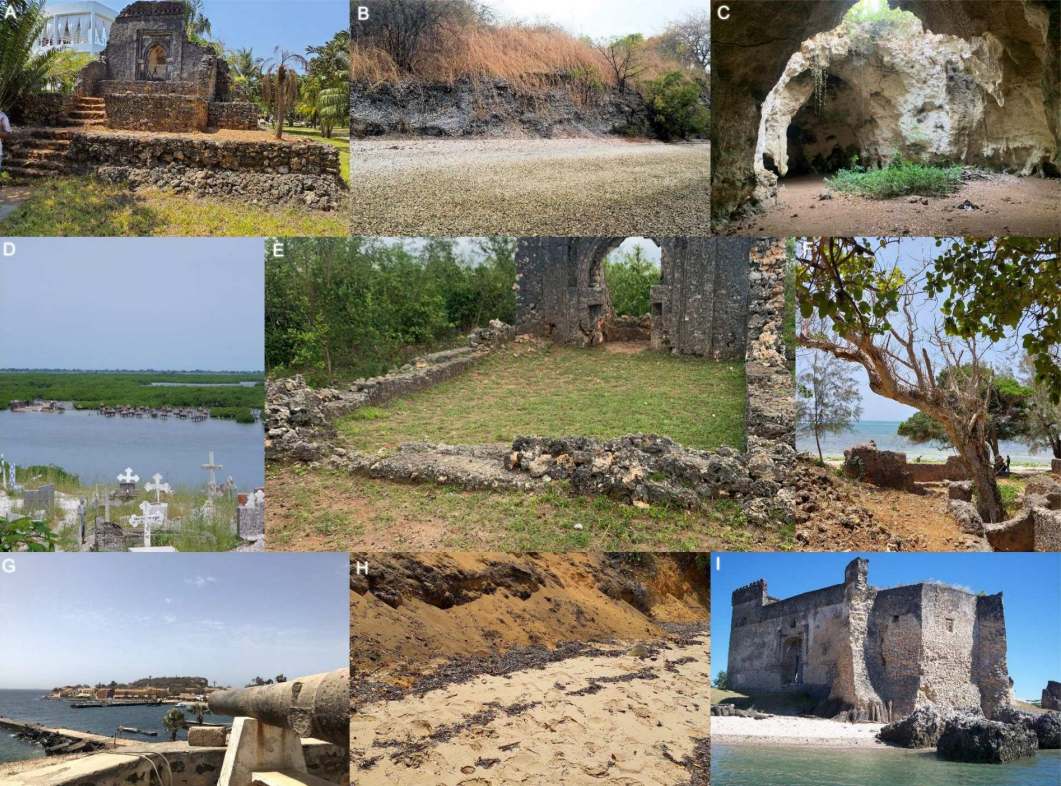
A collage of the diverse types of archaeological sites and monuments that characterise the study areas here discussed. (A) Watamu Amani mosque, Kenya; (B) Shell midden in Dioron Boumak, Senegal; (C) Kuumbi Cave, a Later Stone Age site in Unguja, Tanzania; (D) Cemetery of Joal-Fadiouth, excavated in a shell midden, Senegal; (E) Ruins of the small mosque associated with Swahili Period in Tumbatu Island, Unguja North, Tanzania; (F) Jumba la Mtwana, Kenya; (G) Gorée Island view of historical period buildings, Senegal; (H) Mida creek site, Kenya; (I) Kilwa Gereza – Swahili palace in Kilwa Kisiwani, Tanzania. (credit: Ochungo et al)
Leveraging Digital Earth Africa’s services
Ochungo et al used Digital Earth Africa’s tools and services to undertake comprehensive shoreline mapping and temporal changes in selected areas over a near-forty-year period (from 1984 to 2023). The analysis included the application of the Modified Normalized Difference Water Index (MNDWI) to detect quantitative shoreline alterations, as well as Digital Earth Africa’s coastal erosion workflow and the coastlines data repository, to analyse annual shorelines and erosion rates. The result is a robust geospatial dataset that allows researchers to pinpoint which sites are at risk, which ones have already been affected, and where protection efforts might be most needed.

”Using Digital Earth Africa’s (DE Africa) high-resolution satellite imagery and analytical tools, we were able to monitor and analyse shoreline dynamics over time,” says Ochungu.
“The platform’s accessible and comprehensive datasets allowed us to identify areas where cultural heritage sites are at risk due to coastal erosion and other environmental factors. This integration of Earth Observation data with archaeological research provided valuable insights that are instrumental in informing conservation strategies and policy decisions to protect these invaluable sites.”In the Saloum Delta of Senegal, an important site for artefacts and burial grounds, the vast majority of sites (80 percent) were unaffected by coastal change. But of those that did experience change, erosion was seen to be more prevalent than coastal growth. However, in Mombasa, the analysis revealed significant coastal changes. Of 36 heritage sites, approximately 39 percent were seen to have experienced coastal retreat. Ten of the affected sites face an average erosion rate of about 17.2 metres per year. On Pemba Island in Tanzania, an island with a vibrant trading, agricultural, and religious history, 17.9 percent of 39 heritage sites were seen to experience coastline retreat, and 7.7 percent coastal growth. The research shows a mean annual retreat rate, indicating erosion as the more common trend among the sites that had undergone change. The shoreline growth recorded near many sites can create a separate challenge of sediment accumulation that could lead to burial and eventual urban development over time.