Aligning governance, technology and budgets is proving essential to deliver water-efficient sanitation that saves money while restoring dignity.
Speaking at a Bremen Overseas Research and Development Association (Borda) event, Dr Zakhele Khuzuwayo, manager: Innovation and Technology, Johannesburg Water, said the sector must “stop working in silos” and align across public, private and academic stakeholders.City of Johannesburg perspective
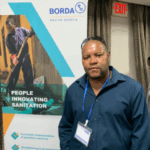
Dr. Zakhele Khuzuwayo, manager: Innovation and Technology, Johannesburg Water
Sanitation pilot projects
This is where technology and innovation come into view, with piloting projects done over several years that pave the way forward. “We are past the pilot stage. Our focus now is embedding water-efficient sanitation solutions (WESS) into the mainstream budget and operations of the city. If a pilot is successful, you don’t stop there — innovation must be integrated into service delivery.”
Khuzuwayo emphasises that leadership and governance are just as critical as technical solutions. Illegal connections, informal settlements, and non-revenue water remain major challenges, and these cannot be solved by engineers alone. “We need the right people in the room – finance officials, municipal leaders, regulators – to make decisions that stick. Engineers can design, but only leadership can align governance, budgets and service delivery.”
Something Dr Khuzumayo points out is that whenever technical workshops and events are taking place, high-level decision makers are absent from the room. JW makes a point of sending senior management to these events because the decision-making power lies with them. “If the problem lies with municipalities, and we want to address all 257 of them, why are only two or three showing up? Water-efficient sanitation solutions (WESS) will die if only two or three municipalities take it seriously.”