In hydrogeology, ‘groundwater age’ refers to the time since water infiltrated the subsurface. While conceptually useful, its interpretation in fractured or heterogeneous aquifers is complex, as mixing, dispersion, and variable flow paths can obscure the true residence time and challenge straightforward age estimations.
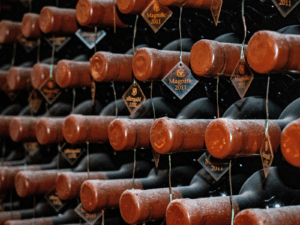
Unlike a sealed bottle of wine, which follows a relatively predictable chemical evolution under controlled conditions, groundwater in fractured aquifers does not ‘age’ uniformly. Some water flows quickly through open fractures, while other portions linger in tiny rock pores for decades or centuries. As a result, a water sample from a borehole is rarely of one single age, but rather a blend of waters of many different ages. Water flows through fractures and rock pores at variable rates, mixes continuously, and interacts chemically with the surrounding environment, making its residence times highly variable and far less predictable. A useful way to think about this is like a shopping mall. The age of one shopper is the time they personally have spent inside since they entered. The mean residence time, however, is the average time that all shoppers spend in the mall. In groundwater, tracers such as carbon-14 can give us an apparent age of a water sample but because samples are mixtures, the apparent age is often closer to the mean residence time of that mixed water, rather than the true age of a single parcel. In such settings, the ‘age’ of groundwater is not a fixed value but better described as a distribution of residence times, of which the mean residence time is just one summary statistic. Recognising this variability is critical for accurate interpretation of tracer-based estimates and for the development of realistic conceptual and numerical models. This nuance is important in a country like South Africa, where fractured aquifers dominate, and groundwater remains a vital resource for both urban and rural populations. While isotope and tracer-based methods have become increasingly valuable tools for improving hydrogeological conceptual models, there are inherent limitations in oversimplifying age interpretations. Discussions at the IAEA technical working group on environmental tracers, held in Vienna, Austria in April 2025, reinforced the growing consensus that mean residence times, full age distributions, and multi-tracer approaches provide more scientifically sound and informative insights than relying on just single age estimates alone. For example, short-lived tracers such as 35S and ²²²Rn are increasingly used to delineate recent recharge and shallow flow paths, while noble gases (CFCs, SF₆, ³H/³He) are employed to estimate apparent ages of younger groundwater components. These tracers operate under fundamentally different assumptions. Radio-sulphur isotopes such as 35S, produced via cosmic ray spallation of atmospheric argon, rapidly oxidize to sulphate and enter the water cycle via meteoric precipitation. Their relatively short half-life (87.4 days) makes them useful for identifying recharge events on seasonal to sub-annual scales. In contrast, gas tracers such as ³H/³He only start the isotopic clock once water passes below the water table, thus missing residence times in the vadose zone where important biogeochemical processes occur. This is a critical point also raised during the Vienna meeting. Groundwater age, if interpreted solely from gas chronometers, does not capture the temporal domain of infiltration and vadose zone transport. For fractured-rock aquifers, where flow is often governed by both matrix diffusion and fracture advection, the vadose zone may represent a significant portion of the total transit time. Hence, combining isotopes that reflect vadose zone processes (stable water isotopes, 35S) with those that reflect saturated zone residence (SF6, CFCs) yields a more complete hydrochronological profile.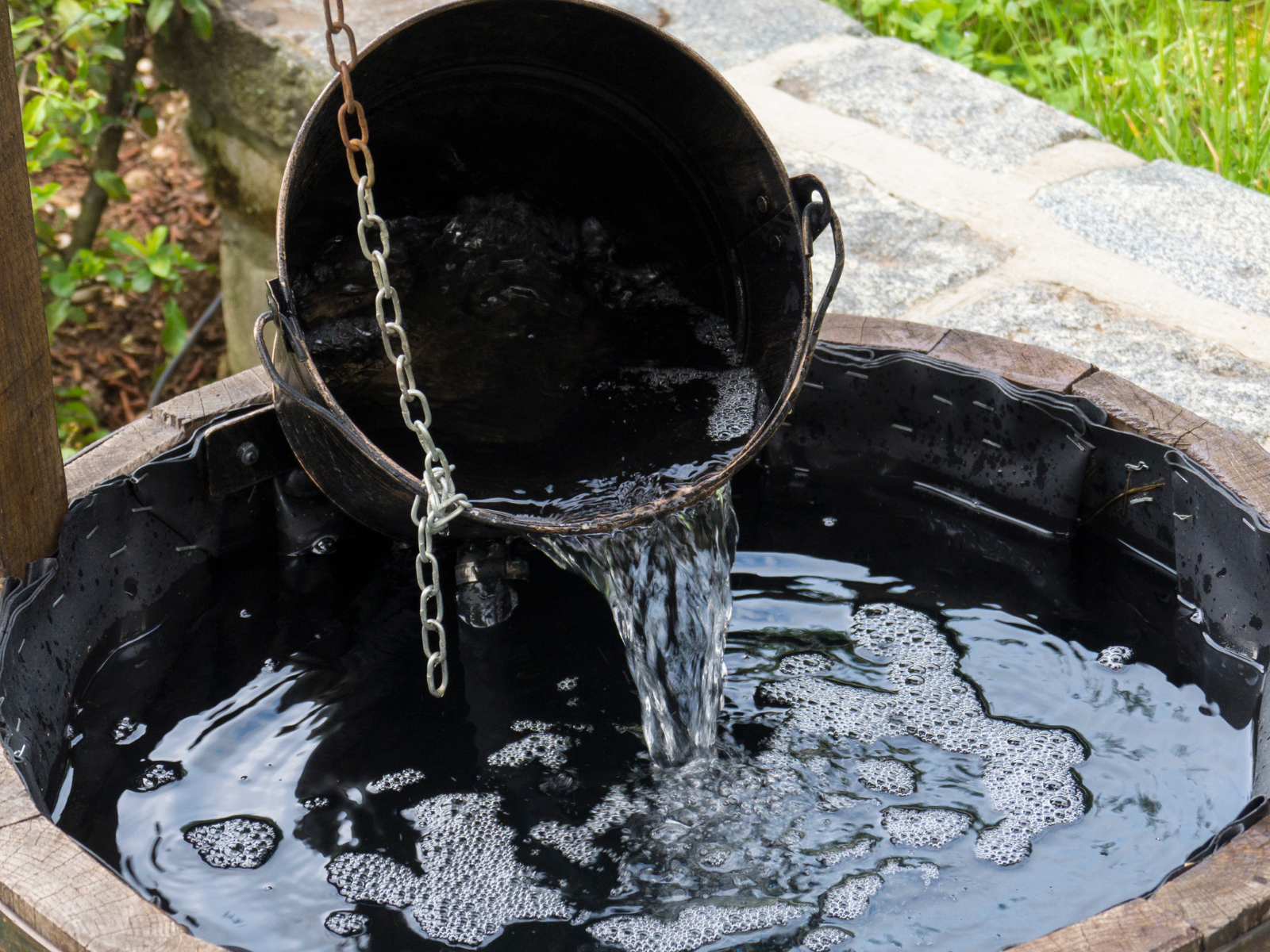
Groundwater does not ‘age’ like fine wine it flows, mixes, and evolves in response to geological, climatic, and anthropogenic drivers
Fieldwork
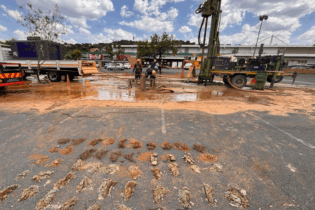
Fieldwork conducted at a now decommissioned quarry near Pretoria reinforced these insights. Environmental tracers, including stable isotopes (such as Deuterium, ²H and Oxygen-18, ¹⁸O) and the radioactive isotope Tritium (3H), were applied to investigate recharge processes and groundwater flow dynamics. The stable isotopes provided information on recharge elevation and seasonality, while the presence of tritium (3H) indicated the presence of modern water within the system. Combined, these tracers constrained mean residence times and highlighted the mixing of recent recharge with older groundwater components, a common feature in fractured quartzite aquifers. In the broader tracer literature, additional tools such as artificial tracers (fluorescein, rhodamine WT), noble gases, and short-lived radionuclides (²²²Rn, ²²⁶Ra, ²²⁴Ra/²²³Ra ratios) have been used to delineate fracture-dominated flow and quantify residence times on the order of days to weeks. These approaches are particularly relevant in dynamic environments such as coastal lagoons or managed aquifer recharge systems, where short-term flushing and discharge processes dominate. The concept of an ‘endmember’ representing the unmixed, original groundwater signature prior to dilution or mixing is also critical in such studies. Yet even defining a representative endmember is non-trivial, as an equilibrium between aquifer material and infiltrating water is not always reached, especially for sorbing tracers like radium. The time to reach equilibrium is strongly influenced by the distribution coefficient (K_D) and isotope half-life, ranging from minutes to days for ²²⁴Ra (t½ = 3.63 days) and ²²³Ra (t½ = 11.43 days), to years for ²²⁸Ra (t½ = 5.75 years), and up to millennia for ²²⁶Ra (t½ = 1600 years). These can be converted into approximate flow distances based on groundwater velocity assumptions.
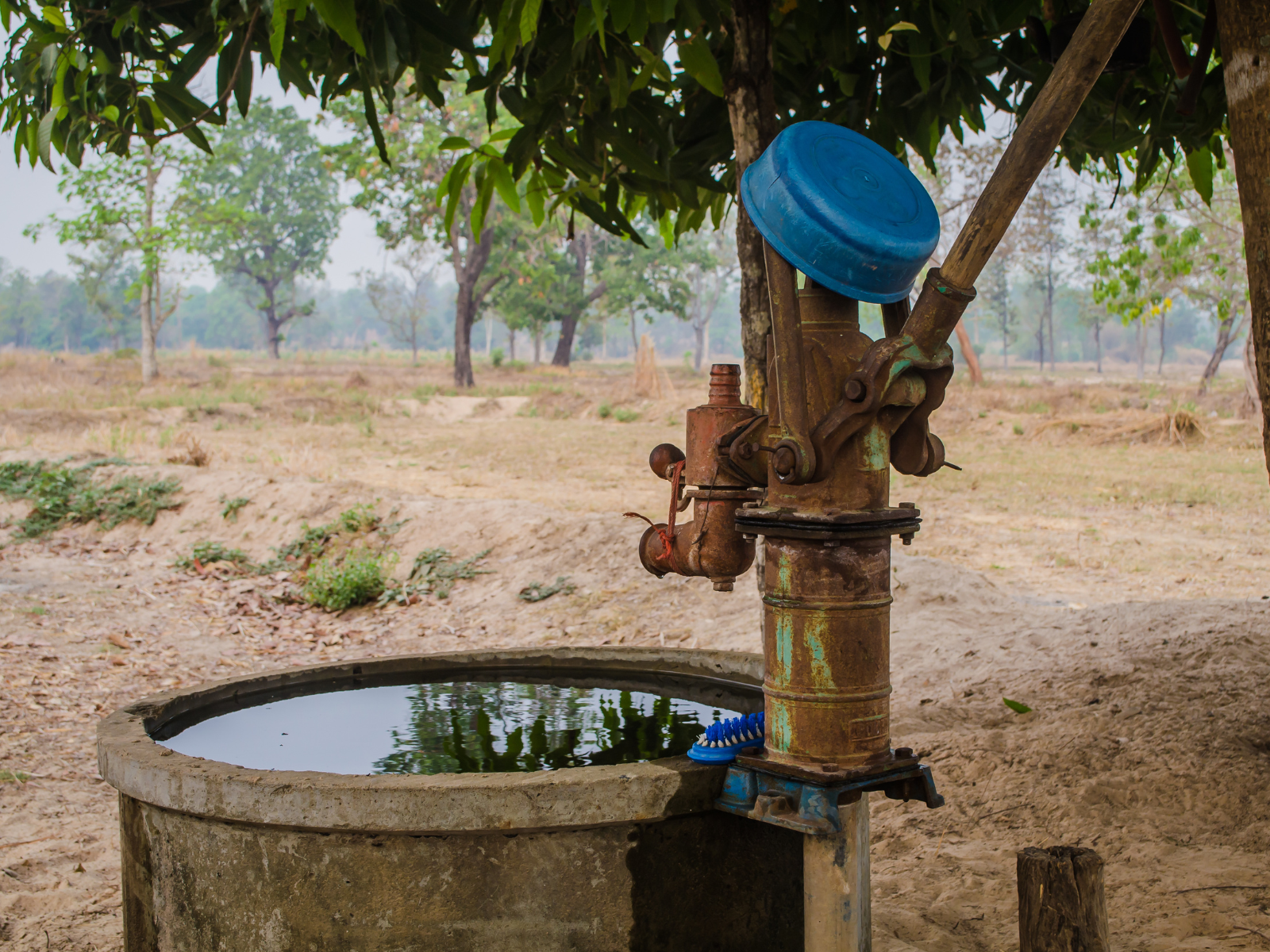
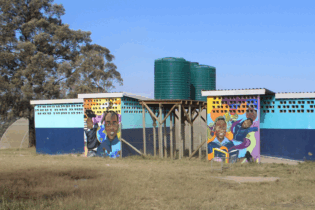
For communities in rural areas or small towns, knowing whether borehole water is ‘young’ or ‘old’ can mean the difference between safe drinking water and contamination risk
Impacts
For communities in rural areas or small towns in the Karoo, knowing whether borehole water is ‘young’ or ‘old’ can mean the difference between safe drinking water and contamination risk. This is why, from a South African management perspective, these scientific insights carry real urgency. Fractured-rock aquifers, which supply much of the country’s water, are often assumed to be naturally protected by depth or by long mean residence times. Yet environmental tracer evidence shows that rapid preferential flow paths can deliver ‘young’ recharge water through fractures and faults into supposedly well-protected aquifers. This means that even boreholes yielding predominantly ‘old’ water may still be vulnerable to recent surface contamination if a small fraction of young water is present. With pressures from urbanisation, agriculture, and climate variability mounting, these dynamics can no longer be ignored. Effective groundwater management must therefore go beyond bulk averages and explicitly account for the youngest fractions of water, which act as sentinels of vulnerability. This requires clearer science communication. Terms such as ‘groundwater age’ must be unpacked, and mean residence time framed as a statistical simplification of a much broader distribution of travel times. What is urgently needed is the routine application of multi-tracer frameworks, tailored to site-specific conditions, that capture the full range of transit times, geochemical interactions, and hydrological domains traversed by groundwater. The Vienna technical meeting strongly advocated for this integrative approach, and adopting it in South Africa would provide a more realistic foundation for recharge protection strategies, contamination risk assessment, and long-term water security.
Yazeed van Wyk, research manager, Water Research Commission