Johannesburg Water has regained control of its billing from the City of Johannesburg – a strategic move to enhance billing accuracy, resolve customer queries faster, and ensure that every rand can be collected and channelled back into maintaining and upgrading the city’s ageing water and sanitation infrastructure.
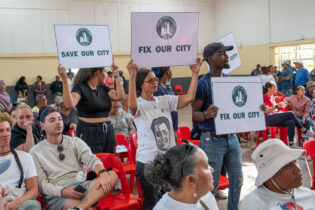
For years, residents have voiced frustration about inaccurate accounts, delayed responses to billing queries, and a lack of clarity on where their money goes. The problem can be traced back to the early 2008 and 2009 when the City of Johannesburg centralised billing for City Power, Pikitup and Johannesburg Water under Project Phakama. The idea was to give customers a single consolidated bill covering water, electricity and waste services. Under Phakama, the city migrated its billing system onto a SAP platform that could run the integrated and complex operations of the city. Unfortunately, the project faced widespread criticism following its launch, with thousands of residents finding issues with their accounts.Underinvestment in water and sanitation infrastructure

Kgaugelo Mahlaba, CFO, Johannesburg Water
Trading reforms underway
 To tackle this, Johannesburg Water is rolling out a turnaround strategy aligned with the National Treasury’s Trading Services Reforms for metropolitan municipalities, which reward metros that adopt certain reforms with additional capital funding.
Some of these reforms include ring-fencing revenue from the sale of water for the water function, as well as creating single-point accountability for the water function in the city.
“I’m proud to say that these reforms are now in place. We are producing our own financial statements and have control over support services like human resources and procurement. We have also developed a turnaround strategy and performance improvement action plan with key performance indicators as well as other initiatives to further strengthen our governance. This has all been approved by council and submitted to Treasury in order to access the incentive grant,” says Mahlaba.
While residents will still receive a single consolidated statement from the city, Johannesburg Water now has the final say on its own accounts and tariffs, subject to council approval. The shift means the utility can bill customers directly and manage queries.
To tackle this, Johannesburg Water is rolling out a turnaround strategy aligned with the National Treasury’s Trading Services Reforms for metropolitan municipalities, which reward metros that adopt certain reforms with additional capital funding.
Some of these reforms include ring-fencing revenue from the sale of water for the water function, as well as creating single-point accountability for the water function in the city.
“I’m proud to say that these reforms are now in place. We are producing our own financial statements and have control over support services like human resources and procurement. We have also developed a turnaround strategy and performance improvement action plan with key performance indicators as well as other initiatives to further strengthen our governance. This has all been approved by council and submitted to Treasury in order to access the incentive grant,” says Mahlaba.
While residents will still receive a single consolidated statement from the city, Johannesburg Water now has the final say on its own accounts and tariffs, subject to council approval. The shift means the utility can bill customers directly and manage queries.
Challenges
Johannesburg Water’s non-revenue water (NRW) rate is incredibly high. “Even though it has recently dropped from 46% to 44%, it still means that nearly half of the water produced never reaches paying customers — a massive financial and operational loss for the city,” notes Mahlaba. NRW costs the entity R3 billion a year. On top of this, non-payment adds another R4.8 billion in lost revenue. Unauthorised consumption is close to 20 713 684 kl per annum. In total, Johannesburg Water loses approximately R7 billion annually from water losses and non-payment. Adding to this financial strain is a social mandate – water is a human right. “We do have an expanded social package programme that gives qualifying indigent citizens free access of up to 15 kℓ free water per month. But they need to meet certain criteria and they must register for the programme,” states Mahlaba. Johannesburg Water has implemented a five-year water conservation and water demand management strategy. This plan includes repairing leaking reservoirs, upgrading zonal bulk meters, improving pressure management, enforcing by-laws and replacing old pipes and valves. The strategy aims to reduce water demand by 37 123 Mℓ annually.Billing and disconnections
 “Billing inaccuracies are often a result of faulty water meters. Some meters are stolen and tampered with, while other meters are broken and need to be fixed or replaced. We sometimes have to resort to estimation, however, meters must be read at least twice within a financial period. Johannesburg Water aims to read over 90% of our meters every month to avoid billing inaccuracies between the actual meter reading and an estimated meter reading. There are hostile areas where we are unable to read meters, as our technicians are vulnerable to violence from communities, hijackings or residents setting dogs on them,” states Mahlaba.
He adds that Johannesburg Water has formed a joint committee with the metro police where they work together to disconnect illegal connections and connections of non-paying citizens.
“Billing inaccuracies are often a result of faulty water meters. Some meters are stolen and tampered with, while other meters are broken and need to be fixed or replaced. We sometimes have to resort to estimation, however, meters must be read at least twice within a financial period. Johannesburg Water aims to read over 90% of our meters every month to avoid billing inaccuracies between the actual meter reading and an estimated meter reading. There are hostile areas where we are unable to read meters, as our technicians are vulnerable to violence from communities, hijackings or residents setting dogs on them,” states Mahlaba.
He adds that Johannesburg Water has formed a joint committee with the metro police where they work together to disconnect illegal connections and connections of non-paying citizens.
“However, cutting water is not as easy as cutting power. For example, a Level 3 disconnection often involves the use of an excavator where a water meter is removed. This is a costly exercise.”“We bill approximately 329 000 accounts monthly and are currently dealing with just under 5000 queries. This is a marked improvement from the past, when just six people were allocated to resolve complaints city-wide. While the ratio between accounts billed and queries issued is not significant, we are very focused on further reducing the number of open queries. Every query matters, but the real solution is to be proactive and find issues before a query is even logged and this can be done through smart meters and better management of data. We are working with the University of Johannesburg to better analyse and collate our data,” comments Mahlaba. He concludes by saying that Johannesburg Water is determined to improve customer service. “We want to be customer-centric and change our image from the past. Johannesburg Water belongs to its residents. It should be seen as a trust fund that looks after everyone’s needs. Every rand collected must go back into the system to ensure that when you open your tap, water flows reliably.”