The renewable energy economy is being spurred on by the rapid expansion of solar photovoltaic (PV) and battery energy storage systems. While positive, there are challenges, especially regarding the end-of-life waste management of these solar PV systems.
In South Africa, there is growing concern regarding unsafe, irresponsible, and often illegal practices that run the risk of jeopardising positive gains in the renewable energy sector. South Africa’s accelerating adoption of solar PV due to energy insecurity and cost factors will create a significant waste stream, forecast to be 750,000 to 1 million tonnes of PV waste by 2050, with end-of-life waste volumes expected to rise dramatically after the early 2040s, peaking around 2056. Without circular economy strategies, this waste poses an environmental burden and represents a missed economic opportunity. Circular Energy, a Producer Responsibility Organisation (PRO) comprising members primarily from the solar PV industry, is working to address the challenges in waste management that threaten to undermine the entire lifecycle of solar and battery products.The importance of Extended Producer Responsibility (EPR)
South Africa’s Extended Producer Responsibility (EPR) legislation, a regulatory framework within the National Environmental Management Waste Act (NEM:WA) of 2008, is in place to hold producers – defined as local manufacturers, brand owners, and importers – accountable for the entire lifecycle of their products, and demands compliance with rigorous legal standards for end-of-life management. Circular Energy provides the systems, financial assistance, and knowledge-sharing to help companies comply with EPR regulations. The organisation emphasises a lifecycle management approach that prioritises reuse and repair first. Only when a product cannot be safely repurposed should it proceed to destructive treatment for material recovery. The ISO 59004:2024 standard defines circular economy as “an economic system that uses a systemic approach to maintain a circular flow of resources, by recovering, retaining, or adding to their value.” For PV modules, circular strategies include repair, reuse, refurbishment, remanufacturing, repurposing, design for disassembly and recycling. Higher-order options (reuse, refurbishment, repurposing) yield greater environmental and socio-economic benefits than recycling. What often causes confusion are the terms ‘recycling’ and ‘waste treatment’. While many use the term recycling rather loosely, the legal distinction under NEM:WA is important: Recycling is the process of reclaiming waste materials to be processed as a product or raw material. Waste treatment is a broader process that legally encompasses recycling and includes methods that change the physical, biological, or chemical characteristics of waste, often to remove hazardous components or reduce toxicity. The hidden hazards of renewable waste make the requirement for strict regulation essential. This is due to the hazardous nature of solar PV modules and batteries. Unlike simple commodities, these are complex, power-generating products that, when improperly managed, pose serious health, safety, and environmental risks.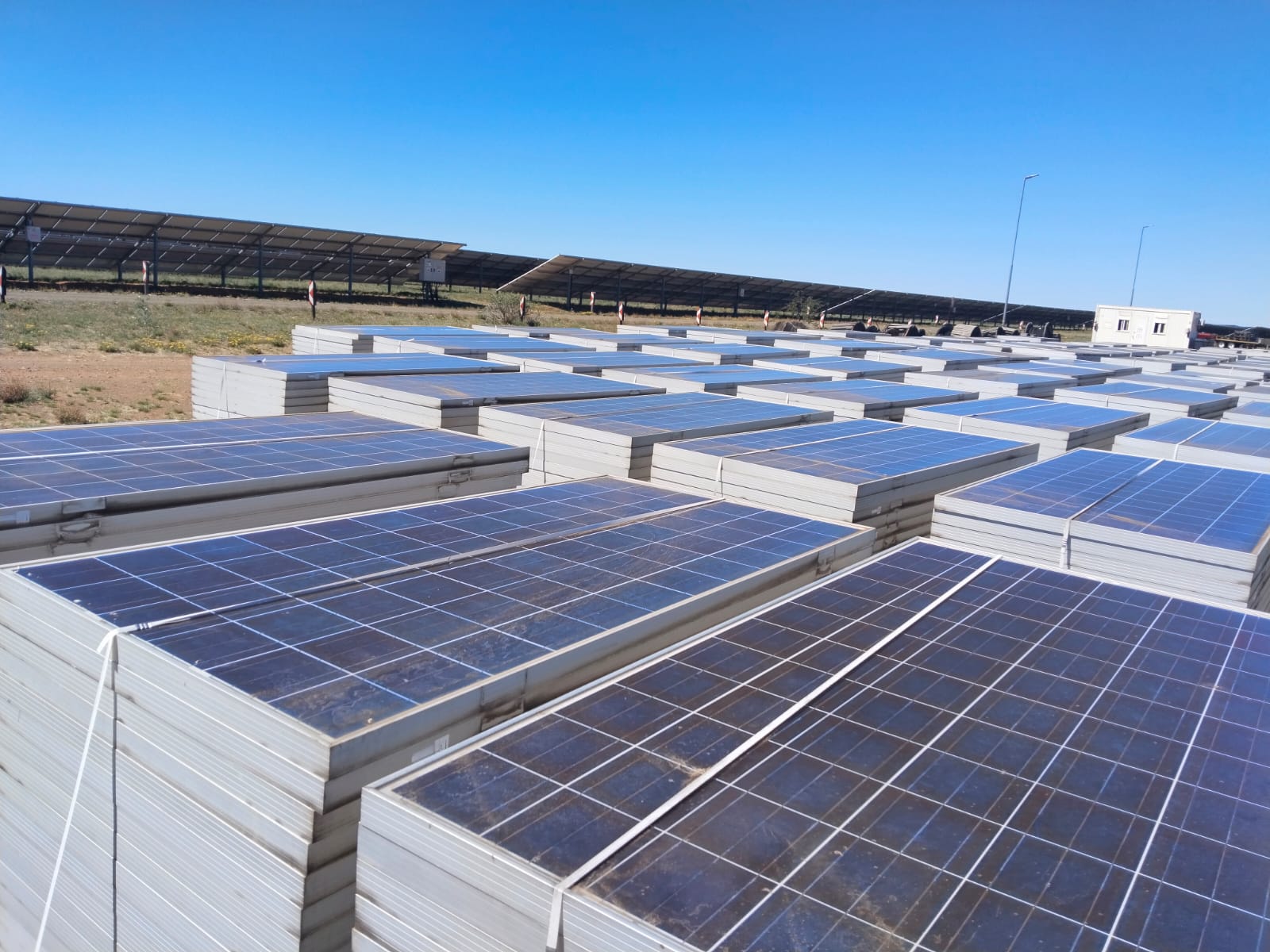
Decommissioned solar panels stored in preparation for transport
South Africa’s context: Drivers and Barriers
South Africa’s just energy transition must balance decarbonisation (coal accounts for approximately 80% of electricity) with socio-economic upliftment (high unemployment). Energy insecurity, primarily severe loadshedding, acts as a key driver, having accelerated the adoption of embedded solar PV systems (5,791 MWp capacity by 2024). However, the country heavily relies on PV module imports, which increased by 213% in 2023. The Regulatory Foundation is strong, consisting of the Extended Producer Responsibility (EPR) Regulations (2021), the WEEE landfill restriction (2021) and the Hazardous Waste Regulations (2008); however, enforcement issues plague the system. Weak enforcement of EPR (allowing producer free-riding), sectoral uncertainty over PV module classification, and lack of PV-specific targets or standards are significant barriers. Furthermore, economic constraints (declining new module prices) and negative perceptions (consumer distrust of second-hand products) hinder the move toward circularity. The existing informal sector (waste pickers) offers an opportunity for integration into formal systems.Toxic elements and improper disposal
Research funded by Circular Energy has confirmed that all three main solar technologies in use in South Africa contain toxic elements such as cadmium, lead and arsenic. Without proper handling, transportation, and treatment, these substances are extremely hazardous to human health and the environment. Despite this, poor practices are rampant and include:
Improper selling: Entities often sell old modules for a small profit to individuals who don’t possess the licences or facilities needed for safe disposal or reuse.
Scrap harvesting: Modules are stripped for valuable scrap materials like aluminium and copper. Alarmingly, this often involves burning cables to remove insulation, which releases toxic fumes into the air and results in toxic waste being illegally dumped. Illegal down-cycling: Perhaps the most concerning violation is the practice of crushing entire solar PV modules – toxins and all – into a fine powder and mixing it with concrete to create consumer products such as paving bricks, or mixing it into recycled plastics to make products such as school desks. NEM:WA regulations explicitly require a waste exclusion process, which involves rigorous testing to prove that all toxic elements have been eliminated before any hazardous waste can be repurposed into a consumer product.Battery Systems – fire, corrosion and critical resources
Battery storage systems, while somewhat more regulated due to their hazardous classification, present other dangers. Lead-acid batteries are corrosive and prone to leaking, while modern lithium-ion batteries, which are used extensively in solar and wind energy storage, do not leak but can violently ignite if compromised. Circular Energy supports and encourages a meticulous process for battery waste management: once removed, batteries must be de-energised to eliminate electrical risks. Each cell is individually tested – safe cells are repackaged for reuse in accordance with strict electrical standards, while failed cells are sent for destructive recycling to recover critical raw materials.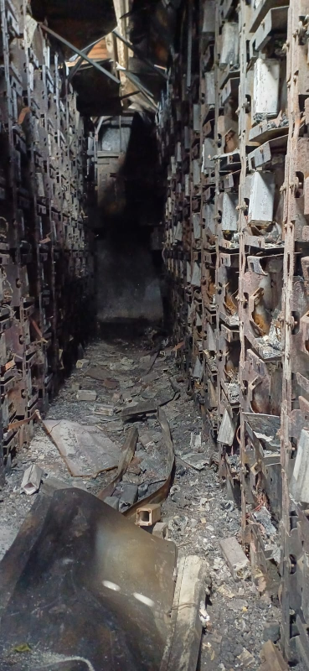
Fires are a real concern when managing battery storage systems
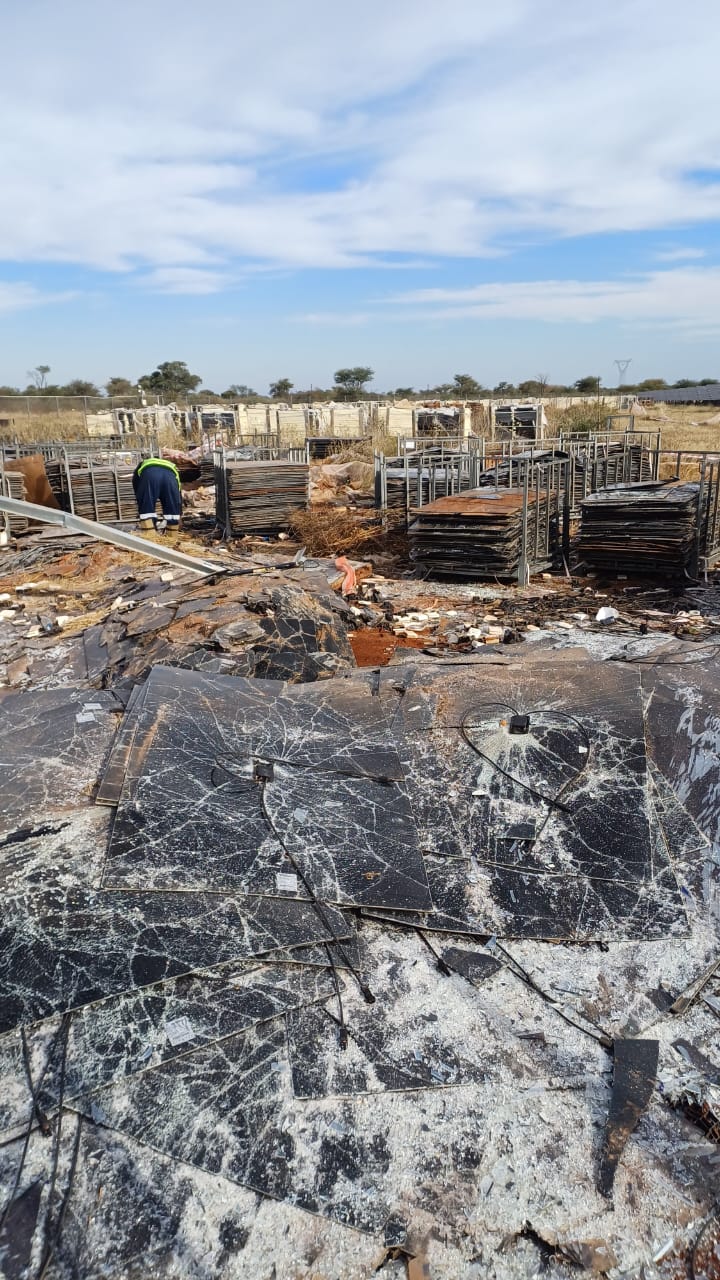
Solar PV is only sustainable if its end-of-life is managed correctly