
Tim Coles, head of sustainability for Sealand
Sustainability as a South African value
Coles believes that South Africa’s sustainability journey is deeply shaped by context and necessity.“It’s not a luxury here,” he says. “In South Africa, sustainability has always been about resourcefulness, looking around, asking what’s already available, and finding ways to reuse or repurpose it.”He points to the country’s informal economy as a long-standing example of circularity in action. “At any traffic light, you’ll see someone making something beautiful out of reclaimed wire or fabric. They’re not doing it for sustainability points; they’re not calling it innovation; they’re doing it because it makes sense. Out of necessity, we’ve built a culture of revaluing waste.” That culture, Coles adds, aligns closely with Sealand’s founding philosophy: to assign value to materials others consider disposable. “When we take old advertising banners or waste fabrics and turn them into durable bags, it benefits everyone – businesses save on landfill costs, and we get access to robust materials that tell a story.” Cape Town’s natural setting reinforces that mindset. “Driving through a national park on your way to work, you’re constantly reminded of the beauty and fragility of the environment,” he says. “That proximity to nature influences how we design and what we stand for. It has also reinforced the need for on the ground intervention in these spaces – as demonstrated by our Protect Our Paths Foundation and partnerships for beach and trail cleans.”
Material innovation and localisation
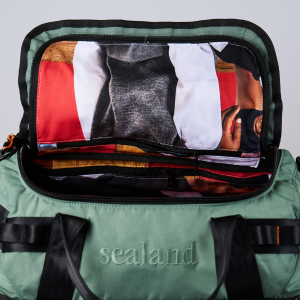
The new Sealand range now using MajiTex, a 100% recycled polyester fabric woven in South Africa

Circular design and end-of-life solutions
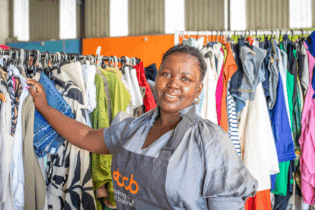
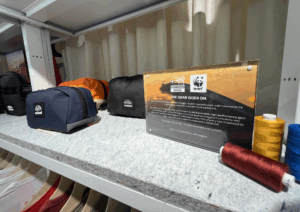
Sealand’s approach to circularity extends well beyond manufacturing. In 2024, the company launched Second Wave, a take-back and resale programme designed to keep its products in use for as long as possible. “We’ve had our Evergreen Guarantee for years, giving every customer ten years of free repairs,” Coles explains. “But we wanted to go further. Second Wave lets customers bring back products they no longer use in exchange for a 25% discount on their next purchase. We refurbish, wash, and resell them with a small tag that identifies them as renewed.” Ten percent of the proceeds from Second Wave sales are donated to the World Wide Fund for Nature (WWF), supporting local conservation initiatives.“It’s circularity with an added social impact,” says Coles. “Customers aren’t just buying something sustainable, they’re contributing to something larger.”Products beyond repair are stripped for reusable components, with leftover fabrics donated to Taking Care of Business (TCB), a Cape Town social enterprise that creates new items from textile waste. “That partnership keeps materials in circulation and supports livelihoods,” he notes. Sealand is also playing an active role in shaping the Extended Producer Responsibility (EPR) framework for textiles in South Africa, working with GreenCape and WISP to develop the country’s first national scheme. “It’s still early days,” Coles says, “but we’re helping define how textile EPR could work, from fees per garment to funding proper recycling facilities.”
Durability as sustainability
Beyond recycling and innovation, Coles argues that durability remains the simplest and most effective sustainability principle.“You can make something from the most extractive industries imaginable, but if it lasts for 100 years, it’s still more sustainable than something disposable,” he says. “Our philosophy has always been: buy once, buy well.”That ethos has earned Sealand a loyal following. Many customers still use the same products they bought nearly a decade ago, a fact Coles attributes to thoughtful design and quality materials. “Every decision, from hardware to stitching, balances sustainability with function and longevity,” he says. “It’s about responsible optimisation.”
Engaging consumers in carbon literacy
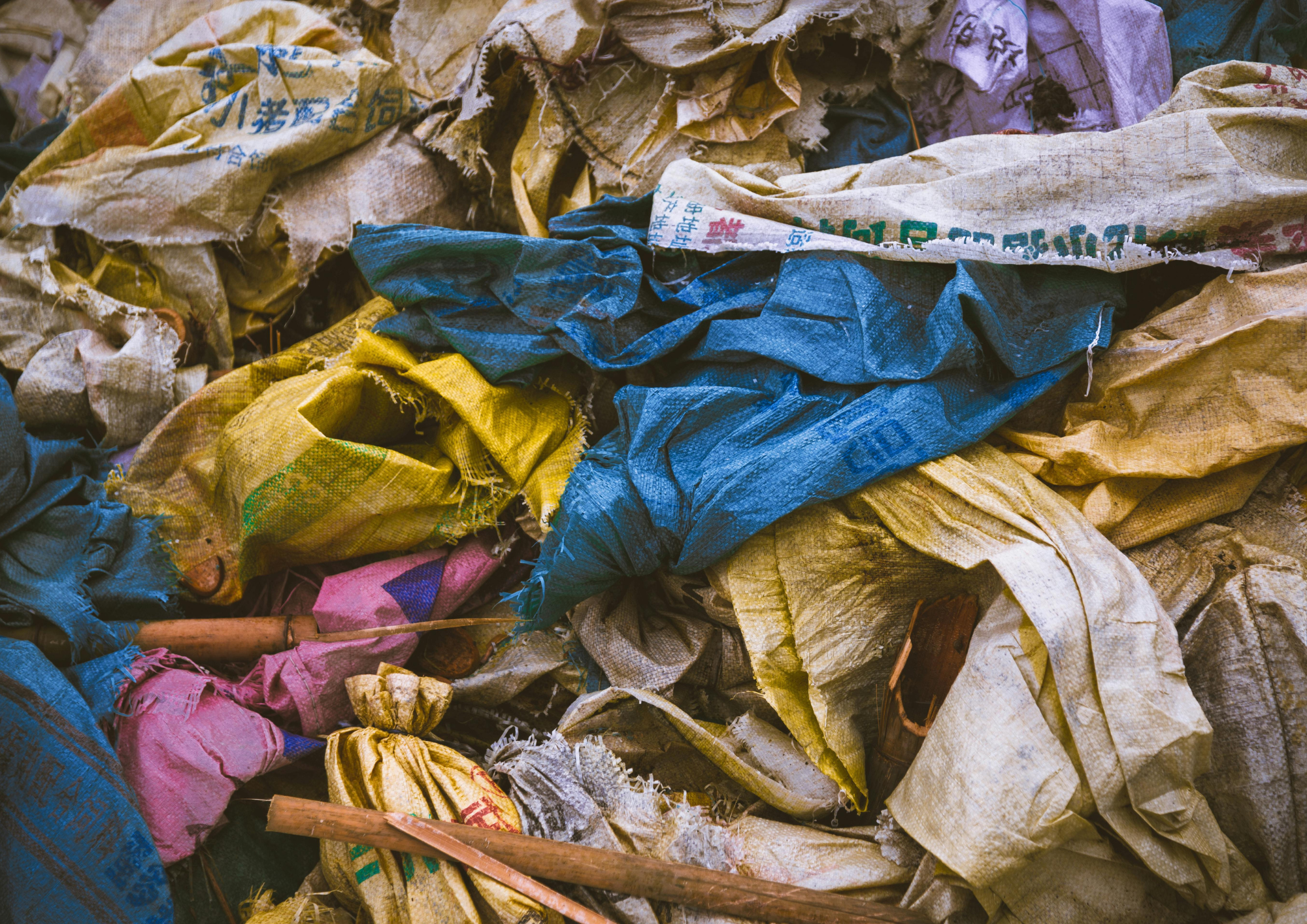
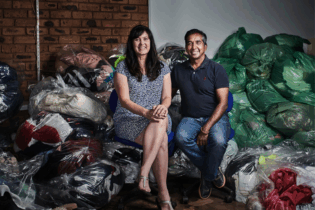
The growing problem of textile waste must be addressed through sustainable design as well as end-of-life management
“The bigger the gap between your values and your actions, the more cautious you have to be,” he says. “When your actions match your message, you can speak freely without fear of misrepresentation. That’s what we aim for: transparency and accountability.”With ten years behind it, Sealand continues to position itself not just as a brand, but as a platform for responsible innovation within South Africa’s growing circular economy. “We’ve never tried to claim perfection,” Coles concludes. “But we’ve built a business that proves sustainability and quality can coexist, and that’s something worth scaling.”