The launch of South Africa’s first public–public Special Purpose Vehicle (SPV) marks a decisive turning point in Emfuleni’s long struggle with water and sanitation failures. The partnership between Rand Water and Emfuleni Local Municipality aims to stabilise collapsed systems, restore dignity, and rebuild trust between communities and the state.
David Mahlobo,
Department of Water
and Sanitation
Deputy Minister
For more than two decades, residents of Emfuleni have endured some of the worst water and sanitation failures in South Africa. Entire neighbourhoods regularly lived with sewage flowing through streets, homes and schoolyards. Pump stations collapsed and pipes burst unchecked while water outages were frequent and unpredictable, sometimes lasting days. Residents were forced to queue at tankers or rely on unsafe water sources. Businesses closed, property values declined, and a once-vibrant manufacturing region slipped into deep distress.
Department of Water and Sanitation’s Deputy Minister, David Mahlobo, summed it up perfectly:
“The children born in Emfuleni Municipality in the early 2000s only know the smell of sewage.”
The South African Human Rights Commission repeatedly flagged the situation as a violation of constitutional rights, citing environmental devastation, chronic infrastructure failure, and the collapse of basic municipal services.
Section 63 – a temporary intervention
The depth of Emfuleni’s collapse made the case for intervention unavoidable. The Department of Water and Sanitation (DWS) invoked Section 63 of the Water Services Act – a rarely used but powerful intervention mechanism that allows the Minister to assign water service functions to a competent institution when a municipality can no longer fulfil them.
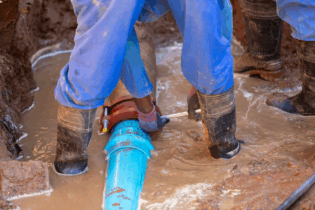
Under the Section 63 intervention, Rand Water’s engineers stabilised 51 critical pipelines, restored key pump stations, refurbished electrical and mechanical equipment, and brought major wastewater treatment works back into operation. Effluent volumes were once again able to reach treatment plants rather than spilling across neighbourhoods. The quality of drinking water improved to meet SANS 241 standards. The DWS allocated a R1.5 billion budget towards the Section 63.
Yet these gains were always going to be temporary without a long-term institutional solution. “The decay occurred over two decades, and it was impossible to rectify everything in a matter of months. In fact, it was estimated that the municipality needed R7.6 billion and the DWS simply did not have this money,” explains Mahlobo. Infrastructure failures remained severe, non-revenue water exceeded 70%, and billing systems were unreliable. Illegal connections and vandalism continued to undermine operations, costing millions in security alone.
SPV – a flagship programme and long term intervention

Ramateu Monyokolo,
chairperson,
Rand Water
This led to the creation of the Vaal Corporation Water Utility- South Africa’s first special purpose vehicle. A ring-fenced, professionally managed water and sanitation utility jointly owned by Emfuleni Local Municipality and Rand Water, the Vaal Corporation Water Utility is purpose-built to halt the decline, restore functionality and put the region on a sustainable, long-term recovery path.
Designed to break the cycle of decline, the SPV introduces a utility model with the autonomy, governance and technical capability needed to manage a complex water network. The model formalises the separation between the Water Services Authority (Emfuleni) and the Water Services Provider (the Vaal Corporation Water Utility), in line with the Water Services Act and reforms before Parliament. Under this arrangement, the municipality will set tariffs and oversee a performance contract, while the Vaal Corporation Water Utility delivers services and reports on measurable outcomes.
“This marks a defining moment for the country. While public–private partnerships are well known, this is the first time we are implementing a public–public partnership. And this model extends far beyond Emfuleni — we are building a sustainable framework that can be replicated across South Africa and even internationally as an effective mode of water service provision,” says Ramateu Monyokolo, chairperson,
Rand Water.
The Vaal Corporation Water Utility will assume responsibility for operations, maintenance, infrastructure upgrading and long-term planning.
“An SPV offers a way to depoliticise water services. It will be governed by a professional, skills-driven board – including engineers, accountants, scientists, environmental specialists and business strategists – ensuring decisions are made on expertise rather than political influence,” he adds.
All municipal staff working in the water and sanitation division of Emfuleni will transition into the SPV without job losses—although performance standards will be higher, and training will be compulsory. Jobs will be advertised, merit-based and overseen by the board.
A defining feature is the ring-fencing of revenue. Money collected for water and sanitation will flow directly into the Vaal Corporation Water Utility, instead of being absorbed into municipal accounts. This is intended to strengthen financial integrity, improve billing accuracy, and create the predictable revenue base needed to raise capital for major upgrades. Section 63 interventions are expected to end by April 2027.
Municipal debt
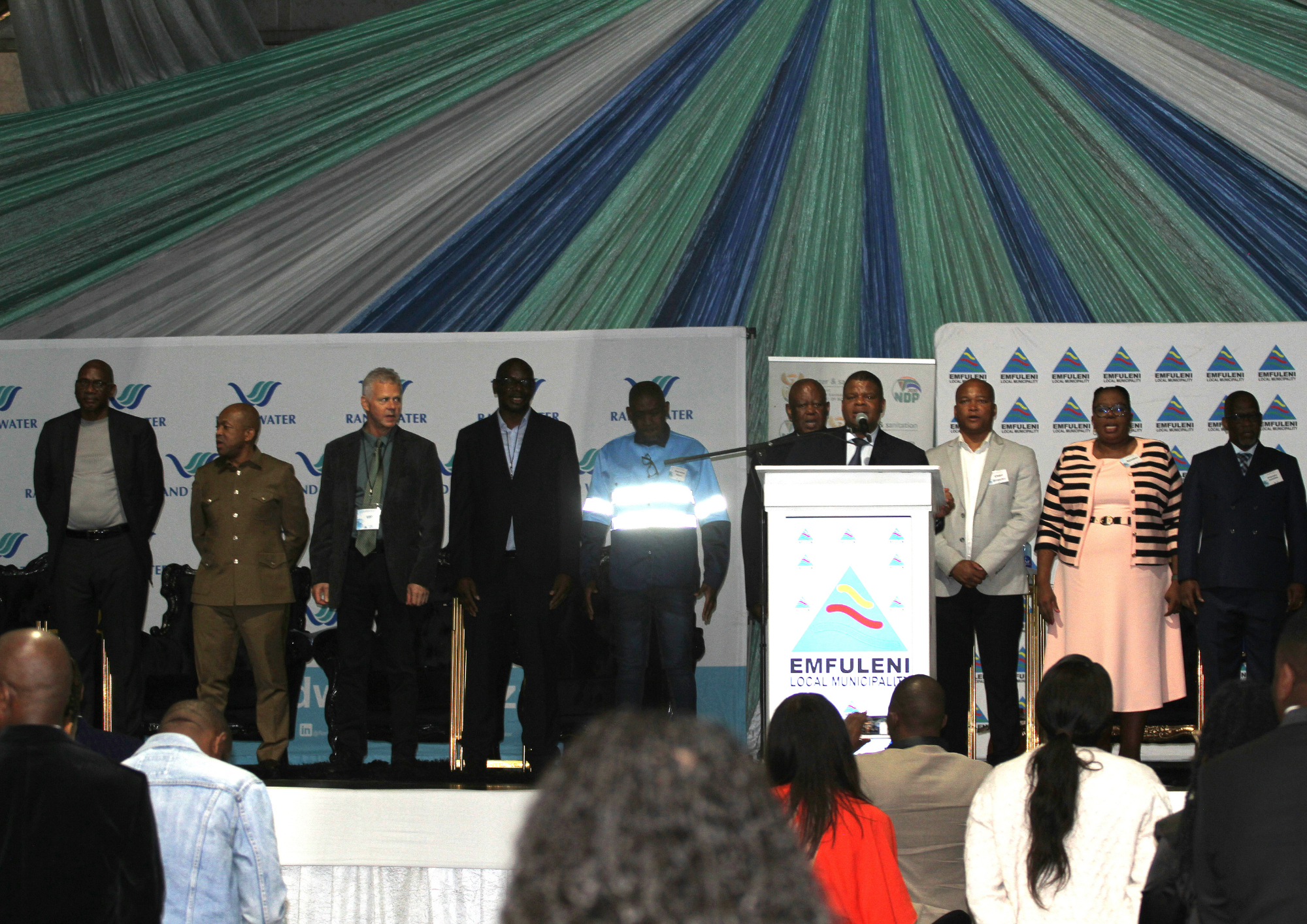
A ring-fenced, professionally managed water and sanitation utility jointly owned by Emfuleni Local Municipality and Rand Water, the Vaal Corporation Water Utility is purpose-built to halt the decline, restore functionality and put the region on a sustainable, long-term recovery path
“Four days after I was elected as mayor, Emfuleni Municipality’s account was attached by Rand Water due to a R1.7 billion debt. The magnitude of the debt was overwhelming, and it became clear that we were facing a severe crisis. As we worked to confront the situation, it was evident that we needed a long-term, sustainable solution. While in consultation with different stakeholders, the concept of an SPV surfaced as a practical way forward,” says Councillor Sipho Radebe, executive mayor,
Emfuleni Municipality.
However, Monyokolo cautions that the SPV is not a debt relief mechanism. “This is not designed to wipe away what municipalities owe. It is a collaboration to rescue service delivery, professionalise operations and rebuild sustainability. SPVs can safeguard the future of both water boards and municipalities.”
Water boards are collectively owed more than R28 billion, with Rand Water alone owed over R8.4 billion. This debt is far more than an accounting problem – it threatens the ability of water boards to operate, maintain and upgrade critical infrastructure. Without consistent payment, utilities cannot invest in new capacity, respond to breakdowns, or plan long-term projects, which weakens water security and delays essential maintenance. The risk cascades through the entire value chain: service reliability declines, infrastructure failures increase, and public trust erodes. Ultimately, municipal debt places both communities and the broader economy at risk, as water boards cannot sustainably deliver the services required for growth, health and dignity.
This is why payment compliance is so critical at every level. As Mahlobo emphasises: “Regarding the citizens of our country: the culture of non-payment must fall. Those who can afford to pay for water must pay and they must pay on time. When people choose not to pay, the strain falls on already vulnerable communities, as funds that should support repairs, upgrades and service reliability simply disappear. Restoring a culture of payment is essential to building a water system that works for everyone.”
Not an overnight project
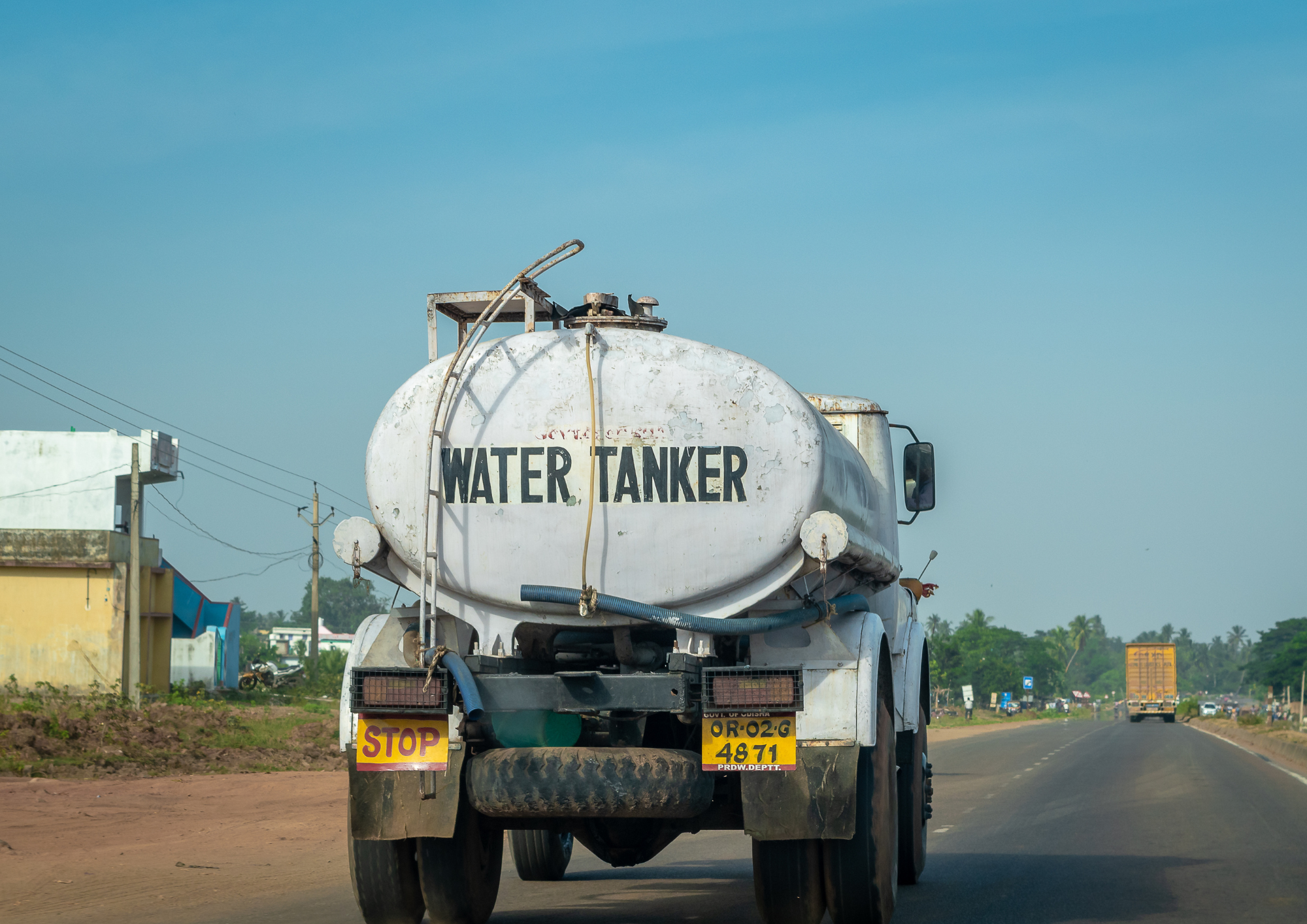
Emfuleni residents often had to queue at tankers or rely on unsafe water sources
But payment alone cannot stabilise a failing system. Long-term, structural reform was needed to ensure that water services could be delivered efficiently and sustainably. “We cannot direct funding into an institution that lacks proper governance,” states Mahlobo.
Establishing the SPV required a series of regulatory steps to guarantee the new utility could operate legally, transparently and in line with national reforms.
Because water services are a municipal responsibility, the Minister of Water and Sanitation first had to approve the assignment of water services provider functions to the SPV in terms of the Water Services Act. This included compliance with Section 19 (performance-based contracts) and Section 63 (intervention and assignment of functions), ensuring that the SPV could lawfully take on operational duties previously held by the municipality.
National Treasury then had to approve the financial and governance model in accordance with the Municipal Finance Management Act. Forming a new municipal entity requires a detailed business case, risk assessment, governance structure and funding plan. Treasury’s approval ensured that the SPV met all requirements for financial integrity, revenue management and oversight.
Once the regulatory approvals were in place, the SPV had to be established as a legally constituted municipal-owned entity jointly owned by Rand Water and Emfuleni Local Municipality. This involved drafting a founding memorandum, shareholder compact and governance framework, as well as defining clear roles between the Water Services Authority (the municipality) and the Water Services Provider (the SPV). A key requirement was that all water and sanitation revenue had to be ring-fenced within the SPV, ensuring money collected from residents is used exclusively for water and sanitation operations, maintenance and upgrades.
Finally, the Vaal Corporation Water Utility had to sign a performance-based service-level agreement with the municipality, setting measurable targets for service delivery, response times, operations, billing and customer care. Labour transfers also needed to comply with the Labour Relations Act to ensure continuity of employment where required. Together, these regulatory steps created a legally compliant, financially transparent and professionally governed structure capable of operating as an independent water and sanitation utility.
Generating revenue and attracting investment
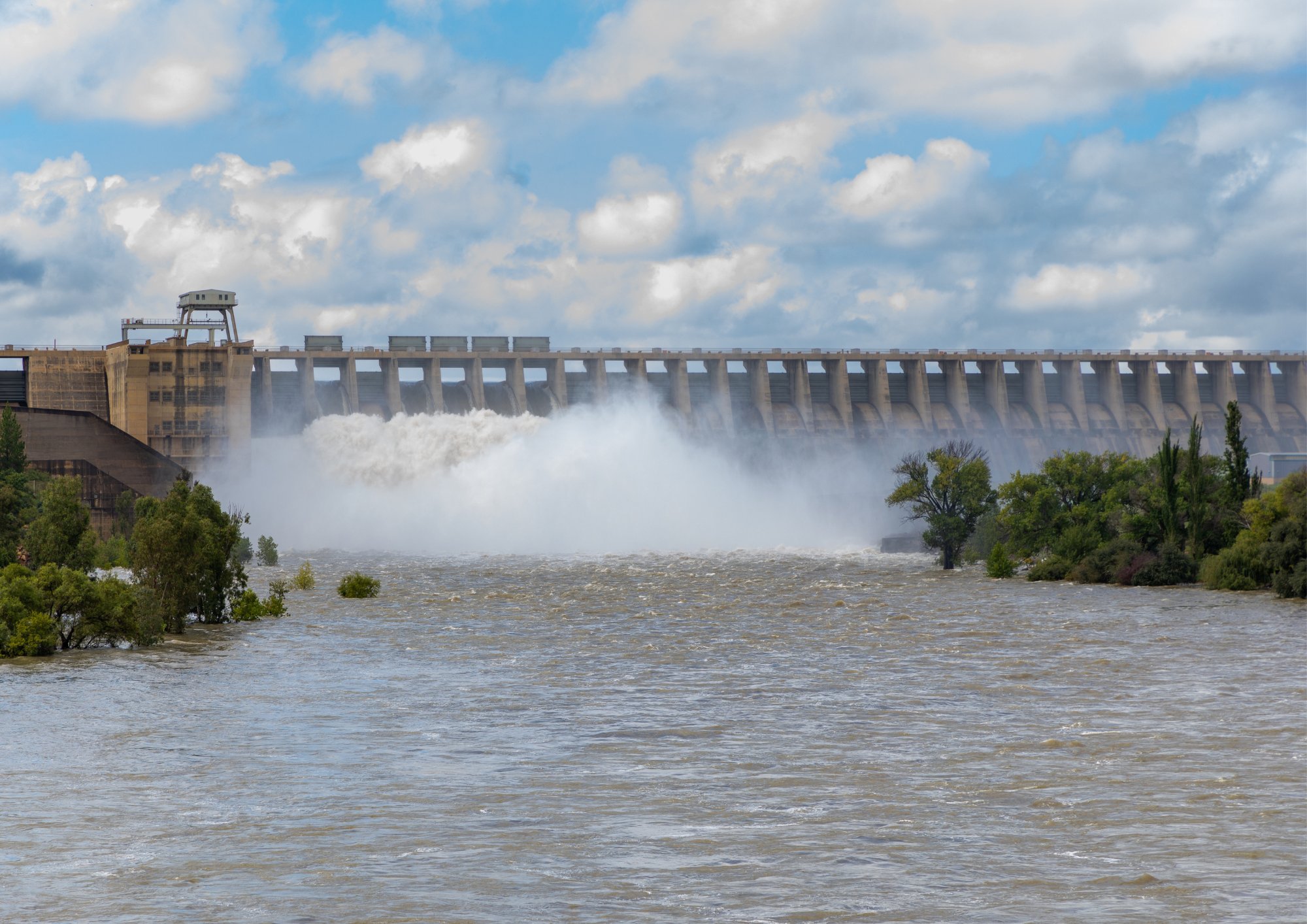
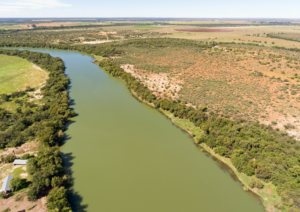
Vaal Dam
The SPV is not an ending – it is a beginning. Decades of decay cannot be undone overnight. Much of Emfuleni’s water and sanitation infrastructure cannot be maintained, it must be replaced. Bulk lines will still burst as pressure is stabilised. Treatment plants will require major upgrades.
Rand Water’s Group Chief Executive, Sipho Mosai, described the model as a commitment to long-term infrastructure stewardship. “There are no quick fixes in water. You plan, you operate, you maintain, and you reinvest.” Plans include a R7.5 billion investment programme over the next decade. The Vaal Corporation Water Utility is expected to attract this investment through the strength of its governance, transparent procurement processes and a professional board.
With the skills and expertise that Rand Water will bring, there will be significant improvements in billing, revenue collection and the reduction of non-revenue water. This will, in turn, generate the financial capacity needed to properly operate and maintain water services in Emfuleni. Grants given by national government related to the provision of water and sanitation will be transferred from Emfuleni Municipality to the SPV.
Combined with reduced non-revenue water, stronger billing and improved revenue collection, and the continuation of these grants, the SPV will have a solid financial foundation. This will enable major improvements in operations and maintenance, while also giving the entity the ability to leverage its revenue base to raise finance from the market — and to service those loans responsibly.
Community trust will be earned, not assumed. Leaders acknowledged that Emfuleni residents have endured years of failure and false promises. Business representatives made clear that support would be conditional on visible performance.
Rebuilding confidence requires not only improved service delivery, but shared responsibility. As Mahlobo stressed, the people of Emfuleni must take an active role in protecting their infrastructure.
“South Africa is facing a nationwide surge in vandalism, and every damaged pump, pipe or substation sets communities back. Money that should be invested in improving water and sanitation services is instead being diverted to either secure infrastructure from theft and damage or replace stolen or vandalised infrastructure. Protecting these assets is essential if we are to channel resources where they are most needed. At times, during the section 63 intervention, we were spending more time and money fighting criminality than fixing infrastructure. In the early stages, the project faced resistance from certain community members and councillors who attempted to obstruct progress for personal gain.”
Conclusion
“Over its 123-year history, Rand Water has maintained strong financial health, enabling continuous investment in infrastructure and reliable service delivery. We are committed to extending this expertise to the Vaal Corporation Water Utility. Rand Water has never failed South Africa — and we are determined not to fail this SPV,” concludes Monyokolo.
“Without a doubt the biggest beneficiaries of the Vaal Corporation Water Utility are the residents of Emfuleni Municipality. This is a significant milestone towards improving water services in the region. This initiative is about your lives, the lives of your children as well as health and dignity,” concludes Radebe.
For now, Emfuleni holds the nation’s attention as a test case for whether South Africa can rebuild water institutions that truly serve the people they exist to protect. Its success will not be measured in speeches or ceremonies, but in flowing taps, quiet pump stations, clean streets, green riverbanks and communities able to trust their water system once again.