Dr Kelvin Kemm, Chairman of Stratek Global
“The HTMR-100 is inherently safe,” explains Kemm. “Its design ensures that even in the absence of operator intervention, cooling is maintained through passive systems. The reactor cannot melt down in the conventional sense.”The system’s graphite-moderated core operates at high temperatures (around 750°C), allowing for both electricity generation and potential industrial heat applications, such as hydrogen production, desalination, and process steam for mining operations. This adaptability positions the HTMR-100 as a flexible energy solution capable of serving both grid and off-grid clients. Crucially, the HTMR-100 requires no large external water source, unlike traditional pressurised-water reactors. “We can place this reactor anywhere, coastal, inland, or remote locations, because the helium cooling system is closed-loop,” Kemm notes. “That flexibility is vital for countries with limited water infrastructure.” A central advantage of the HTMR-100 lies in its modularity and compact physical footprint. The entire plant occupies an area comparable to a football field, significantly smaller than both fossil-fuel facilities and large renewable installations. The reactor’s modular configuration allows for factory fabrication and rapid assembly on site, drastically shortening construction timelines and improving cost control. It also allows for scalable deployment: multiple modules can be added incrementally to match regional energy demand.
“Instead of ten years of civil works, you can deploy reliable nuclear power within three to five years,” says Kemm. “This scalability changes the economic equation for developing nations.”
Sustainable architecture and regional adaptability
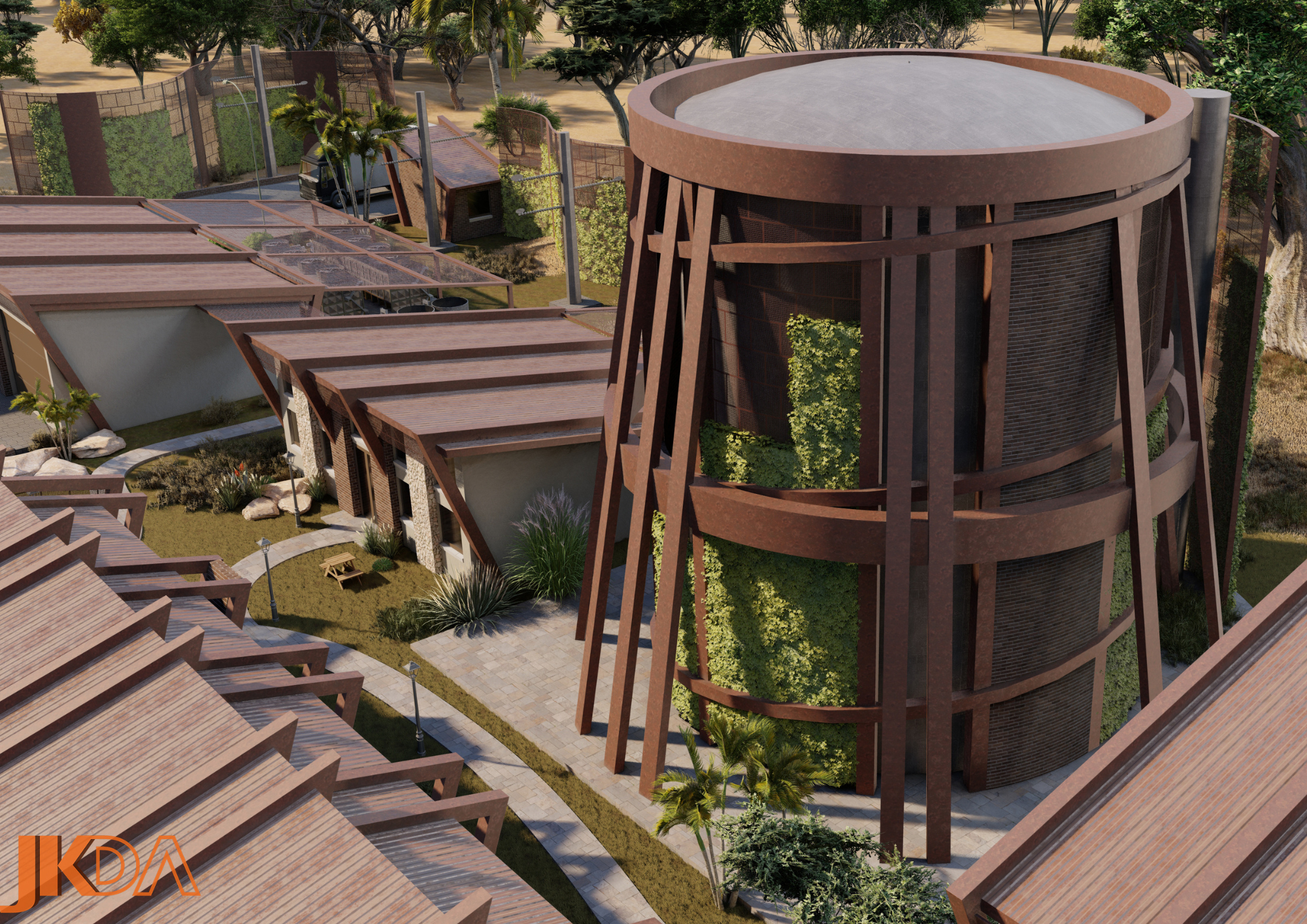
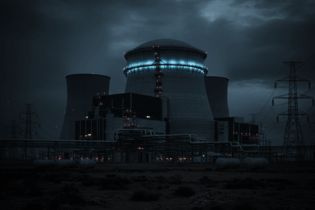
The tower housing the on-site reactor, which will power the estate

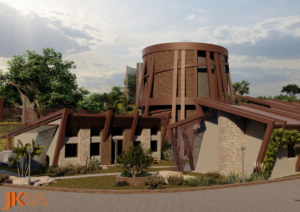
The Kudu design, intended for African savannah environments, draws inspiration from the vertical lines of natural camouflage found on species such as the kudu and zebra. The reactor’s form echoes the African drum, symbolising energy as the “heartbeat of the community.” Columns and trusses use raw, locally sourced materials that weather naturally, reducing heat absorption and maintenance requirements.
“The Kudu embodies both strength and grace,” Kemm says. “It represents the elegance of African engineering, powerful, sustainable, and inherently local.” The Oryx design, optimised for arid desert regions, incorporates raw tinted concrete, natural stone, and Corten steel, all of which weather organically without the need for external maintenance. The structures are shaped to mirror the undulating forms of desert dunes, while native plants and rock formations are used to promote biodiversity and ecological continuity. “These designs are more than cosmetic,” Kemm explains. “They’re functional embodiments of environmental adaptation. They cool naturally, use less energy for climate control, and involve local contractors in construction.” Future design variations, including the Sable, will address Arctic conditions and high-latitude climates, while urban designs are being developed for metropolitan settings, emphasising public engagement and aesthetic integration.Environmental and operational sustainability
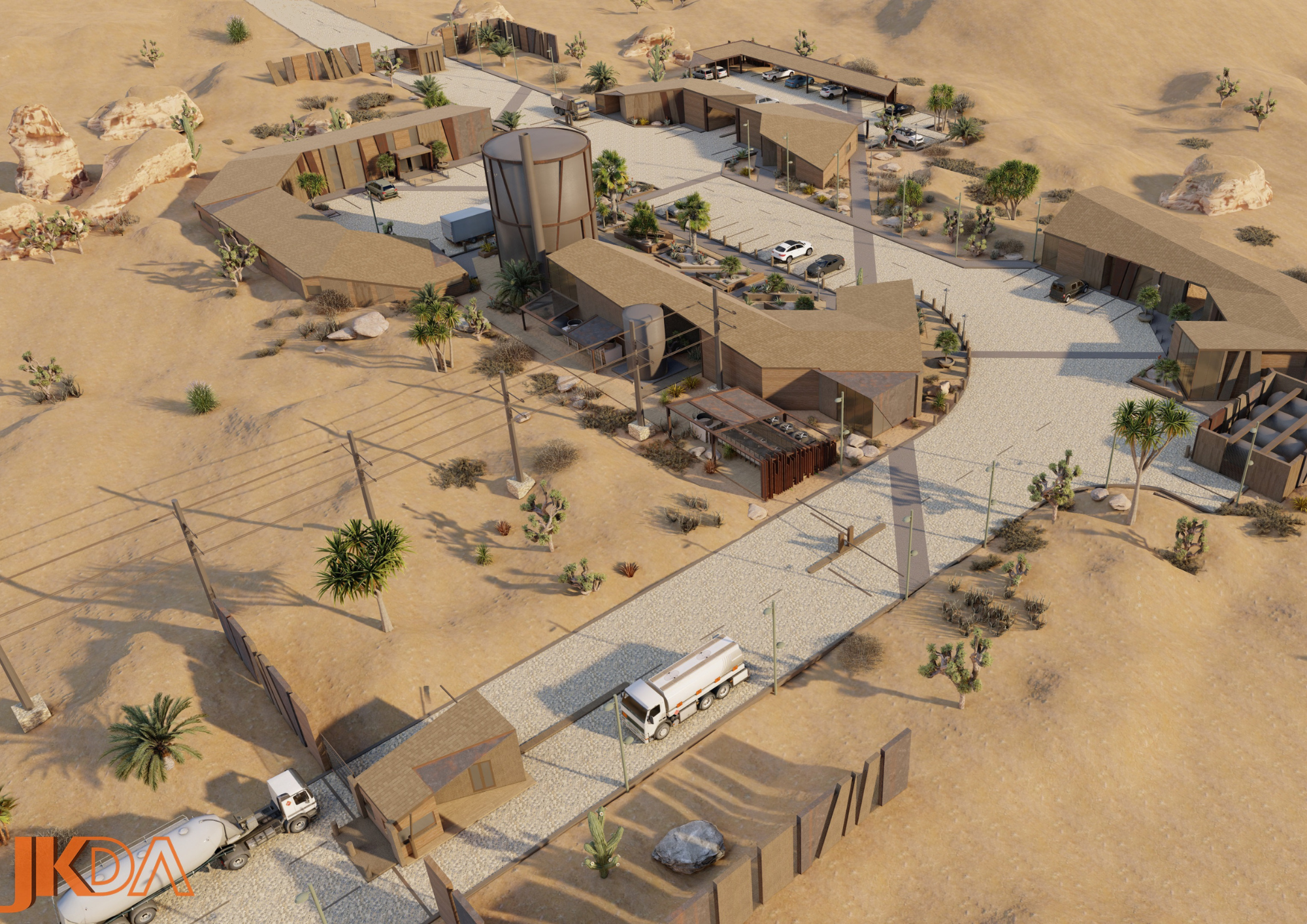
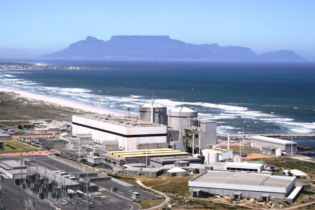
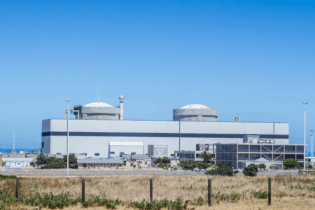
These small modular reactors are being implemented in key locations to show the potential for this technology
Strategic partnerships and global ambitions
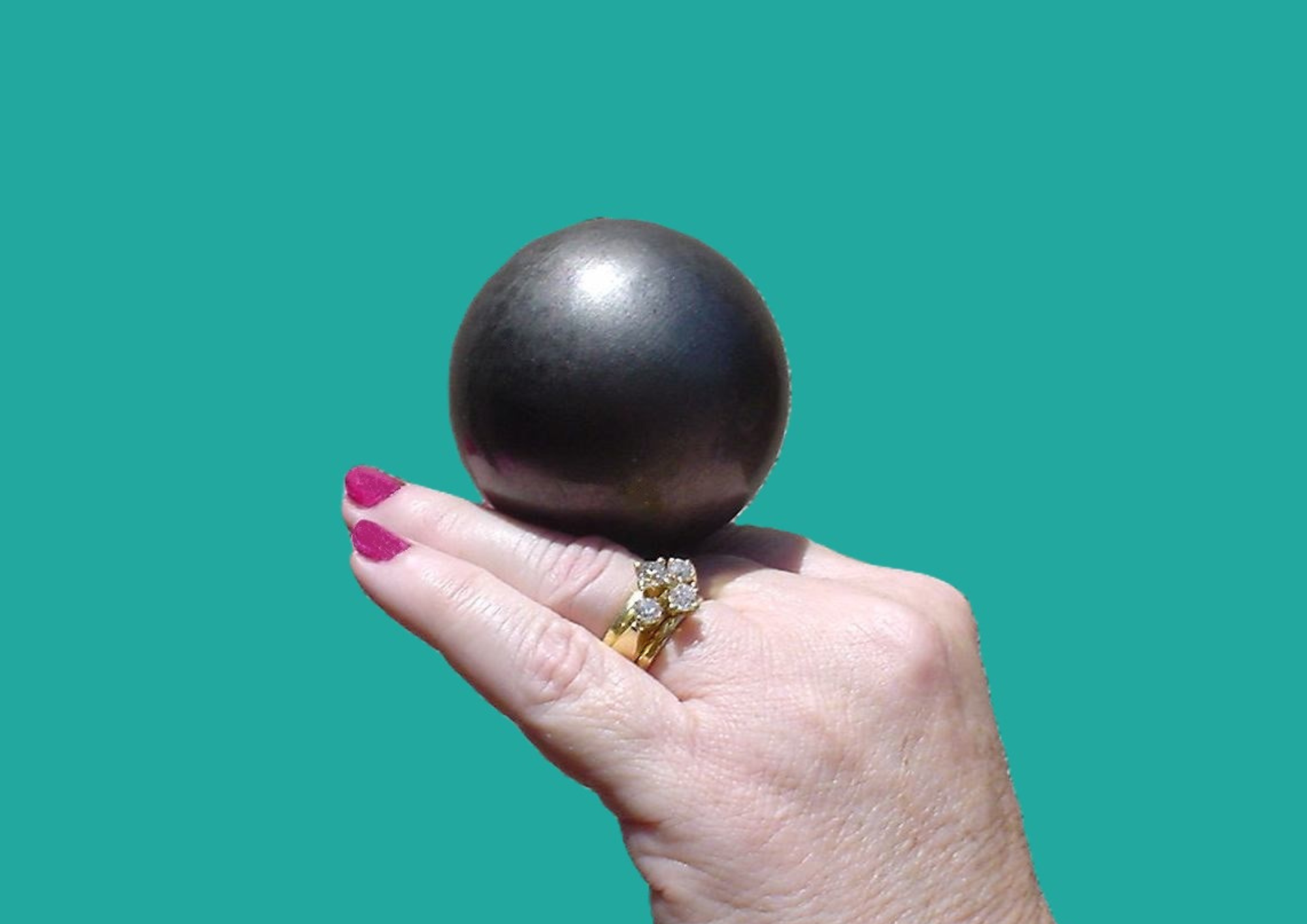
Size of the fuel ball needed for the Kudu reactor
“We’re ushering in a new era where nuclear power is not hidden away behind concrete walls,” concludes Kemm. “It’s something that communities can see, understand, and take pride in. Clean, compact, and beautiful, this is the future of nuclear energy.”