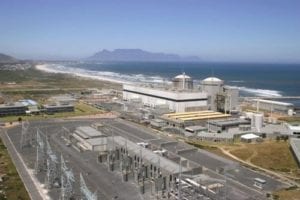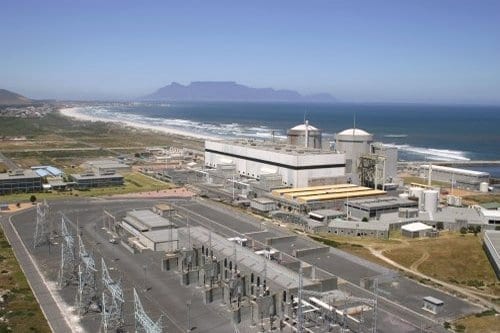
Koeberg power station.
This was announced by Public Enterprises Minister Lynne Brown at KPMG’s results presentation of a study based on the power station’s economic impact on the province, as well as the South African economy.
Koeberg currently supplies approximately 5.6% (1,860 MW) of the power used in South Africa and 50% of the Western Cape’s energy demand.
“According to KPMG, between 2013 and 2016, Koeberg contributed R29 billion to the GDP of the Western Cape Province (1.4% of the provincial GDP) and R23 billion to the rest of the South African economy,” Brown said.
She added that the power station is expected to add R27 billion to the Western Cape’s provincial GDP and an additional R22 billion to the South African economy between 2016/17 and 2019/20.
Brown said Koeberg, as well as its web of suppliers and service providers, contributed R8 billion to Western Cape’s provincial revenue between 2012/13 and 2015/16 through direct and indirect tax collection, and contributed another R9 billion to the fiscus over the same period.
“Boiling it down to household level – the coalface of poverty, inequity and unemployment – the Koeberg project added R20 billion to household income between 2012/13 and 2015/16,” she said.
“A total of R3 billion (13%) went to low income households in the Western Cape,” she added, and said that nationally, Koeberg contributed R15 billion to household income between 2012/13 and 2015/16.
Job creation
Brown emphasised the importance of job creation within the construction industry, maintenance teams, and producers of goods and services.
She said they stimulate, and sometimes almost single-handedly carry, entire local economies and communities.
“Between 2016 and 2020, Koeberg expects to weigh-in with an average of 2,300 direct and 42,000 indirect jobs per annum in the Western Cape,” Brown said.
“We are not talking menial labour,” she added. “The income levels for Koeberg’s employees is above the industry average in South Africa, which points to the highly skilled nature of the job opportunities available at Koeberg.”
Brown said that nationally, during the same period, the power station expects to contribute approximately 63,000 jobs. “These are huge numbers,” she said.
Matshela Koko, Eskom’s chief executive was one of the attendees. He welcomed the findings of the study.
“We are pleased that independent studies, such as the one done by KPMG, affirm Eskom’s significant footprint as these outline the economic and social contribution of one of Eskom’s 27 power stations we have in South Africa,” he said.