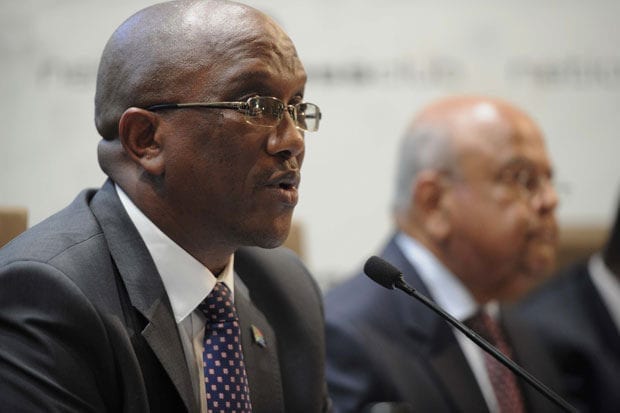
Auditor General, Kimi Makwetu. Picture: Supplied
However, the very topical issue of irregular expenditure was also addressed. CESA president Lynne Pretorius said that the organisation had partnered with government to unlocking project and business opportunities.
“Our industry presents a particular skill set that is required in the delivery of infrastructure to meet South Africa’s social and developmental goals,” Pretorius said. “This is particularly relevant in implementing an improved procurement environment for the consulting engineering profession.”
CESA added that it was is in this spirit of working and partnering with government that it found the Auditor General Kimi Makwetu’s irregular expenditure report “disheartening and concerning”.
The report revealed that irregular expenditure has increased by nearly 80% to R46,36 billion in the 2015-2016 financial year.
“The main reason for the increase in irregular expenditure was the continued non-compliance with supply chain management regulation and lack of consequence management,” CESA said.
It added that a definite potential source of the most recent irregular expenditure figures was a result of the commissioning of professional engineering services where insufficient planning was done.
“Inadequate contract management through the infrastructure delivery process is another,” it said.
CESA has fully supported the new standard for infrastructure procurement and delivery management that was launched by National Treasury this year. “CESA seeks to enforce the adherence to best practices in this process,” it said.
The council said it would also aim to address sources of leakage by becoming a trusted advisor to the public sector, while keeping its industry members honest.
“The unfortunate thing is that not all consulting engineers are registered with a body like CESA,” Chris Campbell, CESA CEO said. “There is no accountability for those who choose to fly under the radar,” he concluded.
The end of the Indaba also saw CESA agree to assist client bodies, such as the province of KwaZulu-Natal, to fulfil its vision and mission in support of improved service delivery.