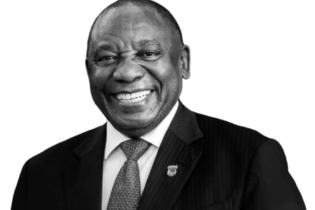
Africans must not expect others to invest in what we ourselves, are not ready to invest in, said new finance minister Malusi Gigaba at the World Economic Forum in Durban.
Speaking about investing in infrastructure to grow the country’s economy, Gigaba noted that while South Africa’s resources may by limited, “they are not insignificant”.
He said government was going to focus on building the country’s infrastructure as it would provide basic services, electricity and transport networks to the private sector in order to “produce and transport world class goods and services”.
“From a continental perspective poor infrastructure continues to undermine intra-continental trade,” Gigaba said. “While Africa’s infrastructure backlog is estimated at around US$100 billion per year, regrettably, available financing covers only half of this.”
He explained that the combination of years of underinvestment and exploitation has meant that African roads and railways were mainly designed and built to facilitate transportation of raw minerals and resources to markets outside the continent.
However, he noted that the country needs infrastructure that supports industrialisation, the beneficiation of minerals and the delivery of basic services to its people.
“We need social infrastructure to support a globally competitive education system, such as schools, universities and housing for students,” he said.
Consequences of poor infrastructure
Gigaba said poor infrastructure has resulted in “devastating” effects in South Africa.
He said intra-African trade was shockingly low at approximately 11% whereas intra-Asian and North American trade was both 40%. He added that unlocking industrial activity, intra-Africa trade, and growing Africa’s share of global trade, was crucial for Africa’s development.
Another point he made was that funding was not missing for such projects, but that there was a need for well-structured and bankable projects.
“South Africa has over R4 trillion worth of projects in our pipeline, the National Infrastructure Plan,” he said. “Government is spending R1 trillion over the next 3 years in funding and delivering the most strategic and urgent of these.”
However, he said what holds the country back was projects which have not been “rigorously packaged through the various feasibility stages”.
He also said the country needed to put in place policy and regulatory regimes which attract investment and use state procurement strategically.
“The Africa infrastructure report pointed out that weak policy in sectors like electricity and transport can hold back investment,” he said.
To those in attendance, he posed the question: “How do we work with other African countries to develop more infrastructure projects using African, rather than foreign companies?,” and concluded by saying: “Our state owned companies need to build relations on the continent, as there are many projects which they can co-deliver with our African partners, rather than these being delivered by foreign companies.”