Exploring how finance is shifting to support South Africa’s water-energy-food nexus, with a focus on sustainability and long-term resilience.

Jay Bhagwan, executive manager of water use and waste management for the Water Research Commission
Individual crises can seem easier to navigate than multiple interlinked crises. Unfortunately for South Africa, its big three crises, water, energy, and food, are interlinked. This nexus is an obstacle for the country to overcome. Understanding both the nexus is the first step in unlocking holistic solutions.
Water Research Commission’s Jay Bhagwan says, “fragmented and linear approaches to water, energy, and food are shortsighted. When we introduce sustainability as a key parameter of solving these crises, we can see how they are interconnected and how cheap energy, cheap water, and cheap food are growing as a challenge to the country.”
While water, energy, and food can seem mutually exclusive, understanding these as forming a nexus is crucial to resolving the crisis.
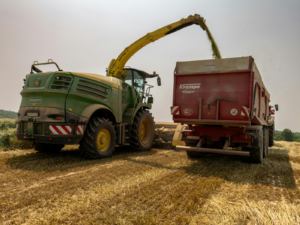
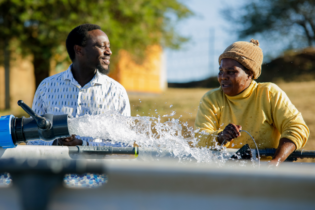
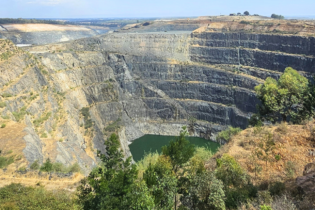
Bhagwan adds, “Energy and water are deeply interdependent. Energy systems require significant amounts of water – for fuel extraction, mining, hydropower generation, and especially for cooling in power plants. Conversely, the water sector relies heavily on energy for pumping, treatment, distribution, and safe wastewater management. This interconnection extends to food production, which depends on both water and energy. When the water sector is under stress, it impacts energy systems, which in turn worsens the water crisis and ultimately threatens food security. To illustrate the scale: agriculture – vital to South Africa’s economy and a major source of employment – consumes about 60% of the country’s fresh water.”
Perspectives from the financial sector

Deerosh Maharaj, executive head of energy, infrastructure and mining for Standard Bank
Asking anyone in the water or energy sector what a key challenge is usually results in them answering, ‘financing and funding.’ For Derosh Maharaj, executive head of energy, infrastructure and mining for
Standard Bank, financing is ever-changing and adapting to the market.
He says, “For a few years now, financing around water and energy has shifted towards themes of sustainability. If you wanted financing, you had to highlight the sustainability of the project, and this wasn’t always the case. Financing is dynamic, and as trends emerge and become viable, the financing moves towards that. Where at one point cost was a driving factor, sustainability is starting to drive businesses’ decisions.”
This leads to an optimism around South Africa’s biggest challenges, whereas the general public and businesses become more aware, their consumer power leads the financing towards sustainable solutions, which in part aid the fight against the crisis.
Where sustainability can incur greater costs, Maharaj says, “With enough time and support economies of scale kick in, if you look at solar in South Africa, the cost has gone down due to demand and supply, and if we look at other alternative energy solutions like batteries we can foresee a similar trajectory.”
However, water is a more difficult sector to leverage financing for, and for years, alternative water solutions were deemed very risky. Maharaj adds,” As financiers, we struggled with water due to the lack of commercial viability, but when Cape Town hit Day Zero, we all had to evaluate our stance and take water very seriously. We had to figure out how to support businesses and come up with alternatives.”
While finance looks at returns on investment, the sudden water crisis in Cape Town reframed the conversation from ‘how do we make water a viable sector’ to ‘what are the costs of not securing water?’ This rephrasing allowed water to pick up pace in the financing world, and while Maharaj notes that water is lagging behind energy, the growth is tangible, and it is only looking to grow.