WASA interviews Alvin Anderson, country director of BORDA South Africa, on the organisation’s local initiatives.
Globally, 3.4 billion people lack safe sanitation, and untreated wastewater continues to pollute rivers and groundwater. Since 1977, BORDA (Bremen Overseas Research and Development Association) has worked to close this gap in over 25 countries.
Founded in Bremen, Germany, BORDA promotes decentralised wastewater treatment, faecal sludge management, and non-sewered solutions, while strengthening local capacity and partnerships for city-wide inclusive, climate-resilient sanitation.Strengthening institutional capacity

Alvin Anderson, country director, BORDA South Africa
- Developing instruments and tools – Practical guidelines and catalogues on financing, licensing, and technical options are being created to help municipalities and developers navigate the complexity of decentralised sanitation. A digital dashboard is also under development, giving users an interactive way to match needs, budgets and regulatory requirements with technical solutions.
- Strengthening capacity – At least eight accredited training modules will be rolled out through certain institutions. Over 400 specialists and 40 trainers are expected to be trained, with municipalities engaged through workshops and on-the-job sessions. New infrastructure, such as demonstration Decentralised Wastewater Treatment Systems (DEWATS) and faecal sludge treatment plants (FSTPs), will serve both as functional systems and training tools.
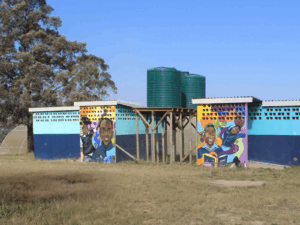
- Monitoring and evaluation – Existing systems, like the recently constructed Julukandoda Primary School DEWATS located in KwaDulela, Howick and the Newlands Mashu DEWATS site in Durban, are being reassessed to ensure long-term performance. Well-performing systems will be upgraded into ‘lighthouse projects,’ serving as demonstration and learning sites.
Partnerships at the core
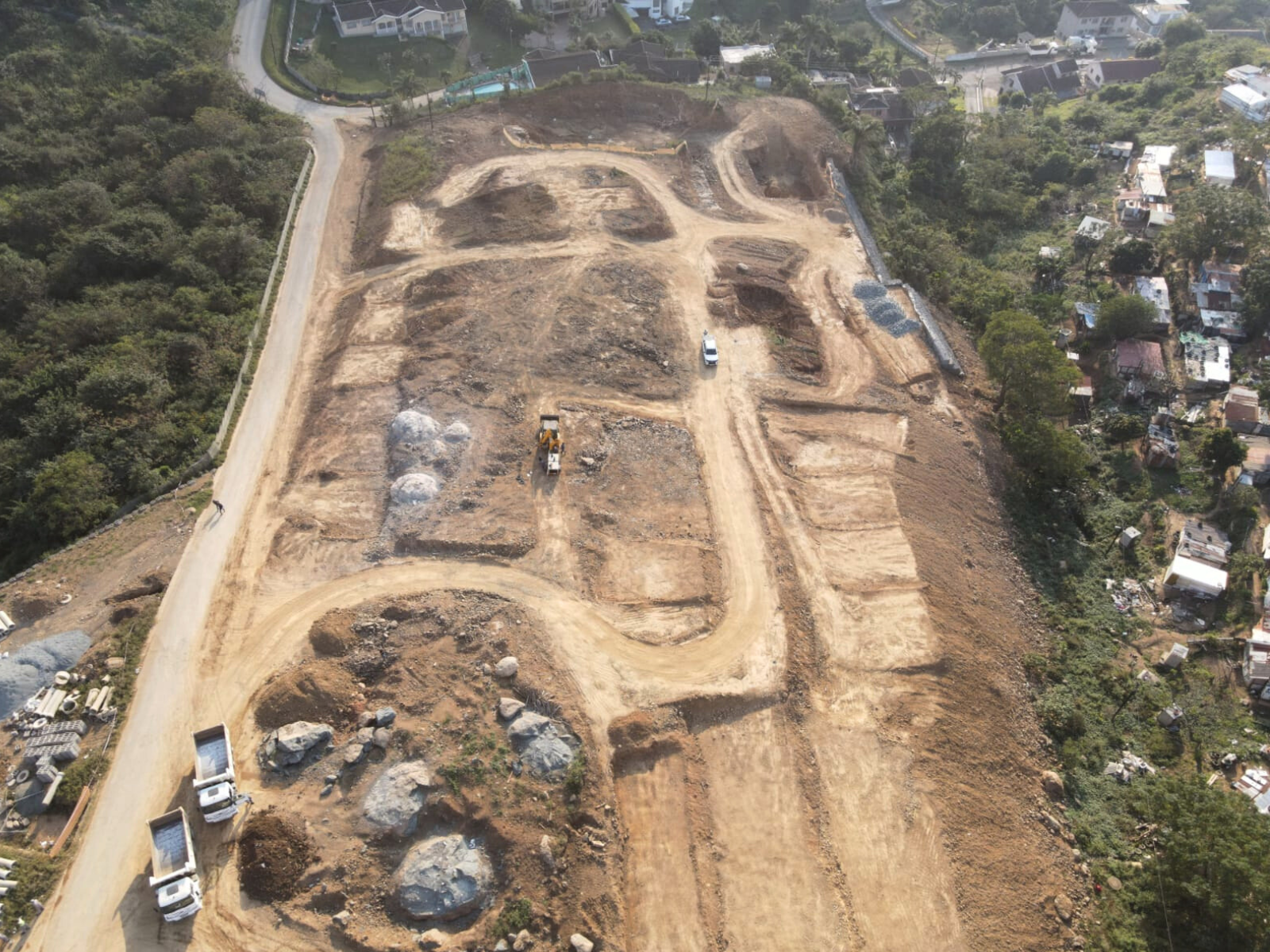
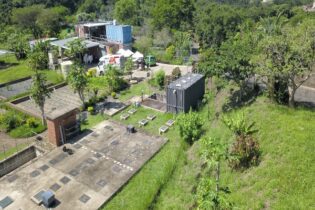
Banana City DEWATS Housing Project

The Banana City Housing Project is another example. It is a DEWATS initiative that provides sustainable sanitation services to 106 households as part of phase 1 and 2 with the overall goal of 413 (phase 3 & 4). With a daily treatment capacity of 75.9 m³ and an allocation of 500 ℓ per household, the system processes wastewater through a series of natural treatment steps — including a settler, anaerobic baffled reactor, anaerobic filter, planted gravel filter and planted sand filter — before safe discharge. By treating wastewater on-site, the project eases the burden on municipal infrastructure, supports healthier living conditions, and demonstrates an environmentally friendly, low-maintenance alternative to conventional sewer systems. Following a six-month monitoring period to confirm compliance with regulatory standards, the facility will be handed over to eThekwini Municipality-Water and Sanitation Unit for long-term management.
Anderson notes that one municipal official once described the site trainings and knowledge transfer facilitated with BORDA as ‘sanitation tourism’. “BORDA has indeed showcased these two projects to several municipalities as strong proof-of-concept demonstrations. They give credibility to the DEWATS concept within South Africa.”More recently, memoranda of understanding have been signed with the City of Cape Town and local municipalities such as Emalahleni Local Municipality in Mpumalanga. Partnerships extend beyond government. BORDA works with training institutions, private developers, and community-based organisations. It also convenes sector dialogues, such as ‘Sanitation Breakfasts,’ to align stakeholders on financing and regulatory issues. According to project manager Mendy Shozi, successful partnerships are built on openness, readiness to engage, and shared responsibility:
“We don’t push our technology. We look for partners who are eager, willing to learn, and committed to walking the journey with us. Because once we leave, they must own and maintain the system.”
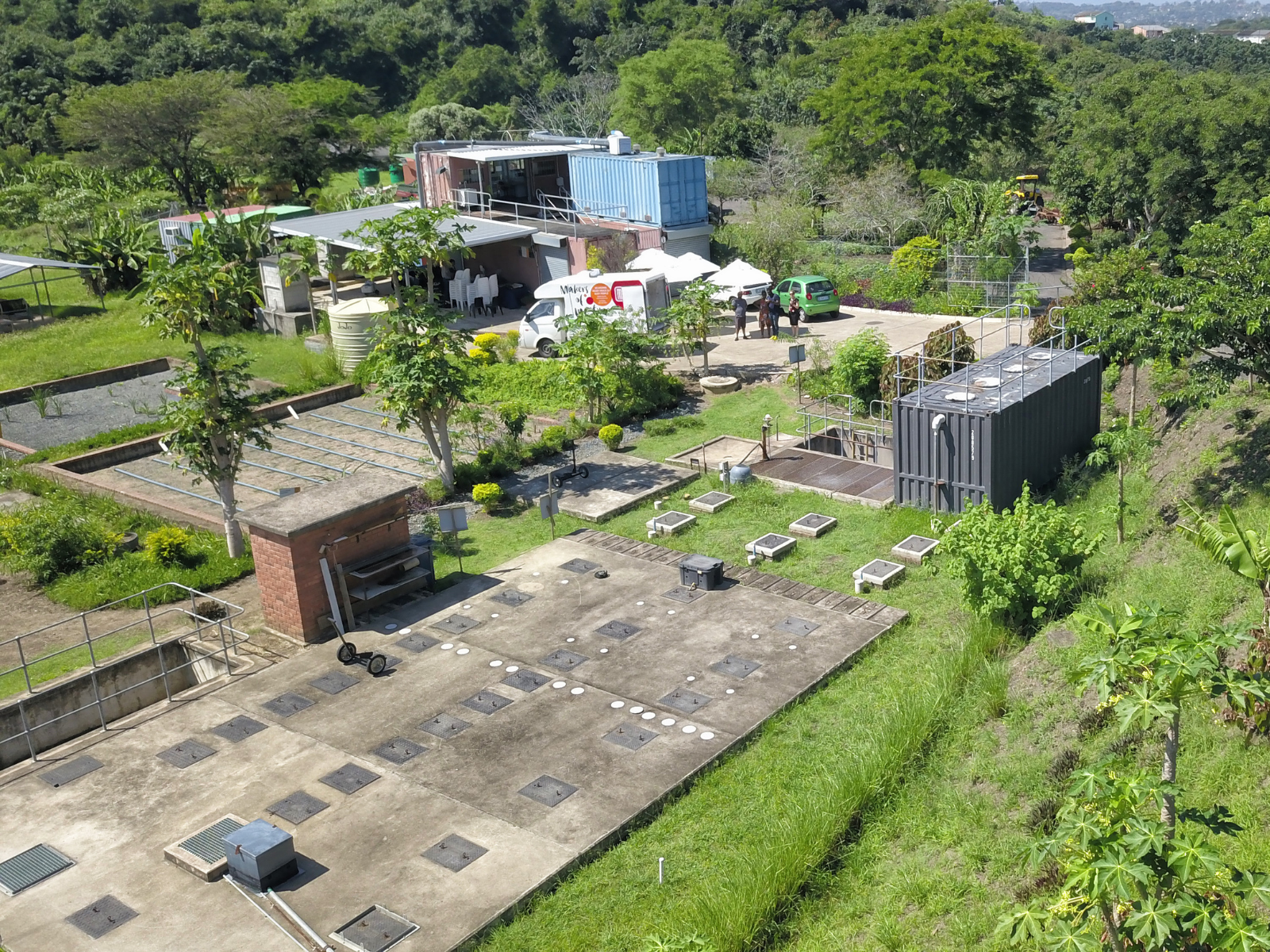
Newlands Mashu DEWATS demonstration site