Daniel Motshwane, founder of Afrique Rising Trading
South African rural and informal communities are poised to aid the circular economy. Daniel Motshwane, founder of
Afrique Rising Trading (ART), a Pan-African social enterprise, aims to give communities the tools to bring income and ‘re-industrialise’ these areas that need it most.
“When I talk about re-industrialising, I mean going back to a time when communities were vibrant with processing and employment opportunities,” he explains. “Our old people were particularly good agro-processors, even though they were not called that. That is where I want to go with mushrooms, to industrialise these communities.”
Motshwane’s interest in mushrooms began in 2018 while visiting Malawi, where he encountered a couple training in mushroom farming. On his return to South Africa, he researches the sector extensively. “I saw a huge gap, especially for commercial farming within the black community,” he says.
“Mushrooms are labour-intensive, they bring social cohesion, and they have incredible nutritional properties, high in vitamins, proteins, antioxidants, and even anti-cancerous compounds.”
Why oyster mushrooms?
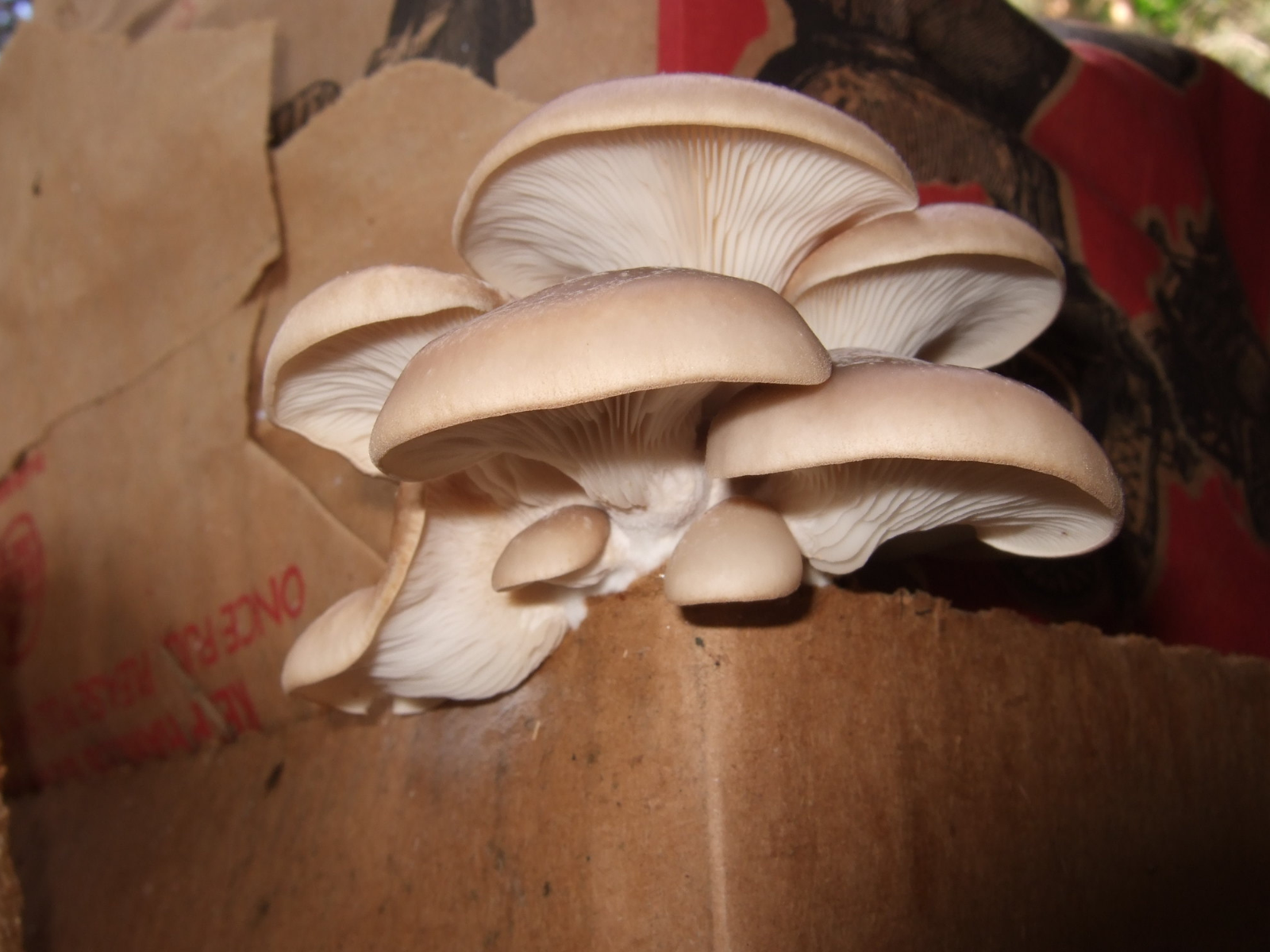
Mushrooms growing in waste. Wendell Smith’s photo, licensed as CC BY 2.0
Globally, oyster mushrooms are the second most widely grown variety, and Motshwane believes South Africa is only beginning to catch up. “They are natural decomposers. We can take many agricultural wastes and use them to grow mushrooms, which means we are also taking care of the environment and mitigating climate change,” he says.
“And you can harvest them from 21 days, which makes them an excellent starting point.”
Oyster mushrooms present an innovative solution to the growing problem of organic waste. Long known as nature’s recyclers, fungi break down tough organic matter and release nutrients in the process. Now, researchers and entrepreneurs, like Motshwane, are turning this natural ability into practical waste management strategies.
Cultivating mushrooms on discarded materials such as coffee grounds, sawdust and crop residues diverts waste and creates value for those cultivating. Motshwane adds,
“The communities we engage with source waste from their environment, many rural areas don’t have good waste collection services and this way their waste becomes a resource.”
This form of recycling embodies circular economy principles: waste is transformed into valuable products while reducing reliance on landfills and cutting greenhouse gas emissions. The approach is gaining particular interest in low-resource settings, where mushroom cultivation can create jobs, enhance food security and provide sustainable alternatives to conventional waste disposal.
More than mushrooms
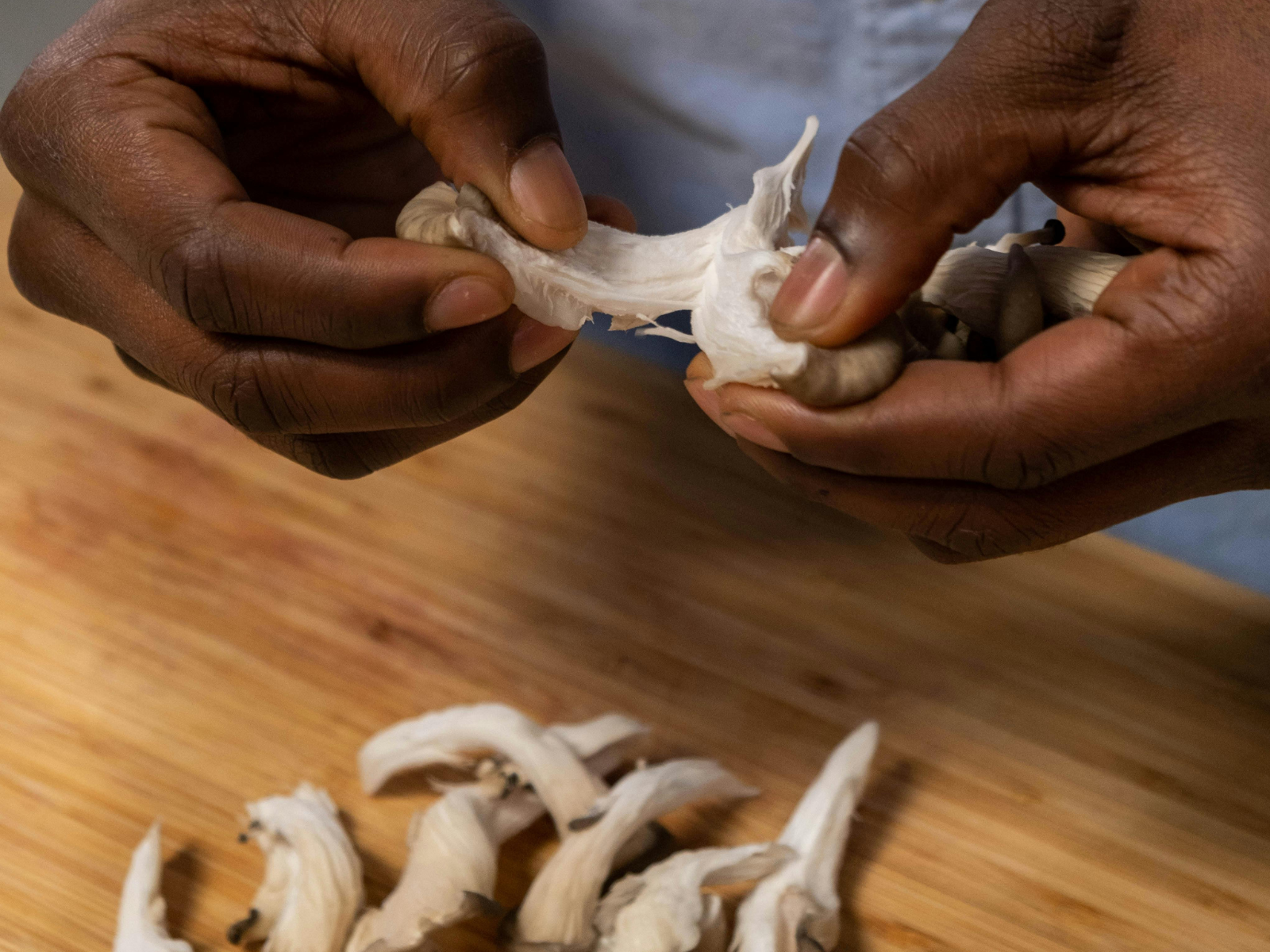
By growing mushrooms communities have access to training, and income in this growing market
Motshwane says that this goes beyond fresh produce. “I started with pastry products,” Motshwane adds. “I developed bread and muffins with mushrooms, and now I am working on ready-mix premixes for hotels, as well as mushroom coffee. There is even interest in capsules, skincare products, and mushroom kebabs, because oyster mushrooms have a meaty texture.”
Central to his mission is involving communities directly. “We advertise our programme through WhatsApp groups, which works very well. People spread the word,” Motshwane explains. Once a group is mobilised, training follows, both online and in person. “Online training has really helped, especially across provinces and even in other countries. It also means I can provide ongoing mentoring.”
The model is designed for scale. “I’m developing growing rooms that can be assembled on site in communities,” he says. “We are also creating a franchise model, where people can produce mushrooms and make their own value-added products. That is where the real opportunity is, products that can be exported, extend shelf life, and create jobs.”
Waste management and circular economy are at the heart of his work. “Mushrooms grow on different agricultural residues, sugarcane bagasse, maize stalks, sunflower husks, wheat straw, banana leaves, coconut husks. Most of these would be burnt, releasing carbon emissions. Instead, we capture that waste for food production,” he explains.
The cycle continues after harvesting. The spent mushroom substrate, or SMS, is used to produce animal feed pellets, compost, worm farming inputs, and even bioplastics.
“We can make bricks, packaging materials, and alternatives to polystyrene, all biodegradable,” says Motshwane. “This is the circular economy in action.”
Pan-African vision
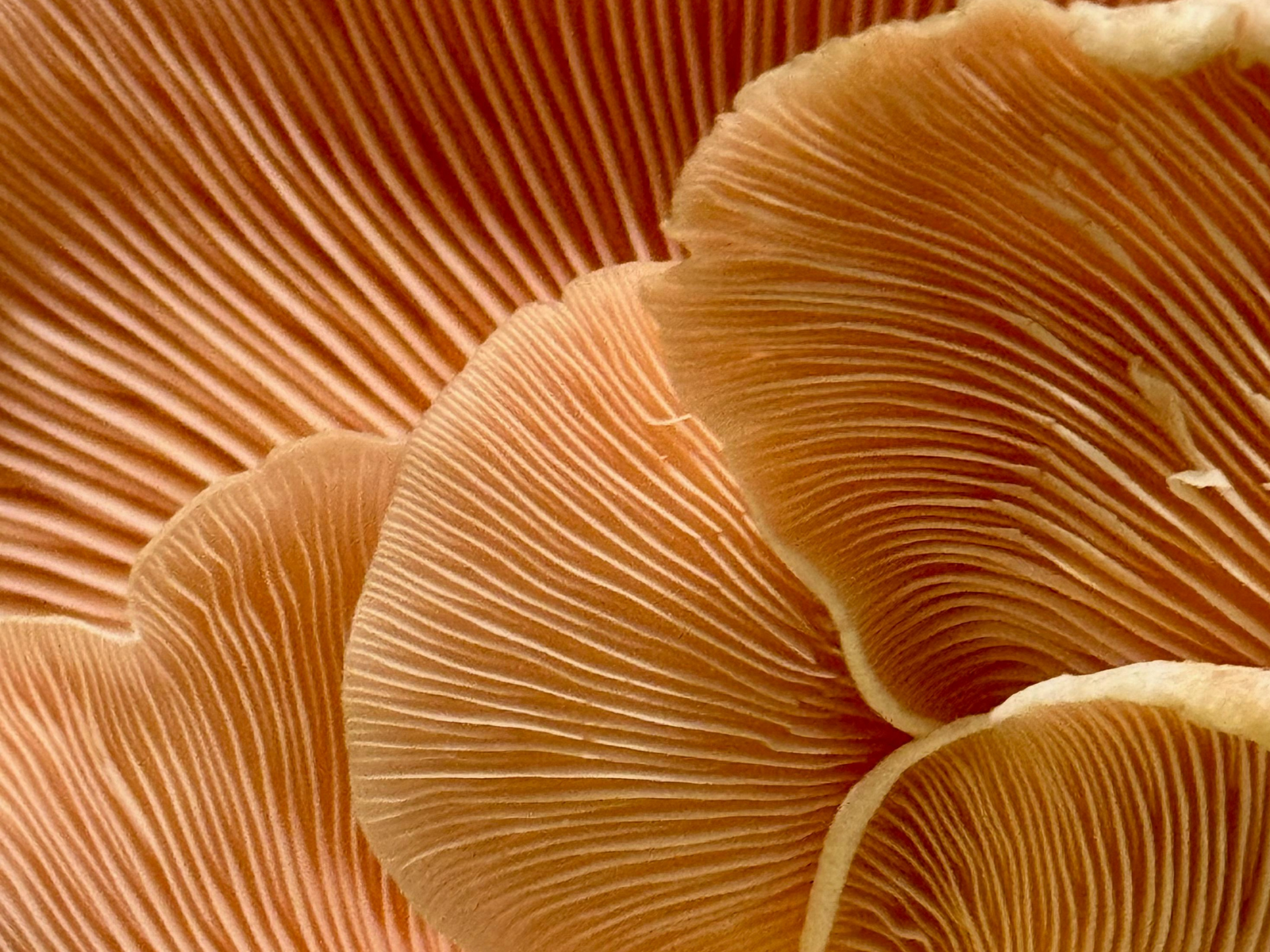
Oyster Mushrooms are the second most grown mushroom in the world, and South Africa is catching up on this market
Motshwane positions his business as Pan-African from the outset. “Before I even started the company, I created networks across the continent,” he says. “I have travelled to many African countries, hosted entrepreneurs, and built relationships. People prefer doing business with someone they know personally, and I wanted to create that footprint.”
His efforts are recognised with awards, including from the British Council in Ghana. Partnerships now stretch from Malaysia to India, with plans for biofuels, construction materials, and large-scale waste-to-value projects. “But first, I needed capacity. Farmers must be trained so that when we move into mushroom waste products, we have the volume required,” he notes.
Motshwane is now preparing to scale up with government support and private partnerships. “The mushroom industry is huge, with over 14,000 known species. We are only working with one now, but as we grow, more opportunities will open for many other people.”
Despite the challenges, his vision is unwavering: “Everything that is going to happen now is going to move very quickly. The model touches on all the points that government and communities want to see, jobs, sustainability, innovation, and African collaboration.”