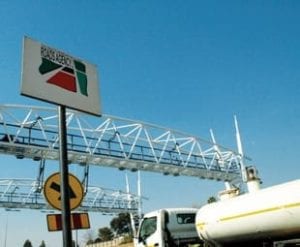
As you will be aware, the Association voiced its concern about the proposed toll scheme from 2007 when the first discussions were held with SANRAL. The direct result of these discussions was that SANRAL presented the proposed scheme to members at a number of Conventions as well as to the Board.
The RFA has – from the outset – stated that the road freight industry is willing to pay for good road infrastructure, maintenance, route improvement and development. However – following the first publication of the proposed tariffs and operational details in November 2010 – the RFA began to voice strong opposition to the proposed tariffs of the GFIP as these were seen to be exorbitantly high when compared with other toll routes in the country. Opposition took the form of a public media campaign and government lobbying programme – supported by an economic impact assessment study on the then proposed tariffs. This was the only focussed economic opposition to e-tolls at that stage – the rest being more focussed on opposition to the principle of tolling. The immediate result was that the Department of Transport called for a series of Stakeholder engagements following the Minister of Transport’s decision to delay the implementation of tolls (then scheduled for April 2011). This engagement saw the first tariff reduction for freight vehicles. The Association continued its media campaign as well as lobbying with SANRAL – where further tariff reductions were proposed. This then had the result of high-level discussions with the then Deputy Minister of Transport and SANRAL. Following on increased public pressure and opposition from various lobby groups including the RFA the Department of Transport indefinitely postponed the introduction of e-tolls whilst further discussion took place – culminating in the publication of a further set of reduced tariffs in April 2012 together with provisions for the policing of non-payment of tolls – the intended date of implementation being the end of April 2012. The Association strongly opposed the policing powers and measures (comment from the RFA was covered by all major papers) and the gazette was withdrawn. On the eve of the pronouncement by the High Court in respect of the Interdict brought about by the Opposition to Urban Tolling Alliance, the Department of Transport postponed the implementation of e-tolls following an agreement reached with COSATU. Treasury then appealed the Interdict which was set aside by the Constitutional Court in October 2012. Fuel levy as alternative to e-tolls? Whilst the Constitutional Court was deliberating the matter – the RFA met with the Deputy President (Chair of the Inter-Ministerial Task Team appointed to solve the e-toll crisis). During these interactions, the RFA reiterated its call for a fuel levy to cover the expenses already incurred by SANRAL (this was the construction cost related to the roads and gantry system only). This was generally accepted as a possible alternative to e-tolls and the RFA and Treasury were requested by the Deputy President to calculate the financial requirements of the GFIP and the resultant fuel levy that might then be required. In the follow-up meeting – Treasury placed the following alternatives to e-tolls on the table: • national 12c per litre fuel levy fixed for 08 years for Phase 01 of the GFIP; • higher level of taxation in the top income tax bracket; • doubling of the Gauteng vehicle licence fees; • combination of any of the above options. Treasury noted that:- the R3 Billion VAT claimed by SANRAL would need to be repaid in some form and is not covered in the proposed 12c fuel levy;
- Phases 2, 3 & 4 of the GFIP would need to be resolved and that the fuel levy would have to be raised in future to accommodate these.

What has the RFA Lobby Campaign achieved?
• Tariffs for Class B & C vehicles down by 51% of original tariff excluding discounts – Class B: R1.56 down to R0.75 and Class C: R3.98 down to R1.51 (including VAT); • Time of day discount extended (freight given 20% discount within the peak traffic periods from 08h30 to 10h00 and 14H00 to 16:00 due to the delivery demands of goods); • Time of day discount increased (freight given 30% discount from 23h00 to 05h00); • 31% e-tag discount (increased from 25% ) off the base tariff; • Capped amounts will allow members to include the full cap in their contracts and can be claimed as the e-Tolls are a statutory charge; • Ring-fenced funds (tolls are in effect a ring-fencing mechanism) that will be dedicated to the building and maintenance of roads as opposed to the fuel levy which has to be apportioned and allocated to roads on a matter of government priority; • The RFA has been acknowledged as a key stakeholder and will be closely consulted in all future road infrastructure programmes; • Independent Regulator which is now in the process of being set up (RFA previously called for an independent regulator and lobbied against the proposed “Economic Regulator” that would have been set up within the Department of Transport and would have prejudiced operators); • Minimum period for comment on published government gazettes set at 30 days. The RFA has commented on the GFIP since 2007 – from when the first comment on the announcement of the Intent to Toll was forwarded to SANRAL through to various gazettes detailing tariffs and procedures in 2010 and 2011. During this process the RFA obtained legal advice on possible options for relief should lobbying not have been successful – and was advised that administrative matters under the PAJA Act could be rectified. From the onset we were advised that the exemption of certain categories of users with the user pay principle was supported by the Constitution and that it allowed for the policy decisions made by government in effecting the e-tolls. This has proved to be sound advice as many issues – including “adequate consultation” – were in deed rectified by the Department of Transport following RFA lobbying around consultation, access to information and determination of tariffs. RFA comment on latest gazettes Whilst we still believe that the fuel levy is the most efficient method to finance roads, we have agreed to support e-tolls based purely on current cost and the introduction of an independent regulator. We still maintain that the administration cost in respect of collection and our internal administration could have been avoided if fuel levies were utilized and earmarked to fund the upgrades of freeways. However with escalating fuel prices the current discounted e-toll tariff structure will have a lesser cost impact on operators. The RFA has in addition lobbied for: • Time of day discounts from 30% to 35% and 20% to 25%; • The current e-tag discount of 31% be increased to 40% for RFA members only; • Overall cap of R1 500 per vehicle (both class B and C); • Annual toll tariff increases would be limited to CPI increases. We strongly opposed the Cross-Border Road Transport Agency (C-BRTA) being given the function of collecting e-tolls following the qualified audit the Agency has just received due to it not being able to assess the completeness of penalties and other revenue. In addition a number of investigations into allegations of fraud and other irregularities at the agency are under way. In addition the RFA has also noted its concern that the proposal to allow SANRAL to operate outside of the National Credit Act may create further complications when measures are instituted to recoup / collect owed tolls (or any outstanding financial obligations). The RFA has made it clear that we will support the tolls based on the rates and discounts on GFIP only and may not support any future e-toll expansion. We have also clearly stated that our support of the GFIP does not equate to a blanket approval of any other toll project and would require open and honest access to any other proposed toll project so that the impact on operators and the economy alike can be fully ascertained well in advance.