The creation of an Infrastructure Codesa, similar to the Convention for a Democratic South Africa (Codesa), will maintain the infrastructure development momentum that the country has experienced since 1994.
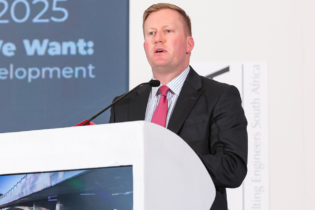
WHILE SOUTH Africa is, this year, celebrating its hardfought for 20 years of democracy, it has also experienced a substantial increase in infrastructure projects, namely the construction of the Gautrain system, the Rea Vaya rapid transit system in Gauteng, the World Cup stadiums across the country, the King Shaka International Airport in KwaZulu-Natal, the Nelson Mandela Bridge in Johannesburg, dams such as De Hoop Dam in Limpopo, the Medupi and Kusile Power Stations that add power to the national grid and many more impressive infrastructure projects. However, the momentum the country built up since obtaining independence seems to be waning, mainly due to the global economic crisis. PPC Ltd, a pioneer in the Southern African cement and infrastructure industries, believes that an Infrastructure Codesa could help to relieve pressures on the industry and stimulate infrastructure developmentclevels last seen in preparation for the 2010 World Cup. “It is clear that infrastructure bottlenecks by both the public and private sectors need to be addressed, not through agreeing to generic accords but through implementable plans with clear roles, responsibilities and deadlines. The methodology is simple. Before 1994 people wanted a democratic South Africa. The National Party and the ANC both raised issues that were preventing them from moving forward in this regard. So, they put together a working group on each of those issues and came back with solutions. All the things that we see today were compromises that emerged from discussions and negotiations,” says Ketso Gordhan, PPC Ltd’s CEO. Gathering the national government and private sector in one room could create a platform where many of the problems currently faced the industry are phased out. Gordhan is adamant that negotiations between the national government and the private sector would substantially increase the number of infrastructure developments completed. Gordhan believes there are various reasons why success has been experienced in the last 20 years. Firstly, it is due to a strong political will to get the job done. “If there is a strong political will to get something done, the chances of success are much higher. We saw that with the Gautrain project; it was because the MEC, premier and the national government really wanted the project to get done,” he explained. Secondly, the existence of strong officials on projects was crucial. “They knew how to get decisions through the various mechanisms in government, how to interact with the private sector and how to get the best advice to make things to happen. A strong official makes a huge difference,” says Gordhan Take Gauteng, for example: In her State of the Province address on 24 February 2014, Premier Nomvula Mokonyane stated that the province embarked on a strategic economic infrastructure initiative which was intended to turn the province around. “The first generation of major infrastructure projects branded as Blue IQ turned Gauteng into a construction site. These included, amongst others, the Gautrain, expansion of City Deep, upgrade of the Newtown precinct, development of the Automotive Hub in Tshwane, Nelson Mandela Bridge in Johannesburg, the Cradle of Humankind in the West Rand and the expansion of the OR Tambo International Airport. These projects contributed immensely to the transport system, the tourism sector and general economic activity of Gauteng,” said Mokonyane. Nationally, the country is seeing a call for collaboration, which will boost infrastructure development. During the 2014 State of the Nation Address, South African President Jacob Zuma reiterated the call for government, business and labour to work together and come up with solutions to collaborate in order for the economy to grow in South Africa at significant levels. “We have to work together as government, business and labour to grow our economy at rates that are above 5% to be able to create the jobs we need. Fortunately this collaboration is already taking place,” said Zuma at the State of the Nation Address The president went on to say that steps had been made during 2013 to engage with various businesses on specific steps government could take to make doing business in South Africa easier.
“The willingness of the private sector to engage with government around speeding up infrastructure delivery is very clear; there are many initiatives. The Business Leadership of South Africa has created a working group that is interacting with government. Everybody is very excited, it is clear everybody needs a new way infrastructure can be delivered,” says Gordhan.
PPC leads by exampleIn an internal initiative to reduce the internal wage income gap, in 2013, Gordhan stepped up to the plate and took a pay cut of R1 million and PPC Ltd’s top 60 managers agreed not to take pay increases, making funds available to increase the salaries of 1 200 of the cement giant’s lowest earning employees. “Combined with the usual annual pay increase, most workers at that end of the spectrum got about an increase of between 15 and 17%. I feel that this was the right and responsible thing to do during Southern Africa’s current economic conditions. It was our duty to reduce the wage gap. The workers have welcomed the initiative, not just due to the economic incentive, but because they believe that they really matter to the organisation, which they do,” says Gordhan. Strength beyond the bag
As a pioneer in the Southern African cement industry, the cement supplier launched the PPC Builder’s App in 2013, a first to market mobile application, which was developed by Digital Solutions. The app offers the user the efficiency of effectively measuring how many cement bags are needed for any specific job. In conjunction with this, builders have access to useful tips from an established knowledge base, which assists in obtaining maximum value from their work, in addition to tools that assist on the job – most notably, the weather watch tool, which reports on current weather conditions – allowing the builder to\ comprehensively plan their projects. This allows builders and contractors to remain on schedule with their projects and thus on budget. The app also has a “where to buy” feature, which is able to determine the closest store according to the builder’s current location. It also advises on stores in a requested area and gives directions accordingly. In addition, the PPC Builder’s App offers users a handy spirit and surface level function. Towards the end of last year, the PPC Builder’s App received recognition at the New Generation Social and Digital Media Awards, when it was awarded the silver award in the “Most Innovative App” category. This is the first award of its kind bestowed on the cement manufacturer. The “Most Innovative App” category recognises apps which offer extensive functionality, enable efficient use of various applications and that are pioneers of innovation in the field of development. The PPC Builder’s App was just one of the initiatives or support systems in place to support the cement supplier’s clients in their construction or DIY projects.