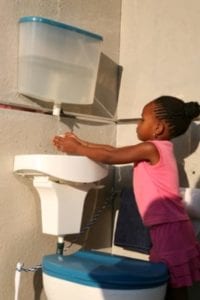
Government is hard at work to develop solutions that enable effective, appropriate and environmentally sustainable removal of human waste, says Deputy President Cyril Ramaphosa.
Addressing the National Sanitation Indaba which last week, the Deputy President said the country is becoming more innovative in the use of natural resources. “Through the Renewable Energy Independent Power Producer programme, South Africa is emerging as a leader in the use of wind and solar power for electricity generation. “Many in our country are desperate for safe, reliable and private sanitation. There are lessons in this programme for how we conserve water and how we manage waste,” the Deputy President said. He also highlighted that South Africa has done well to achieve the Millennium Development Goal of halving the proportion of the population without basic sanitation well before the target of 2015, however, a lot of work still needed to be done. “The statistics show that our country has been increasing access to sanitation. But the pace of delivery remains a concern,” he said.
The purpose of the Indaba is to showcase the practical demonstration of cutting edge appropriate sanitation technologies that can be implemented in South Africa and Africa.