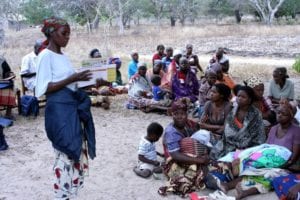
As African countries undertake significant infrastructure development to transform their economies, it is critical that they take into account the impact of these capital projects on the health of workers and nearby communities, and on women and girls in particular.
“Large capital projects are a key driver of employment and growth, and for development to be achieved, we must minimise environmental and social damage,” says Geraldine Fraser-Moleketi, Vice-President and Special Envoy on Gender at the African Development Bank (AfDB). Fraser-Moleketi was speaking at the opening of the two-day Second Technical Meeting on Health, Gender Equality and Capital Projects, that brought together more than 18 African country representatives from health, environment, mining, transport, infrastructure and civil society, as well from regional economic communities.Working for robust assessments
African countries have made significant investments in infrastructure in recent years and the UNDP and AfDB are working with countries to advocate for and strengthen capacity to make environmental assessments more robust to help mitigate health and gender-related risks that come with mobile workers with money. Capital projects such as roads and mines draw huge numbers of workers, particularly men, to sites away from their homes for long periods of time. Their working and living conditions, usually in close quarters, are seen as potential drivers of infectious diseases such as tuberculosis.
At the same time, mobile workers’ disposable income is usually spent on commodities such as alcohol and sex in nearby communities, increasing the risks of HIV infection, especially for women and girls.