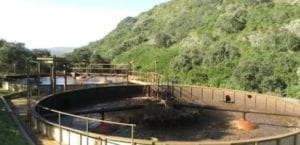
An amount of R6 million has been set aside for the upgrading of Sedgefield’s Waste Water Treatment Works (WWTW) in Knysna in the Western Cape.
The WWTW has been operating for a number of years and the plant has reached its nominal capacity of 0.75Ml/day. “Council has long been concerned with the town’s WWTW. In 2013 an investigation was conducted and from the report it was evident that the works were being overloaded in terms of the hydraulic loading and did not meet the required standards,” says Knysna Executive Mayor Georlene Wolmarans. “This was resulting in the non-compliance in terms of the final effluent quality due to the hydraulic overload and not sufficient contact time for the waste water treatment processes”, she continues.Three phase upgrade
According to Councllor Louise Hart, Portfolio Chairperson for the Planning, Infrastructure and Development Committee, “The upgrade will be done in three phases. The first phase will be the upgrade of the existing WWTW to comply with the special standards for the final effluent. The works will still have to operate and comply with the Department of Water Affairs standards while the ultimate solution is under construction”.
“The second phase will be the construction of a new water reclamation plant to augment the current water supply to Sedgefield. The water reclamation plant will thereafter receive the final effluent from the existing WWTW and treat the effluent to drinking standards.” She continues,
“The final phase will entail the modular upgrade of the new WWTW to an ultimate treatment capacity of 3Ml/day”. “The work on the first phase is set to commence in the new financial year. The upgrade will not only handle the volume but will also ensure that the municipality complies with the standards set by the Department of Water and Sanitation. “The new technology will not only ensure that the treatment works can better deal with the volume but, more significantly, it will also improve the quality of effluent to the special standards imposed by the Department of Water and Sanitation. Furthermore, it will also enhance the environment and better deal with health and hygiene related issues”, Councillor Hart concludes.