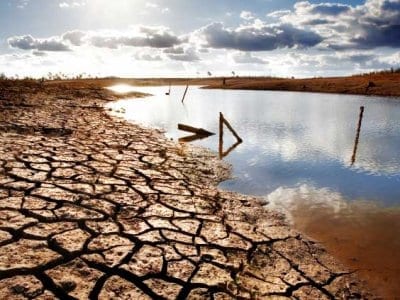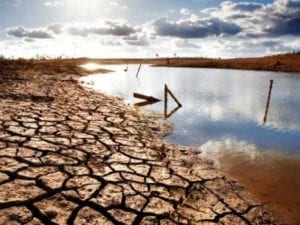
South Africa is possibly overexploiting its water resources at the national level, as water withdrawals currently exceed reliable supply
A seminar launching the latest African Futures paper “Parched prospect II: A revised long-term water supply and demand forecasts for South Africa” by Zachary Donnenfeld, Researcher, Institute for Security Studies Africa (ISS), was held in Pretoria at the Institute for Security Studies.
Using the international futures forecasting system, the research paper forecasts that water withdrawals in all three sectors (municipal, industrial and agricultural) will increase over the next 20 years.
According to the paper proposed interventions for increasing supply and reducing demand are not enough to reconcile the gap between withdrawals and supply. More must be done to bring the South African water sector into balance and reconcile future national water withdrawals with future national supply.
Changing the water conservation conversation
Dhesigen Naidoo, CEO of the Water Research Commission, said that the partnership with the ISS intends to offer a different lens around the water conversation, focusing on risk, and also to organise a set of data, around which more stakeholders can have a conversation.
Important innovations around new sanitation, water treatment and wastewater treatment technologies, water efficiency measures, non-revenue water and the war on leaks will assist in addressing water scarcity in South Africa.
The research indicates that in an attempt to reconcile water supply and demand South Africa needs to increase its available water supply by nearly 2.5 cubic kilometers and reduce withdrawals by 0.57 cubic kilometers by 2035.
This research was made possible with support from the Water Research Commission and supported by members of the ISS Partnership Forum: the governments of Australia, Canada, Denmark, Finland, Japan, Netherlands, Norway, Sweden and the USA.