 Tosas has been providing quality bituminous products to the road industry since 1972 and is widely respected as a pioneer when it comes to the introduction of new technologies. Werner Tessendorf, business development manager, talks to IMIESA about recent developments and project activities.
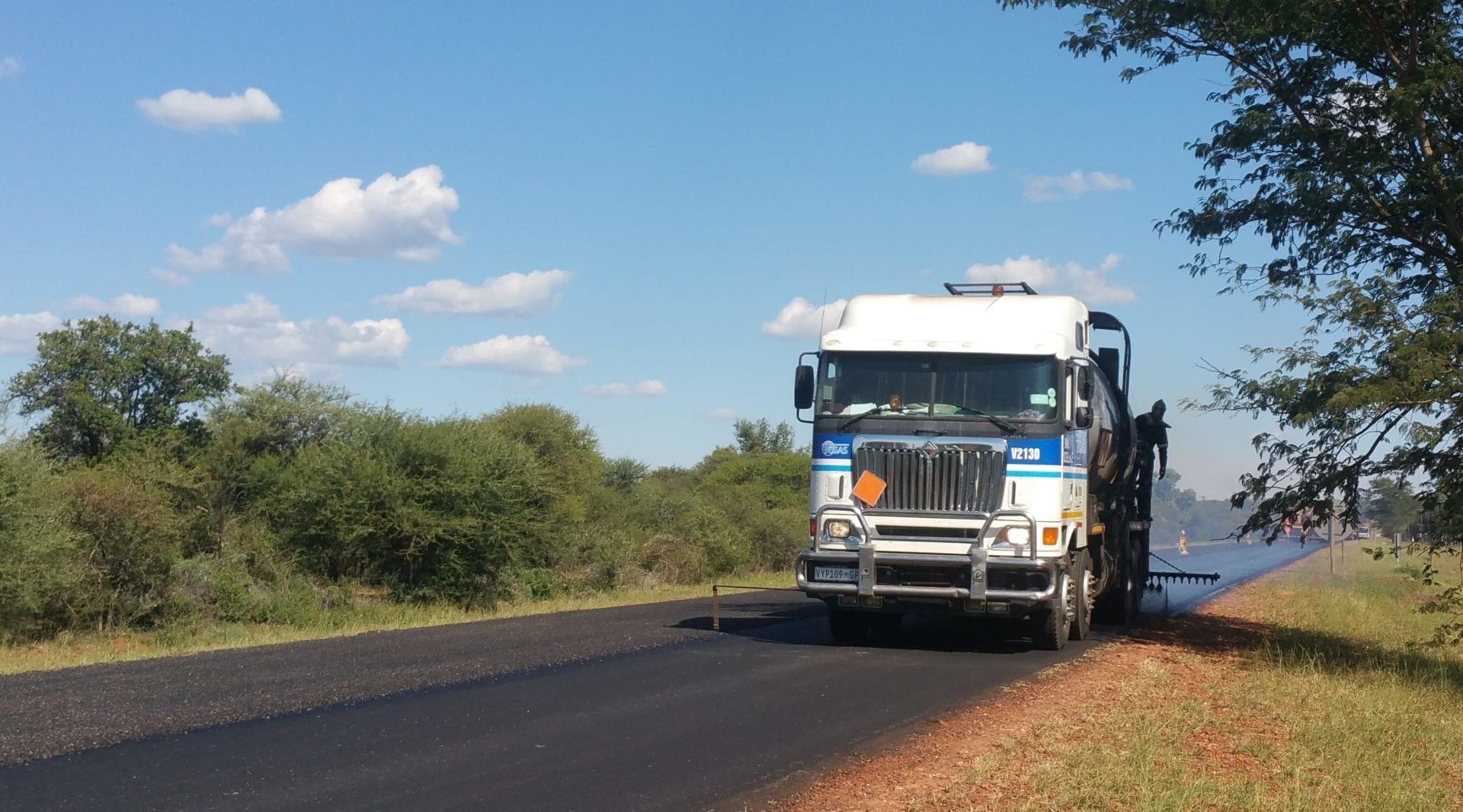
The scope of the project entails the resurfacing of national route R49 Section 2 from Zeerust to Groot Marico (km 0 to km 50) in North West province.
The client, Sanral, and the engineers, Aurecon, were very pleased and we will be continuing in September 2016 with the remaining 500 000 litres of NCRT. The customer has, since then, also given the go-ahead to use the product for a second, large contract. Will NCRT eventually replace conventional rubber bitumen? With all of the benefits of NCRT and the reaction of the market, only time will tell, although it is highly unlikely. The two will most likely be used in conjunction within the roads industry: there will always be the need, on certain large volume contracts that are located far from any major branch or city, to have a rubber plant on-site. However, the NCRT technology can be used to eliminate certain risks that are generally encountered when using conventional rubber. Tosas plans to add a new, high-float emulsion product. Is there a gap in the market for this solution? Absolutely! We see this as a great development and one that could open up the winter seal embargo in the South African roads industry in order to extend the window in which roads can be resurfaced. It allows us to spray emulsions at higher application rates, thus resulting in a higher binder content per application. Since we can control the application of the binder, there is also no run-off. This is generally the problem experienced when applying emulsion at higher application rates, creating environmental issues. How will the proposed new bitumen performance grades affect the current Tosas product offering? It will not affect the Tosas product basket. It will, however, give us a clearer picture of how our products will perform. The new specification will introduce tests and protocols that are used to predict properties, such as permanent deformation, durability and longer-term ageing, which has been lacking in our current specifications. The new specification will actually stimulate innovation in the sense that we can now really test the performance of new products, new formulations and new additives. In conclusion, what is Tosas’ industry outlook for the Southern African roads market? We are very excited about new technologies and products being implemented within the industry, and are positive that the relevant authorities can see the importance of not only building and upgrading new roads, but also that of maintaining existing roads in order to extend their life.