 The International Water Association (IWA) has released a manual to assist services providers with achieving Sustainable Development Goal (SDG) 6.
The Manual on the Human Rights to Safe Drinking Water and Sanitation for Practitioners aims to help improve the understanding and implementation of the human rights principles for drinking water and sanitation.
Service providers and regulators play a central role in ensuring that the drinking water, sanitation and wastewater management targets under SDG 6 on water and sanitation are met by 2030. The Manual spells out how this is best done.
“The Manual on Human Rights to Water explains the international legal obligations to operational policies and practices that will make universal access to water and sanitation a reality. This manual will help operators, managers and regulators make more informed decisions in their daily routines, and for the readers in general to actively engage in dialogues on the human right to water and sanitation to translate it into national and local policies, laws and regulations,” says Ger Bergkamp, executive director of the IWA.
The Manual also answers how utility managers and service providers can contribute to government efforts to strengthen legal and regulatory frameworks, how to deal with clients not paying without violating human rights principles.
A team of international experts authored the report, including lead author Robert Bos from Switzerland; and co-authors David Alves of Portugal; Carolina Latorre of the Netherlands; Neil Macleod of South Africa; Gérard Payen of France; Virginia Roaf of Germany; and Michael Rouse from the United Kingdom.
Access the manual here. 


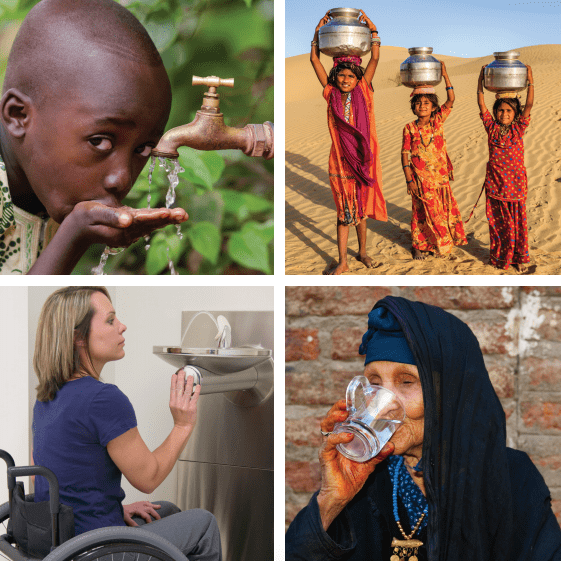 The International Water Association (IWA) has released a manual to assist services providers with achieving Sustainable Development Goal (SDG) 6.


