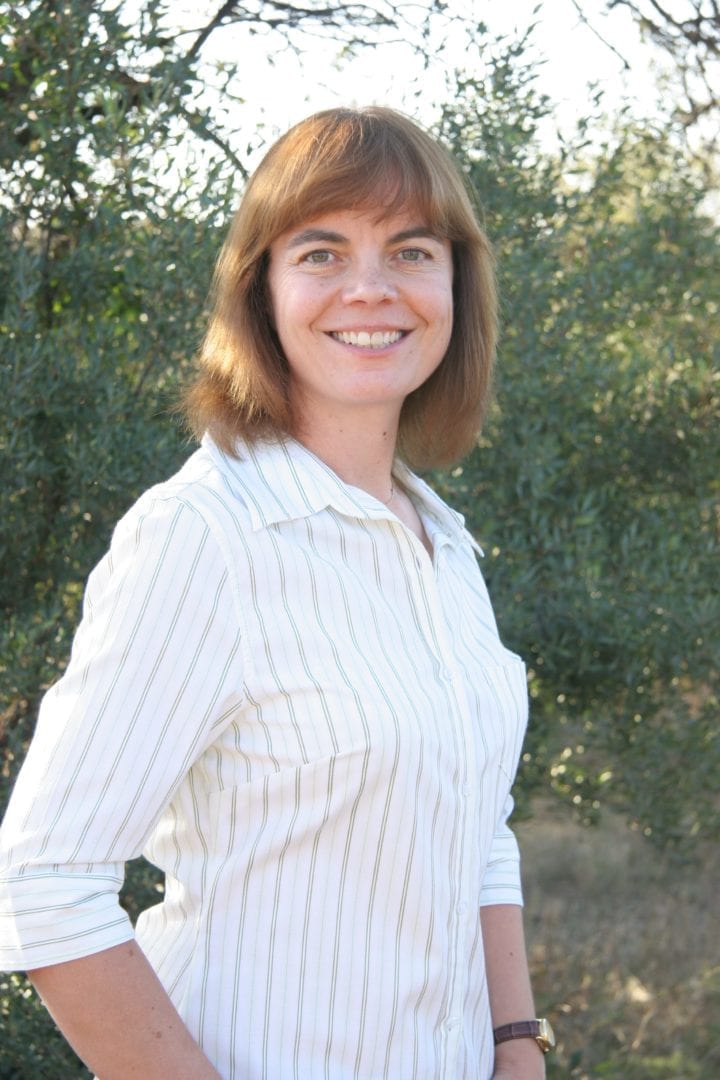
Jo Burgess, WRC research manager, WISA Board member, former YWP-ZA chairperson
interviews
Jo Burgess, former Young Water Professionals South Africa (YWP-ZA) chairperson, current Water Institute of Southern Africa (WISA ) Board member and research manager at the Water Research Commission (WRC):
- What are your current professional activities?
I’m a research manager for the WRC. My role involves looking after industrial and mine water treatment and management programmes – which basically means cleaning up after other people. I have around 40 projects on the go at any one time, and my job is not to carry out all that research myself, but to co-ordinate and communicate it. I try to minimise duplication and maximise the opportunities for people to work together.
- As a ten-year-old, what did you want to be when you grew up?
A vet! I wanted to do a BVetSci then specialise in wildlife care. In my current careetr, I still care for wildlife but in a different way – doing my small bit to provide clean water in the natural environment.
- What has your journey been like as a water sector professional?
I started out as an environmental biologist, then did a Master of Research (MRes) in water pollution control technology. After that I did my PhD in environmental biotechnology, working on bioremediation of pharmaceuticals waste. That was what hooked me on water research – the site where I operated my pilot plant was a stretch of river in the UK that was practically dead. The antibiotics in the wastewater had killed the bacteria at the bottom of the food chain. One of the methods developed in my project worked and removed the antibiotics from the wastewater. After a year of operation the river had come back to life. It had plants, fish, birds and animals – that was it for me. I was winning at life.
- What personal strengths have assisted you in your career trajectory?
I am unreasonably persistent. You don’t have to be the cleverest person, or most outgoing, or most ambitious in the financial sense. You just have to keep trying different options until you find one that solves the challenge facing you.
- What drives you day-to-day?
This will sound cheesy, but it’s love. For our home planet, for the voiceless plants and animals that we share it with, for the natural world as a whole. I want to leave it in a better condition than I found it. I want other animals than humans to thrive.
- What was the biggest hurdle you had to overcome in your career to date?
Apart from not making the grades to be a vet, you mean?
The first PhD I signed up for was to work on tannery waste, and a few weeks before it was due to begin, my funding agreement fell through. Suddenly I had no way to do the project. Plan B was my MRes, and it actually turned out to be a blessing in disguise. The MRes programme was extremely useful, and it led to the PhD that I completed afterwards.
- How do you balance work-personal commitments?
Some days better than others; I don’t always work very consistently, so I’ll work all hours for a while then get tired and coast for a bit. In general though, I try not to work more than ten hours a day, and not to work over weekends. If there’s an event or a special deadline then yes of course, but not as a habit.
- Now that you are working, what tip would you give your ten-year old self?
Not to worry about grades so much. Someone with solid B’s or 2:1 and good practical skills is much better in the workplace than someone with all A’s and a first class degree but no common sense. I used to think that academic grades meant everything. As soon as you leave the education system they shrink down to the correct perspective.
- What inspires you about the water sector?
The people. It’s the most amazing, friendly, collegial sector. I think that’s because everyone who stays in for life does so because they are interested in someone or something outside of themselves. We have fabulous people who dedicate their lives to cleaning up rivers, or protecting wetlands, or getting safe water to people who haven’t got it, or providing the dignity of sanitation. You won’t find any hard-nosed, money-hungry people here. I love that.
- What are the main challenges for implementing water and sanitation for all?
We tie ourselves up in red tape, and that’s a pity. South Africa has some of the most enlightened legislation in the world but we get tangled up when we try to make it reality. It’s always easier to complicate a thing than it is to simplify it, and I think our public services have reached a point where it’s so difficult to procure anything that they’ve been paralysed to a large extent.
- How do women need to be supported in the water sector?
As in any sector, having permission or the ability to work at times and in places that fit into your life is the best support there is. But I don’t believe that’s unique to the water sector, or even to women.
- What role has YWP played in your life to date?
It has changed my life in a wonderful way. The YWP programme provides an instant network where I can access the knowledge of the crowd, and a safe space where no question is stupid. If you ever feel like you’re overwhelmed or alone, it’s the best place to say so. And it’s also the best place to find out that you are needed – when anyone else says they have a question and you know the answer, you realise you are on the right road yourself.
- How is YWP helping increase the women’s share in the water sector?
Through having women leaders – several of the chairmen have been chairladies – it sends a powerful and real statement that this arena is not for men only. That is more valuable than any spoken or written statement.