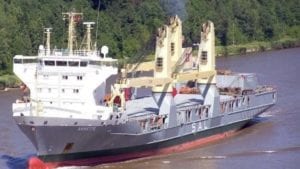
 High sulfur fuels will remain the shipowners fuel of choice despite findings published in a recent UMAS report, which suggests that liquefied natural gas (LNG) is a viable way of meeting emissions rules.
Marc Sima, the founder and CEO of Germany-based FuelSave said,“High sulphur fuels will remain the industry’s favoured fuel until methanol and hydrogen-based alternatives have attained commercial viability. Until then, the pursuit of LNG is just throwing good money after bad.”
Sima said he agreed with the UMAS findings that there would be no significant reduction in CO2 emissions through the wider take-up of LNG, while refuting claims that suggest low sulphur fuels will become the industry’s primary fuel source by 2020.
“I really can’t see the global fleet switching across to low sulphur fuel in little under two years’ time. Not only would shipowners have to make sure their engines are compatible with the fuel in time, but assuming they are, they would have to revise their supply chains, evaluate compatible lubricating oils, and then sit back and watch their operating costs increase.
“It just won’t happen. Low sulphur fuels may be today marginally more expensive than LNG, but should the industry make the switch
en masse, what are the refiners going to do, reduce the cost? I doubt it.”
Stick to the basics
To meet the 2020 global sulphur cap, Sima recommended the continued use of HFO/MDO/MGO with the appropriate emissions abatement technology. He said a scrubber was still the only cost-effective and proven solution for emissions reduction.
“If a scrubber is opted for, its economic and emissions-reducing efficiency can be further optimised by using FuelSave’s patented FS Marine+ solution.
“This is ostensibly a fuel additive that can be used with almost any type of two- and four-stroke engine running on HFO, MGO or MDO. It uses an onboard hydrogen synthgas generator to inject a gas and liquid water/methanol solution into an engine’s combustion chamber to significantly improve efficiency.
“In pilot tests aboard a heavy lift ship, fuel consumption was reduced by 25% equating to net savings of 15%.”
Sima explained that when a scrubber is used in concert with FS Marine+, higher fuel efficiencies could be achieved since the scrubber would have less work to do, which equates directly to a greater reduction in fuel consumption.
“With a scrubber working with our process, we found shipowners can reduce the amortization rate for the scrubber, which currently does not provide a great return on investment.
“FS MARINE+ provides a real solution to emissions reduction, and without the kind of high investment the use of LNG or low-sulphur fuels would require.”



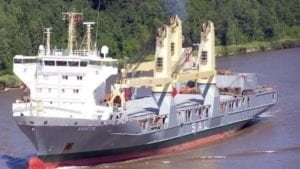
 High sulfur fuels will remain the shipowners fuel of choice despite findings published in a recent UMAS report, which suggests that liquefied natural gas (LNG) is a viable way of meeting emissions rules.