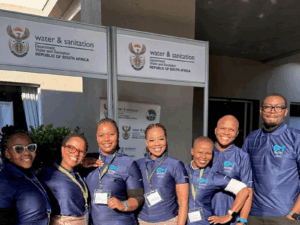
The Young Water Professionals (YWP) of WISA hosted a workshop and participated in panel discussions at the Department of Water and Sanitation’s (DWS’s) National Youth Indaba.
Held under the theme “Empowering Youth for a Water-Secure Future”, the Indaba aimed to provide a collaborative platform for youth voices, innovations, and aspirations to help shape sector priorities and national development goals. The purpose of the Indaba was to:- Promote youth inclusion in shaping the water and sanitation agenda
- Identify and address gaps in skills, mentorship, and professional development
- Foster collaboration between government, industry, academia, and youth networks to support participation and leadership
- Create a safe, dynamic space for the youth to share their challenges, co-create solutions, and build strategic networks
- Highlight success stories and role models who are actively transforming the sector through innovation, resilience, and impact-driven work.
Future-proof youth skills workshop
Facilitated by Boitumelo Matshediso and Bomkazi Vava, YWP hosted a high-impact workshop that aimed to bridge the gap between academic preparation and real-world readiness in the water and sanitation sector. It provided a platform for open discussion, storytelling, and peer-to-peer learning among students, graduates, and early-career professionals. Bomkazi Vava conducted the opening presentation that highlighted the skills gaps facing young professionals and emphasised the importance of lifelong learning, adaptability, and mentorship. Vava also introduced practical strategies for staying relevant in a rapidly evolving sector shaped by technology, climate change, and policy shifts.
Boitumelo Matshediso joined other workshop facilitators in the main plenary to share reflections from the Dialogue Café. The recap highlighted:
- The honesty and vulnerability shown by participants
- Youth concerns around employability, representation, and recognition
- The need to transform institutional barriers into pathways for youth success.
Youth progress and panel discussion
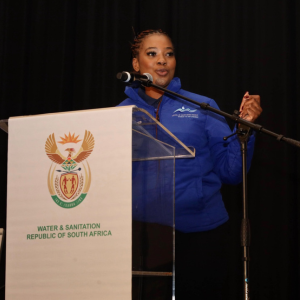
Mariah Malatji