
Verona Bowie – Managing Director of Ezemvelo Eco Solutions
Why not chlorine
While chlorine remains the standard, there are some problems with the chemical. “There are certain bacteria that are chlorine resistant, and in areas where water is extracted from a river, the elevated levels of organic matter can render the chlorine ineffective and thus harmful to drinking water. In the past, the solution to bad water was to increase the dosage of chlorine, but it cannot be pushed any further without completely wrecking the water quality.” In terms of wastewater treatment, if the water pumped back into the water source is not of adequate quality, it has adverse effects on the rest of the water. Chlorine systems rely on centralised water management, and in South Africa’s rural areas, this does not exist.“Put simply, people need water; some people do not have access to water, so the solution is to get clean water for people who need it. The shortcomings of chlorine mean we need an easy-to-implement solution for areas and plants where chlorine cannot help,” says Bowie.
Non-chlorinated water treatment
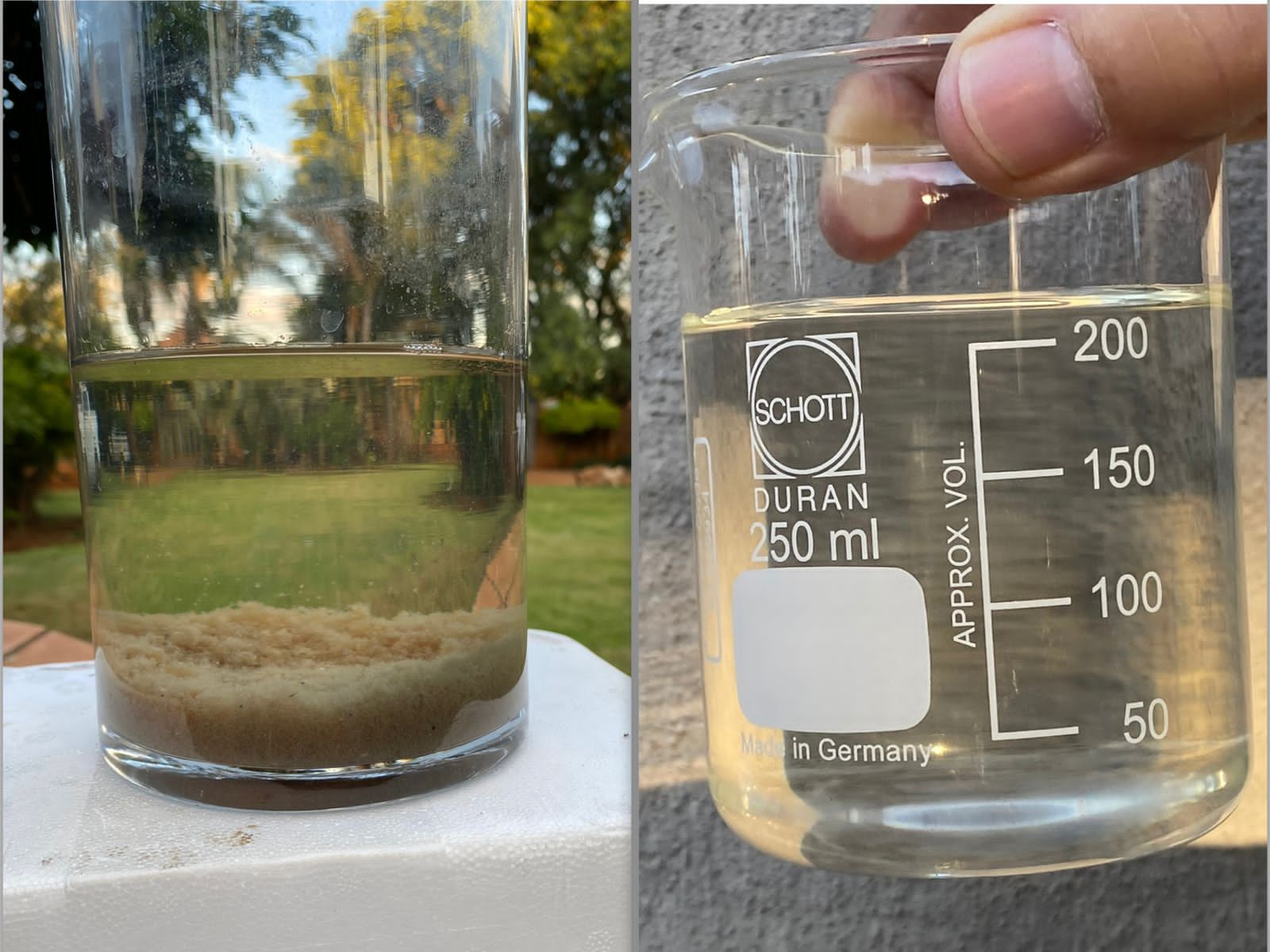
Before and after two minutes of dirty water being treated with Rubicon sachets

“Rubicon-Eco can treat water for spores, bacteria, viruses, fungi, most common pathogen organisms & phenols and combating diarrhea diseases such as cholera, typhoid fever, and E. coli,” says Bowie.This product is well-suited to municipal wastewater treatment, where its use replaces chlorine and treats water to a tasteless, odourless clean state. Prolonged storage shows that the only decomposition materials are oxygen and water, a claim substantiated by the World Health Organisation, Water Research Commission of South Africa, and international bodies such as BSRC Japan. “Rubicon Eco oxidises cyanide, sulfur, as well as amines. It can also be used in arsenic remediation,” adds Bowie, who continues, “It is also effective in treating water with antibiotics present. As drug-resistant bacteria and antibiotics are more common in water, Rubicon-Eco is capable of clearing water from these bacteria as well as antibiotic-polluted water. “ After extensive testing, Rubicon is already on the market, and Bowie says, “The need for an efficient water disinfection that is able to target all levels of pollution while being environmentally safe is important for the South African context, and as chlorine reaches its cap in the use non-chlorinated products are a solution that makes sense.”