African climate think tanks and experts have called for the support of inclusive decision-making spaces by the G20 and accelerated reform of international cooperation institutions to create a more equitable global economic architecture that leaves no one behind.
Reaffirming Africa’s commitment to multilateralism and international law as essential foundations for shared global prosperity, they noted that Africa’s position is clear that “the climate agenda is the development agenda”. Speaking in Johannesburg, South Africa during a G20 Expert-Level Informal Consultation forum organised by the African Union Development Ageny (AUDA-NEPAD) and the Office of the Special Envoy for Climate Change in the Executive Office of the President, Republic of Kenya, which is also Chair of the Conference of African Heads of State and Government (CAHOSCC), the experts noted that the G20 must recognize Africa’s fundamental right to development while supporting global decarbonisation efforts toward the 1.5°C goal.“We call for policy space and differentiated pathways that enable just, affordable, and inclusive energy transitions reflecting our national contexts. Climate ambition must advance hand-in-hand with poverty eradication, job creation, and economic growth,” said Her Excellency Nardos Bekele-Thomas, CEO of AUDA-NEPAD.
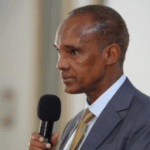
Amb Ali Mohamed, the Special Envoy for Climate Change in the Executive Office of the President, Republic of Kenya

On energy transformation, the experts said the G20 must prioritize investments in renewable energy generation, transmission, and storage infrastructure aligned with Africa’s regional power pools, and called for support in strengthening cross-border energy trade, grid interconnectivity, and expansion of Just Energy Transition Partnerships (JET-Ps) and the implementation the Agriculture Industrialisation Strategy that are inclusive, fair, and aligned with African priorities.
Climate Finance for Development
The G20, they said, must unequivocally reaffirm legal obligations under the Paris Agreement, particularly regarding climate finance provision by wealthy, historically high-emitting countries to developing nations on a needs-based approach. They called on the G20 to support the Fourth Financing for Development outcomes, including commitment to an intergovernmental process at the United Nations to close gaps in debt architecture and explore options for debt sustainability. They cautioned that any structures for climate finance mobilisation must serve the needs of countries with special circumstances, including Africa, noting that the G20 should commit to financing transitions to low-carbon and climate-resilient development through concessional, grant-based, predictable flows that address capital costs, currency risks, and debt burdens while involving local private sectors.Adaptation and Partnerships
The experts noted that Africa requires innovative approaches that enhance access to climate finance, enabling translation of National Adaptation Plans into transformative adaptation actions.“We acknowledge the critical links between climate adaptation, mitigation ambition, and climate finance, emphasising the significance of ambitious mitigation targets in G20 Nationally Determined Contributions,” said Amb Mohamed, adding that partnerships between African countries and G20 members are essential for implementing adaptation actions effectively.H.E Bekele-Thomas urged that Africa’s engagement with the G20 must be grounded in principles of equity, justice, and shared responsibility, adding: “We seek not charity but partnership; not exclusion but fair participation in shaping our collective future. The path to global climate action must honour Africa’s right to sustainable development while contributing meaningfully to planetary goals.”