Every day, healthcare facilities create volumes of waste that must be disposed of safely and effectively. Kirsten Kelly recently visited Averda’s City Deep Electro-Thermal Deactivation (ETD) plant that receives around 1 000 tonnes of medical waste each month.
The facility came under Averda’s control in 2016. Since then, it has been extensively refurbished to become South Africa’s largest and most advanced medical waste treatment plant.“We have a powerful shredder that handles a staggering two to five tonnes of infectious waste per hour as well as an ETD oven that does not release CO2 emissions,” says Waldo Jansen Van Rensburg, business unit manager, Averda South Africa.He adds that the ETD process uses heat generated by electricity to sterilise or deactivate pathogens and hazardous components in the waste, often leading to volume reduction and the potential for material recovery. “The ETD oven is currently achieving a 6.5 log. South African regulations typically require at least a log 5 reduction to consider waste properly decontaminated before disposal.” A log is a technical benchmark for sterility assurance in medical waste treatment. It refers to a logarithmic reduction of microorganisms – a measure of how effectively a treatment process (like sterilisation or deactivation) kills or inactivates pathogens. The scale is from 1 – 7 and a log 6.5 indicates that over 99.999% of the microbes have been destroyed. The ETD oven is highly effective at sterilising infectious medical waste. Unlike many competitors who shred waste after treatment, Averda pre-shreds the waste. “This exposes pathogens within items like blood-stained linens, gloves, or nappies, allowing more effective sterilisation by ensuring heat reaches the waste core,” explains Jansen Van Rensberg. The facility uses a PLC-controlled conveyor system for automated waste movement. An auger pushes the shredded waste through an enclosed conveyor into an electrothermal deactivation system that sterilises waste at ±110 °C for 35–45 minutes. While most of the waste is wet by nature, a boiler is used to add additional moisture where needed. However, too much moisture can cause arcing and uneven heating. The sterilisation process uses biological indicators (ampoules containing microorganisms) to test effectiveness – sterility is confirmed when the bacteria do not survive. From shredding to heat treatment and compaction, the entire process is enclosed to prevent environmental contamination or worker exposure. The result is a fluffy, safe-to-handle output that is compacted and prepared for disposal or repurposing.
Types of waste received
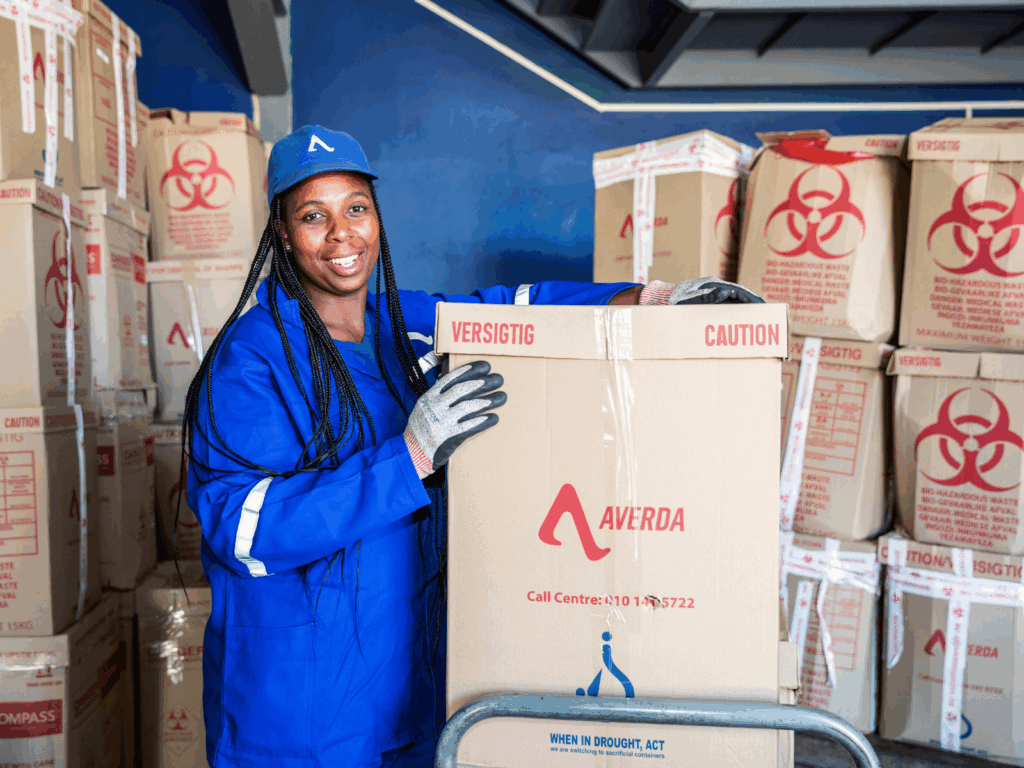
The Averda ETC facility receives roughly 50 tonnes of medical waste a day, which is equivalent to 30 full-sized waste trucks.
- Infectious waste: This makes up about 90% of the total waste processed at the facility. It includes blood-soaked swabs, dressings, gloves, masks, nappies, and other items contaminated by bodily fluids or patient excretions.
- Pharmaceutical waste: These represent a smaller portion (around 5–10%) of the waste stream.

The Averda ETD facility does not treat radioactive, chemical, or anatomical waste through the ETD system, but it does screen for these and redirects them to appropriate treatment methods, including incineration at their Klerksdorp plant. The Klerksdorp facility is the biggest incinerator in the country where 800 tonnes of waste is treated every month. Both Averda plants are open 24 hours a day to accept and handle the large volumes of medical waste on a daily basis.
“Incineration reduces the volume of medical waste by at least 90%, and Averda South Africa diverts 100% of that waste, some of which is used directly by Averda as a co-blending treatment to solidify chemicals before sending them to their Vlakfontein landfill,” states Jansen Van Rensberg.He adds that Averda are about to roll out a project whereby they will also divert 100% of their treated medical waste from landfill, which will be a first in South Africa. Treated medical waste has a better environmental profile than coal – it contains no mercury, sulphur, or arsenic, making it more suitable for energy applications.
Challenges in medical waste management
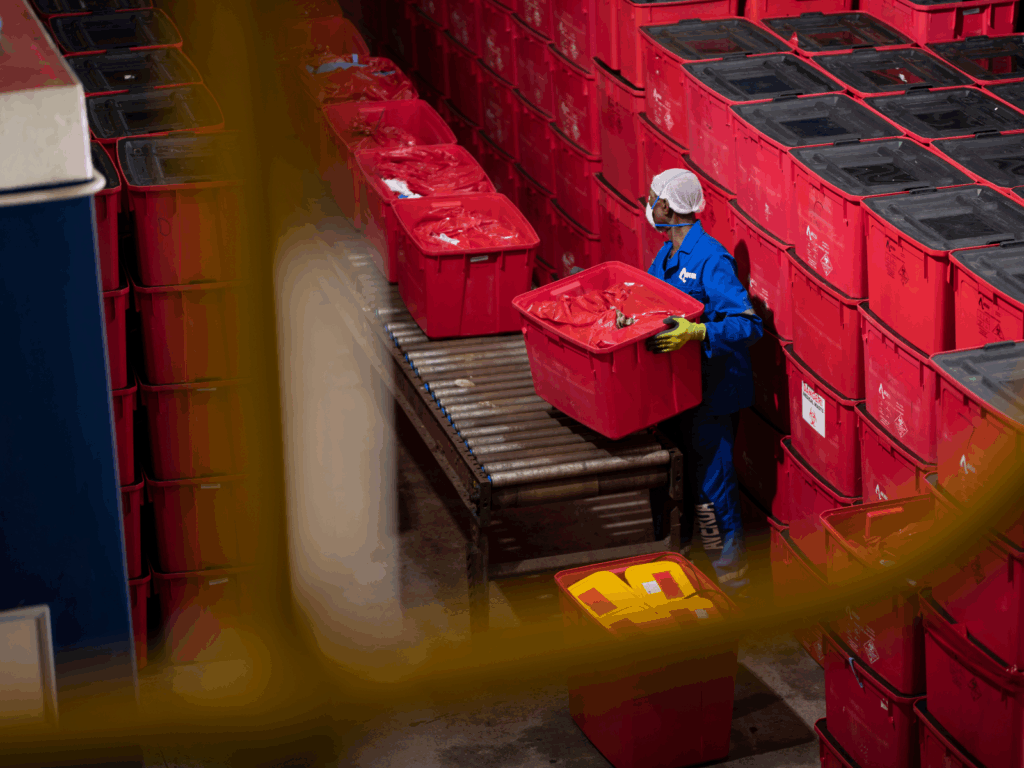
From the moment waste is generated
to its final disposal or repurposing, the
entire process is tightly controlled
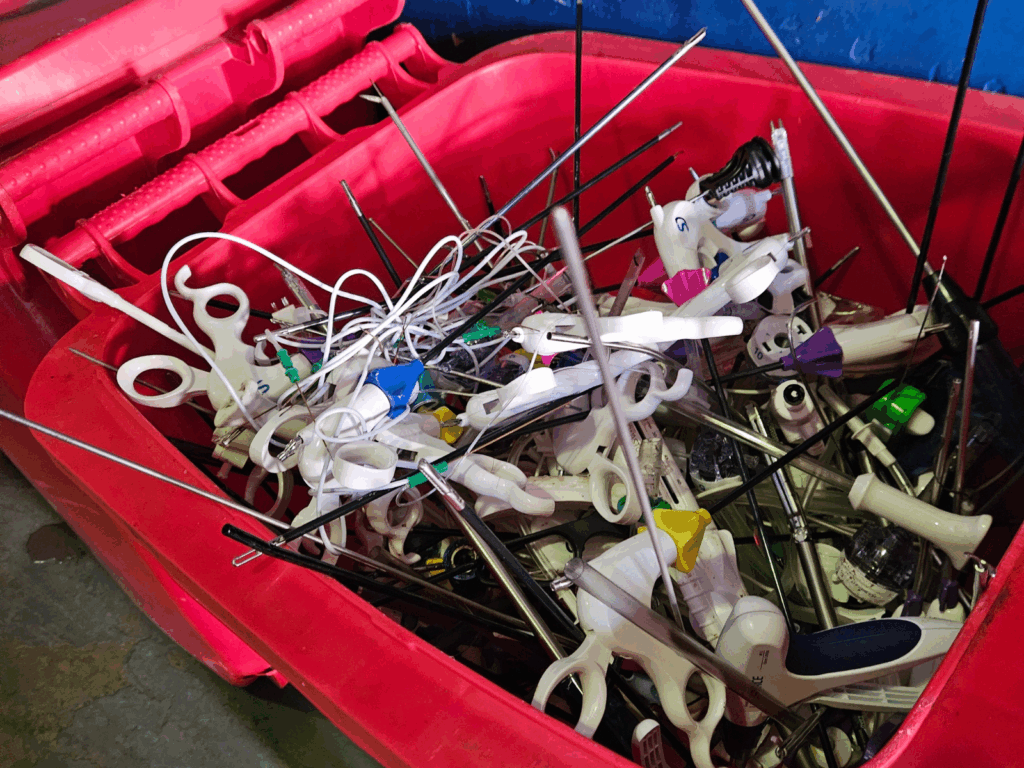
If sharps are mistakenly placed in the
infectious waste bin, they are isolated
and sent to Averda’s Klerksdorp plant
for incineration
“With on-site shredding, advanced heat treatment, AI-driven scanning, radioactive monitoring, and access to both incineration and landfill facilities, Averda ensures a seamless and fully compliant cradle-to-grave solution.”