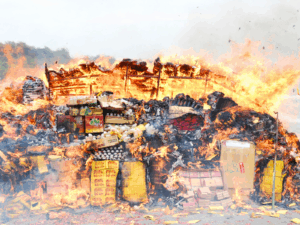
Uncontrolled waste burning poses significant health and environmental risks in South Africa, especially at illegal dumps and within informal communities. Burning tyres, plastics, and industrial waste releases harmful fumes and smoke that affects communities daily.
When formal waste collection is insufficient, open burning is often seen as the only option to reduce volume. North-West University reports that nearly one-third of South African households lack regular waste collection. Without proper services, many resort to unsafe disposal methods like burning. The smoke produced is toxic, releasing fine particles, black carbon, dioxins, and harmful chemicals. These do not simply vanish into the atmosphere; people breathe them in, leading to severe health risks such as cancer, heart disease, respiratory problems, and circulatory issues, particularly among the elderly and the already ill. Children are especially vulnerable, facing long-term developmental damage. The dangers of open burning extend beyond health concerns. Fires can quickly escalate, especially when hazardous waste explodes, endangering homes and causing fear and anxiety among residents.Many communities suffer not because of their own actions but due to illegal dumping by outsiders, which fuels the problem.Nature also suffers; these fires emit greenhouse gases that accelerate climate change and disrupt local weather patterns. Ash and toxins seep into soil and water sources, endangering crops, wildlife, and food supplies.

This issue transcends environmental consequences; it is a matter of fairness and human rights. Clean air should always be a priority. Research by the Central University of Technology indicates high pollution levels stemming from poorly managed landfills in the Free State. In places like Kya Sands, Gauteng, residents have protested through petitions, legal action, and appeals to authorities. Despite compelling evidence of harm, assistance has been slow, leaving communities feeling abandoned. The CSIR warns that more than half of South Africa’s plastic pollution comes from open burning, a problem that can no longer be ignored.

Patricia Schröder, President, IWMSA