
Tracey Gilmore, co-founder of Taking Care of Business
The programmes
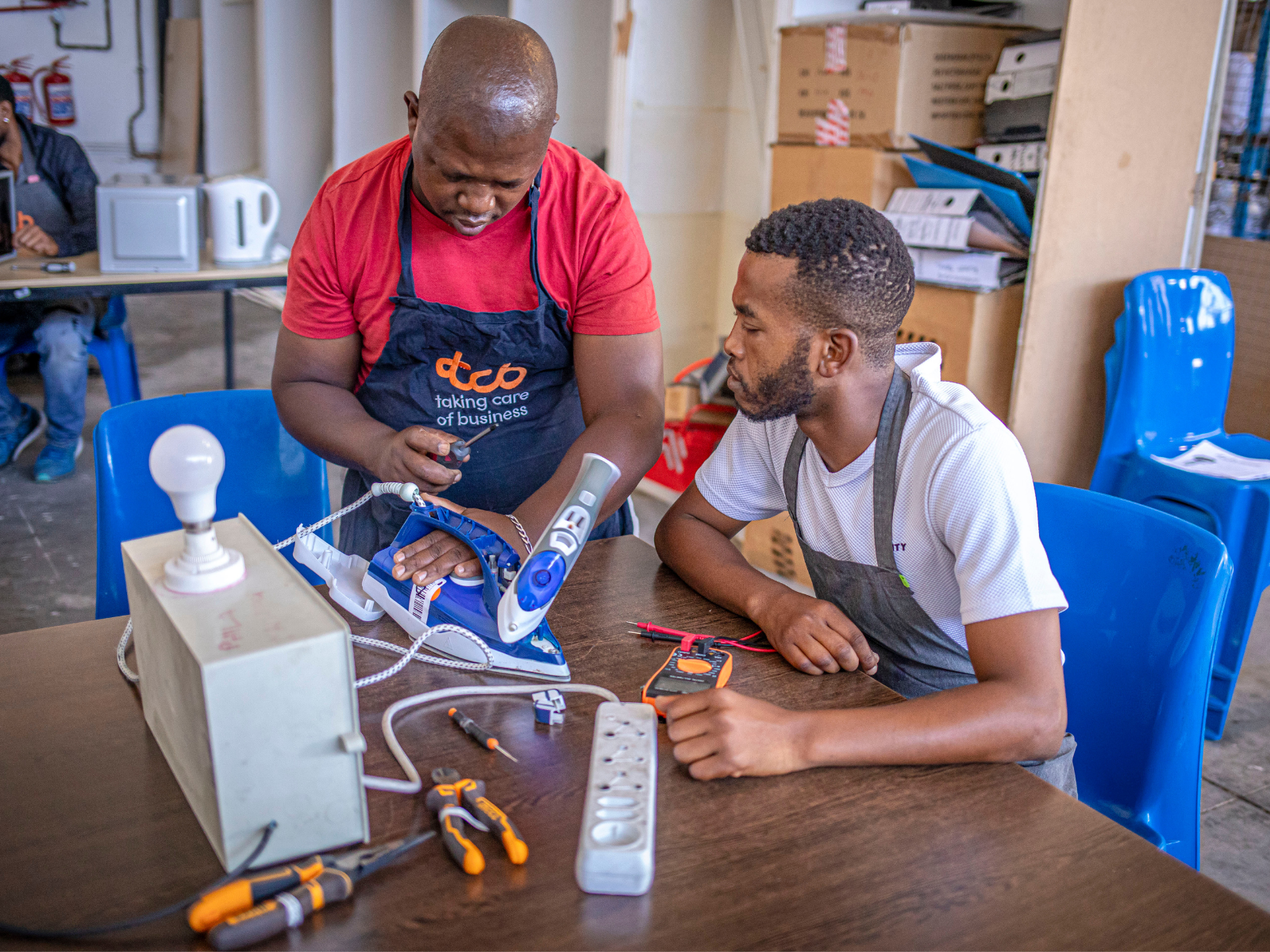
The Repair programme diverts waste from landfill and offers a new life for consumer electronics while generating income for communities who need it
Resell
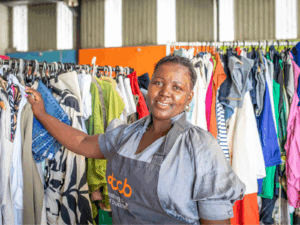
Launched in 2010, equips unemployed mothers to become successful clothing traders during a 2-year Enterprise Development programme. Their businesses are fueled by the, generous impact focused, donations of excess clothing and merchandise sourced from within the retail and manufacturing sector, which reduces fashion waste. TCB partners include Woolworths, MRP, Truworths, Pick ‘n Pay Clothing, TFG, PEP, CottonOn, My Runway, and Steve Madden.Repair
Gilmore explains, “ When Clicks approached us in 2014 we were inspired to launch TCB Repair. We equip unemployed South Africans, mainly men, with the skills to repair appliances and run their own appliance repair and trading businesses in this 2-year training programme. Damaged, broken and excess stock is donated by retail partners and the public. It is then repaired and sold to reduce e-waste. TCB partners include Clicks, Shoprite, Home of Living Brands and @Home.
Remake
Clothing off-cuts represent a sizeable waste stream within the clothing manufacturing industry. Gilmore adds,“We equip seamstresses to run financially viable micro-manufacturing businesses. Donations of fabric, off cuts, cut samples, and haberdashery sourced from within supply chain partners support this circular economy programme. TFG, Truworths and a few CMT factories support our expansion potential.”There is also a Redistribute programme, which takes in direct donations and helps distribute resource to charities This programme supports 80 registered not-for-profit companies and donates 1.2-million-rand worth of products annually.
Social and environmental impact
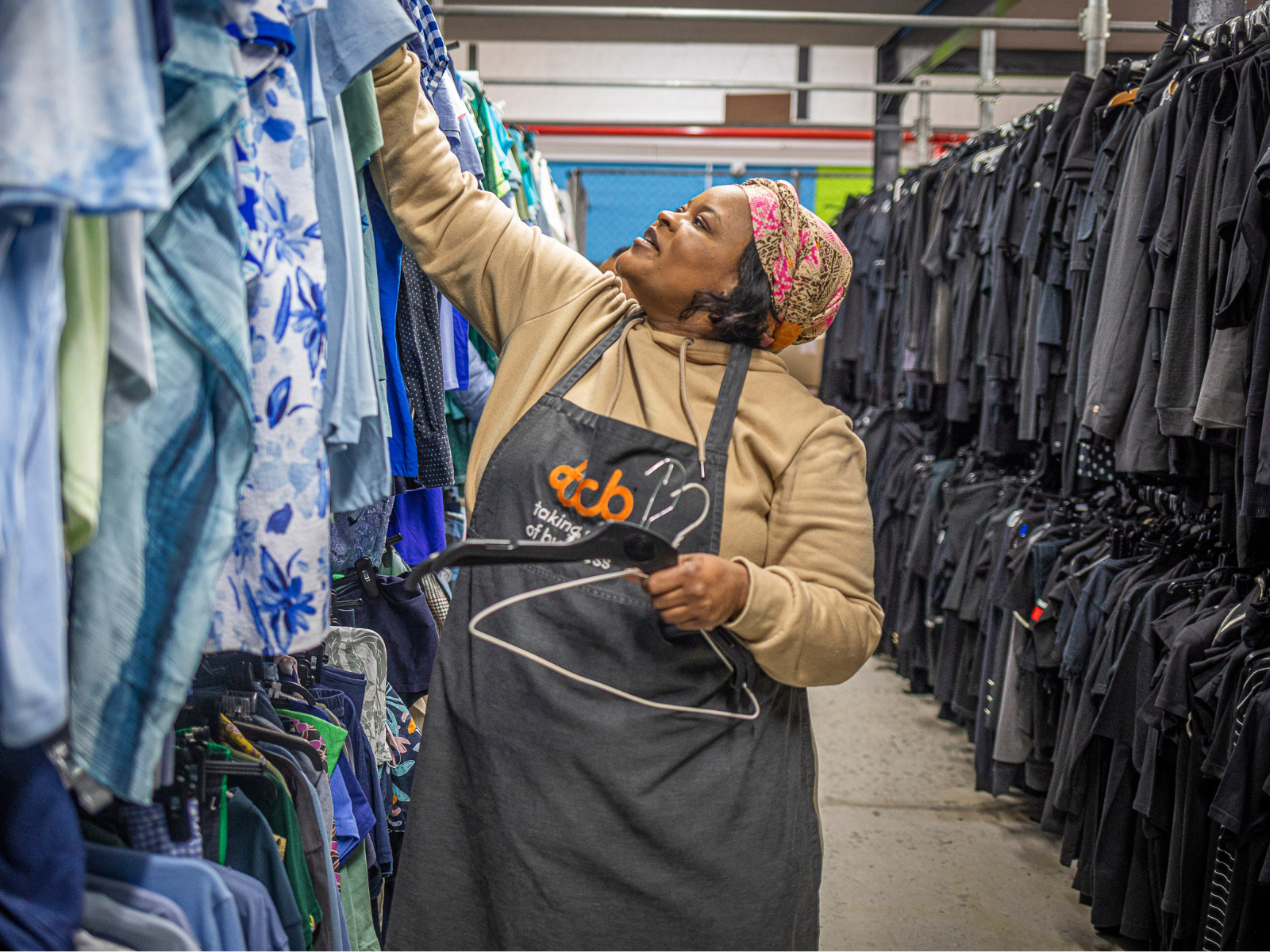
The informal economy, and microbusinesses are vital to the economic activity of poorer communities
Gilmore explains, “Whenever we address sustainability, we are also addressing socio-economic issues. As a country, we need to see how they go hand in hand; if we forget the social impact and don’t plan for it, we are missing an opportunity, and if we address social issues without taking the environment into account, we exacerbate the problem.”This line of thinking runs through TCB, where the social impact and environmental impact rely on each other. South Africa’s high unemployment means that those most affected by climate change are often not thinking about sustainability because they are focused on surviving. “TCB starts as a social empowering project and as people go through the programme, they are also educated on the environment and how this work helps the broader communities they are a part of,” adds Gilmore. TCB’s 2025 annual report indicates that over a 15-year period of equipping people with these skills has generated R564 million in profits from waste items by their circular economy entrepreneurs. It also reports that 7927 people have been recruited through their programmes. This has led to 23 million items being diverted from landfills. “The items diverted from landfills encompass a large number of waste streams, and because these items are still adding value, it really demonstrates that what we are willing to throw away can be a vital resource for others. This mindset change of seeing waste as a valuable resource can really help shape the South Africa of tomorrow. One that is more sustainable and circular,” says Gilmore.