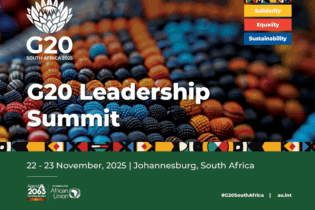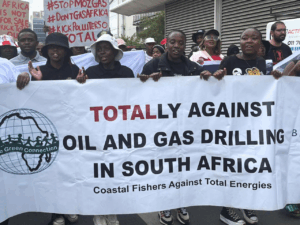
As South Africa hosted the G20 Summit this last weekend, 22nd – 23rd November 2025 – amidst COP30 negotiations in Belem, Brazil – African civil society is urging global leaders to commit to a rapid shift to a fossil-free future with renewable energy systems that are locally owned, community-driven, and accessible to all. This call was amplified at The Green Connection’s G20 Civil Society Symposium on Climate Justice and the Green Economy in early November, which brought together activists, community leaders and policy experts to formulate the Cape Town Civil Society Charter. The eco-justice organisation and community partners also joined today’s mass march against TotalEnergies’ century of exploitation, as part of the We, the 99% People’s Summit, on Constitution Hill in Johannesburg.
“In countries like South Africa, governments must develop national and local adaptation plans that are participatory, transparent, and inclusive of those most affected – including women, youth, informal workers, and rural and informal-settlement communities. Adaptation should protect livelihoods, secure water and food sovereignty, and build grassroots climate resilience. This requires ending fossil fuel subsidies, stopping oil and gas expansion, and prioritising grant-based climate finance for the Global South. At the same time, the justice implications of extracting critical transition minerals must also be addressed as global demand continues to rise,” says Lisa Makaula, Advocacy Officer at The Green Connection. “Global solidarity is critical in this moment. We are of the opinion that the current fossil-fuel economy may not only be destroying our environment but could also deepen inequality while violating human rights. As the world accelerates a ‘green’ transition, Africa must not be pushed into yet another cycle of extraction. G20 leaders must recognise that communities – not corporations – should guide Africa’s energy future. Public funds should shift away from oil and gas projects that risk becoming stranded assets, towards renewable energy systems that are locally owned, environmentally sustainable, and aligned with the 1.5°C limit. It makes little sense for Africa to take on more debt for outdated infrastructure while the rest of the world moves towards cleaner technologies. Makaula stresses that predictable, accessible, grant-based climate finance is essential for people-centred adaptation and for easing the debt burden on developing countries that have contributed least to the climate crisis but face its worst impacts. She says, “We urge G20 leaders to honour their climate finance commitments, including the USD 1.3 trillion annual goal by 2035. International financial institutions also require urgent reform, as current rules penalise African economies and obstruct effective climate action. Global financial systems must serve people, not profit.”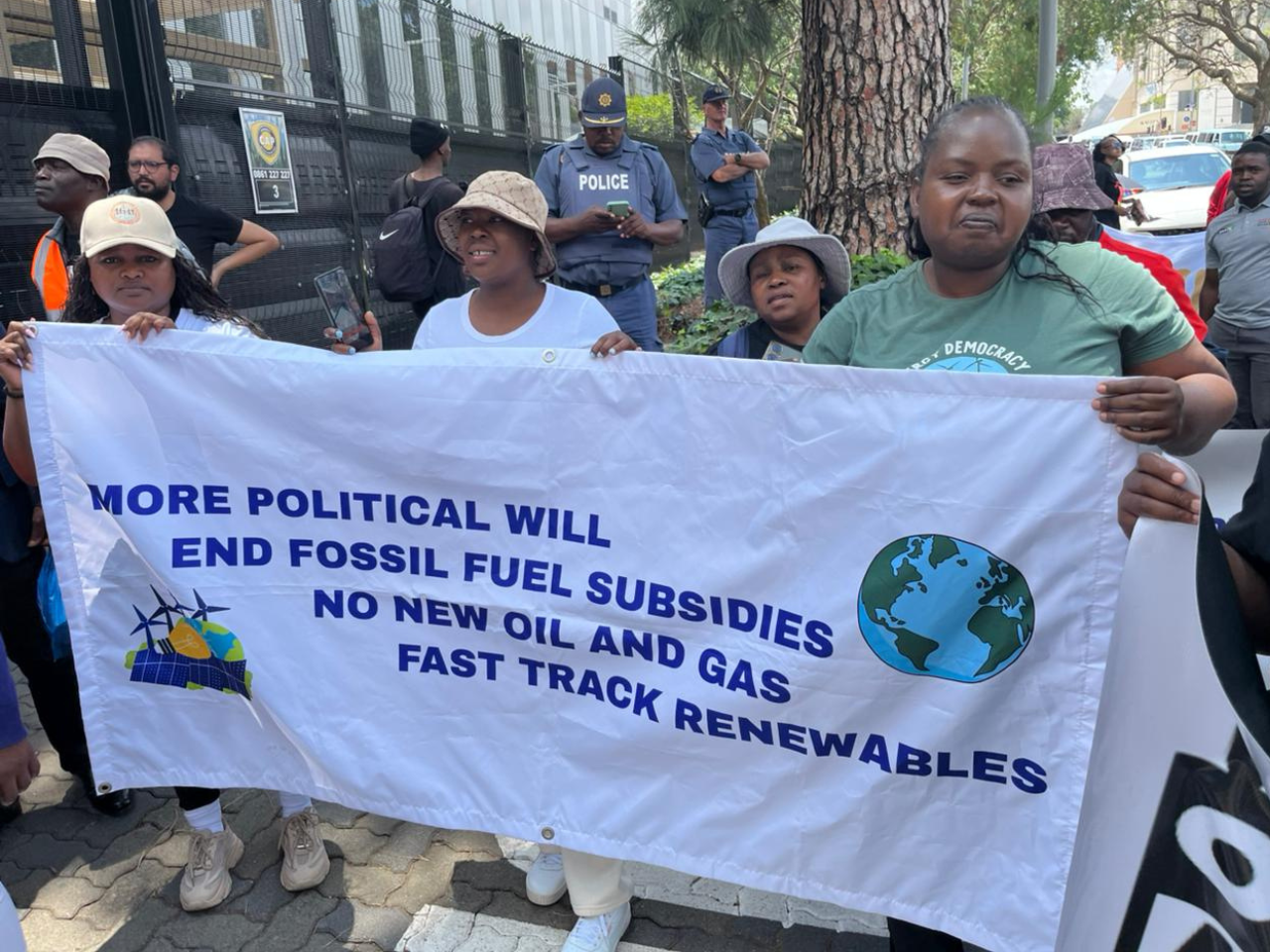

Beyond climate finance, governments must protect human rights, civic space, and the rule of law. People must be free to organise, speak, and participate in democratic processes without fear of harassment or repression. This will become even more important as investment in critical transition minerals – such as lithium, cobalt and rare earth elements – expands. Civil society must have fair, open, and meaningful public consultation in all policy-making processes, and communities should be able to influence decisions affecting land use, housing, energy, and environmental governance. Consultation must be genuinely accessible, inclusive, and based on mutual respect.
Community Outreach Coordinator at The Green Connection, Neville van Rooy, says, “The ethical management of Africa’s reserves of transition minerals is vital. While these minerals underpin global decarbonisation, communities must not face exploitation. Instead, they should benefit through local value-addition, decent jobs, and community ownership. This sector cannot repeat the injustices seen in the fossil fuel industry. A just transition must protect communities from harm.” He continues, “We support a just transition that truly centres workers, communities, and marginalised groups. This requires transition policies that guarantee decent work, offer retraining where necessary, and provide strong social protection. It also means safeguarding existing sustainable livelihoods, including those of small-scale fishers and people working in eco-tourism.”The Green Connection’s Strategic Lead, Liz McDaid says, “South Africa has a historic opportunity to use its G20 Presidency to elevate Africa’s priorities. With the world watching, we hope to see governments act for people and planet rather than continue subsidising industries that may drive the crisis. But meaningful progress requires ethical, transparent leadership that serve the people, not corporate interests. And public funds and climate finance must be managed with integrity.”