
Teslim Mohammed Yusuf, EWSETA executive for planning, monitoring and evaluation
“Pilots allow room to fail; I don’t have that privilege. What we are doing must work,” and that is the mindset we had when we successfully launch the G20 Clean Cooking Legacy Programme in KwaZamokuhle on the 4th of October 2025.
Global context and local relevance
Clean cooking was the only G20 energy priority negotiated outcome led by the Department of Electricity and Energy during the Energy Ministerial in October 2025 that received unanimous support among all member countries. According to Teslim, this highlights the growing global recognition that energy poverty and health implications of indoor air pollution from harmful cooking fuel types remain “foundational development challenges.” South Africa faces a particularly complex situation due to its heavy coal-energy dependence.“More than 80% of our electricity comes from coal,” Teslim notes. “So, before a household even switches on a stove, their baseline outdoor air quality is already poor. Adding coal, wood, or paraffin cooking on top of that multiplies the health risks.”Government views the clean cooking initiative as an opportunity to improve public health, reduce pressure on overstretched health systems, lower fire-related household risks, and contribute to long-term emissions reduction in-line with South Africa’s Nationally Determined Contribution (NDC). Teslim adds that the initiative has indirect economic significance as well, referencing global carbon border taxes: “If we don’t improve our energy profile, our exports will become less competitive internationally.”
KwaZamokuhle: The first implementation site
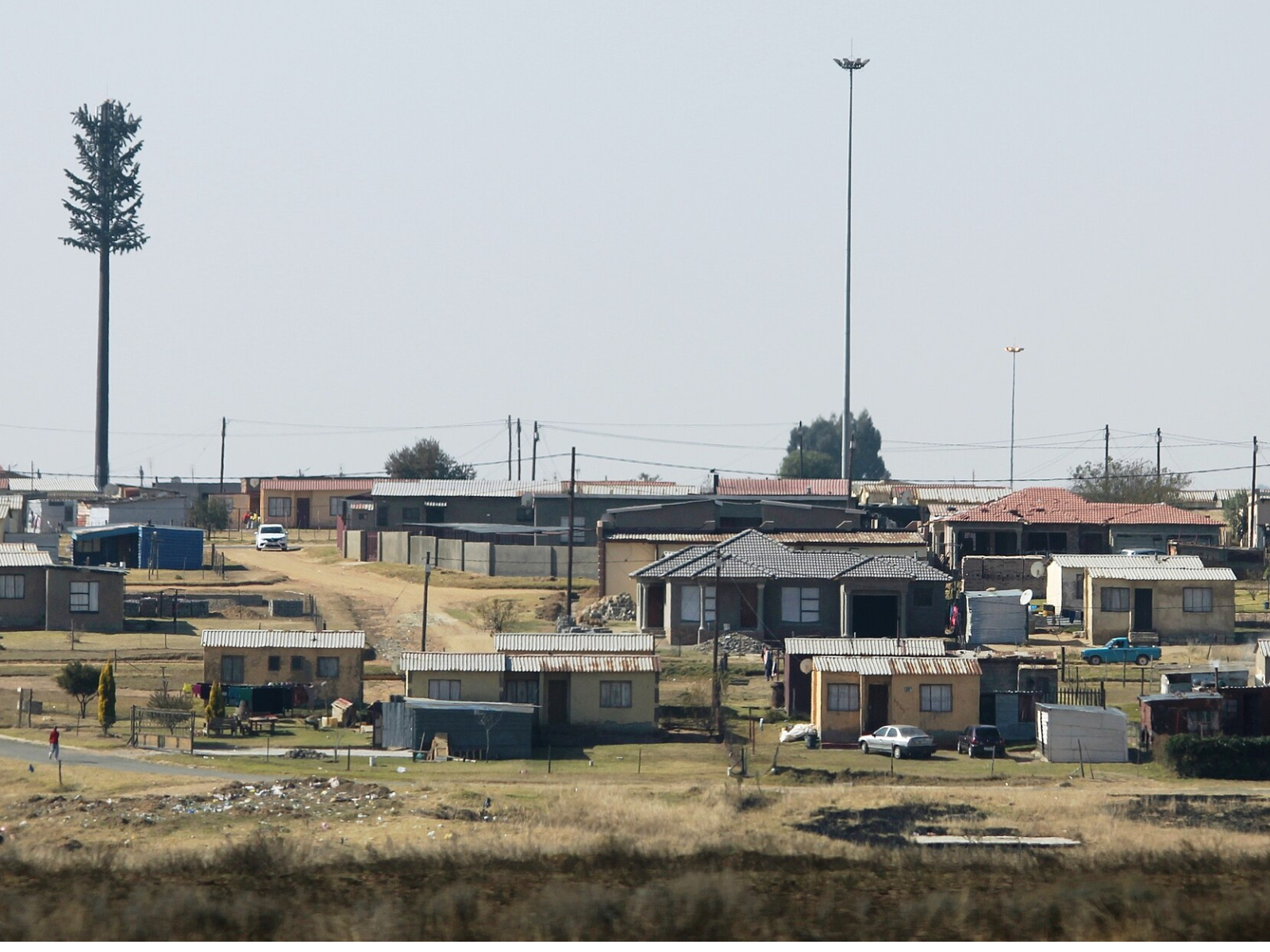
KwaZamokuhle, the first implementation site.
“These coal stoves are incredibly versatile,” Teslim explains. “They can heat a room, keep a kettle warm, cook food, and even be used for ironing. But they also release harmful fumes. We met kitchen staff who were rotating pots and taking turns outside just to breathe.”Through the programme, the schools now use modern high-pressure LPG systems, compliant installations, and improved ventilation. Preliminary feedback from woman cooking in these schools suggests reduced cooking times and safer working conditions. Teslim stresses that the school kitchens were chosen not only for health reasons but also because “school meals are the first energy transaction many children experience each day. If we can clean that environment, the impact is immediate.”
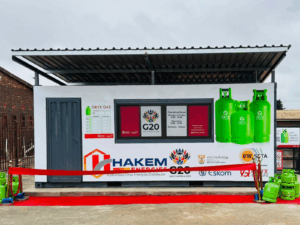
Making LPG accessible: the “box in the community” model
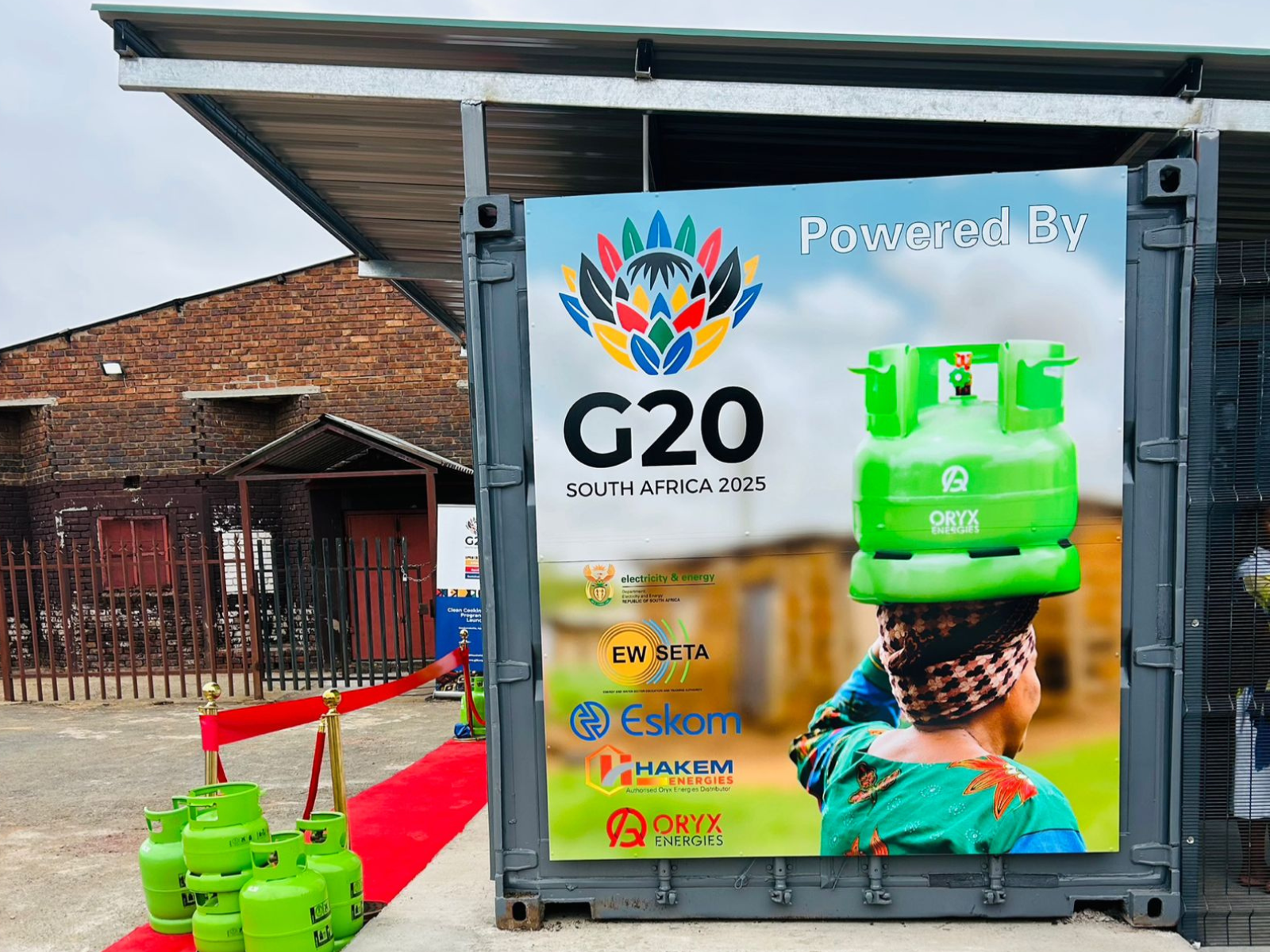
By adopting a working business model the community benefits from new economic activity
Teslim describes the rationale as simple: “If you do not bring gas closer to the community, people will go back to coal, wood, and paraffin. Easier access is everything.”The programme also promotes micro-transactions, allowing residents to buy small quantities of gas instead of full cylinders. This is a unique “fill what you can afford” solution: making it possible to “top-up” cylinders as opposed to being required to fully fill-up cylinder based on capacity. “If someone only has R10, they can buy enough LPG to cook breakfast. That changes the economics of clean cooking completely,” he says. In addition to household and school interventions, the programme includes capacity building for residential LPG installers, safety officers, and the small distribution of businesses previously mentioned. “This is not just about technology of fuel type. It is about creating local economies,” Teslim says. “We are training youth to become certified installers and safety practitioners. Clean cooking can become an entry point into the wider energy sector.”

These training programmes, delivered with industry association called the Liquified Petroleum Gas South Africa LPGSA, aim to support long-term job creation and formalisation within a sector that has historically been dominated by informal labour.
Governance, coordination, and local politics
The rollout has not been without difficulties. Teslim acknowledges that coordination between entities is crucial to the success of programmes of this nature. The Department of Electricity and Energy are custodian of South Africa’s energy security mandate, and it was a privilege to have its Minister Dr. Kgosientsho Ramokgopa launch the G20 Clean Cooking Legacy Programme in KwaZamokuhle on the 4th of October 2025. Political complexity at the community level also posed some challenges. KwaZamokuhle spans multiple ward councils, each with its own councillors and administrative systems. He adds that logistical negotiations, from community engagement facilitated by ward councillors to identifying suitable households in determining how resources should be distributed, often require considerable time and effort.“I drove to KwaZamokuhle twice in one day for a single conversation. That is the reality of local implementation,” however, the commitment for change on the ground, keeps you going and sure that success is inevitable.
National implications and alignment with existing programmes
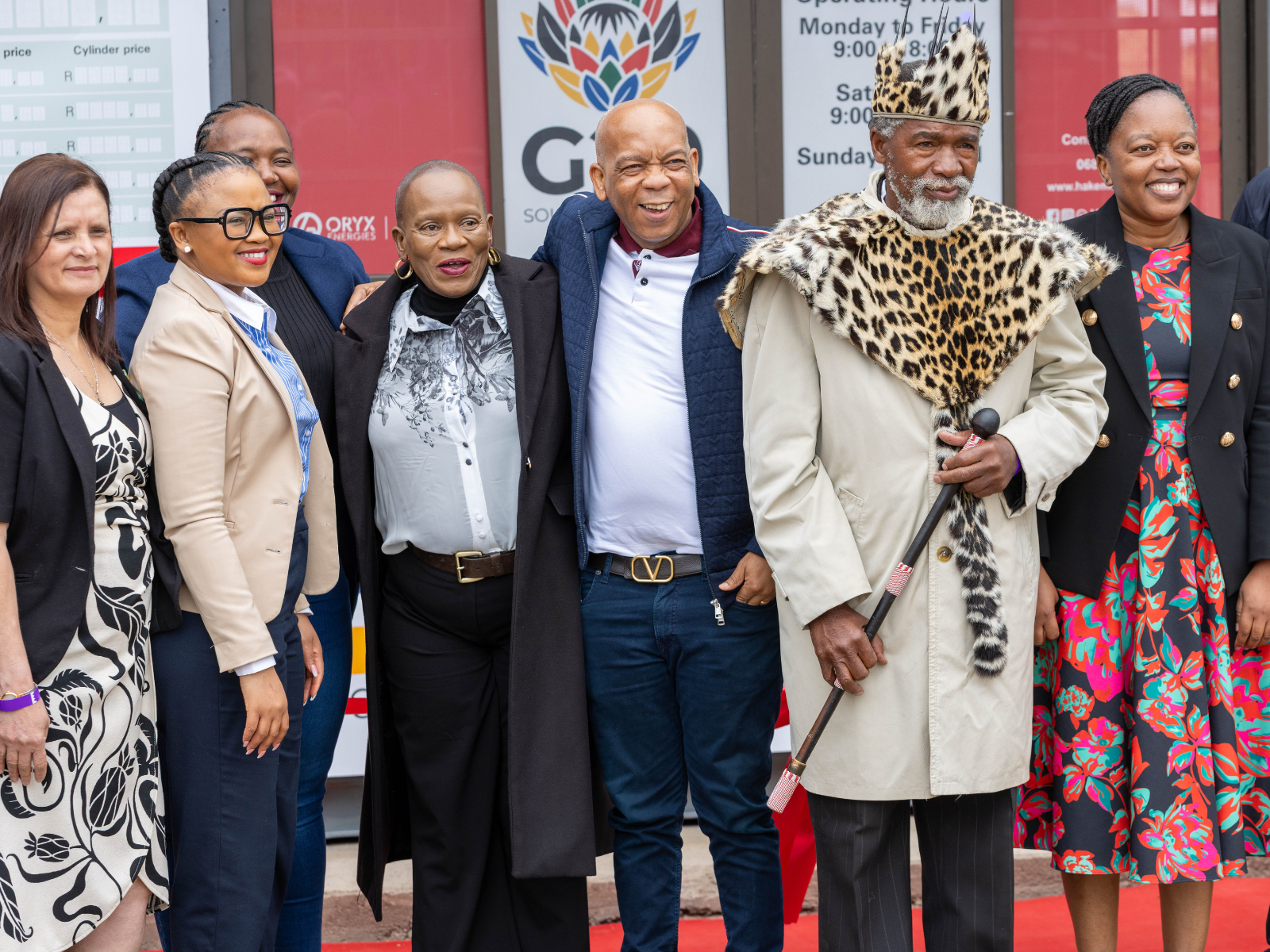
The Minister of Electricity and Energy for South Africa is Dr. Kgosientsho Ramokgopa alongside community members and EWSETA for the programme launch
“We must integrate with Eskom’s work. If they are replacing coal stoves in high-pollution areas, and we are building LPG access networks, that is when the system becomes coherent.”He adds that South Africa cannot view clean cooking as an isolated intervention: “It sits across energy, health, climate, small business, and education. The coordination is as important as the technology or fuel type.”
A model for Africa
Teslim argues that the programme’s impact could extend beyond South Africa’s borders. It is important to remember, the energy Poverty trap, reliance on polluting fuels drains household incomes and exposes families to unsafe environments, diminishing their ability to support themselves in a sustainable manner. Many African countries face similar challenges: limited access to clean fuels, underdeveloped distribution systems, and behavioural barriers to adoption. “Africa should be our market, not just geographical boundaries of South Africa,” he says. “If our manufacturing and expertise “Africa’s most industrialised economy” can serve a continent of 1.4 billion people, we create economies of scale that make clean cooking accessible, affordable, and available.” A G20 technical document developed in partnership with the International Energy Agency (IEA), the African Union, and key international organisations, outlines a four-pillar adoption framework covering policy, technology, markets, and capacity building fundamentals. The document will be made accessible to governments, researchers, and industry at larger, guiding a wide audience of actors as a catalyst for positive change. Although at a G20 Ministerial level, the technical submission is reduced to a Ministerial Communique for political circulation, Teslim emphasises the importance of preserving the scientific detail. “The condensed version is fine, but the full version matters. It gives institutions and individuals the tools to successfully implement their own clean cooking initiatives.”Reporting and accountability
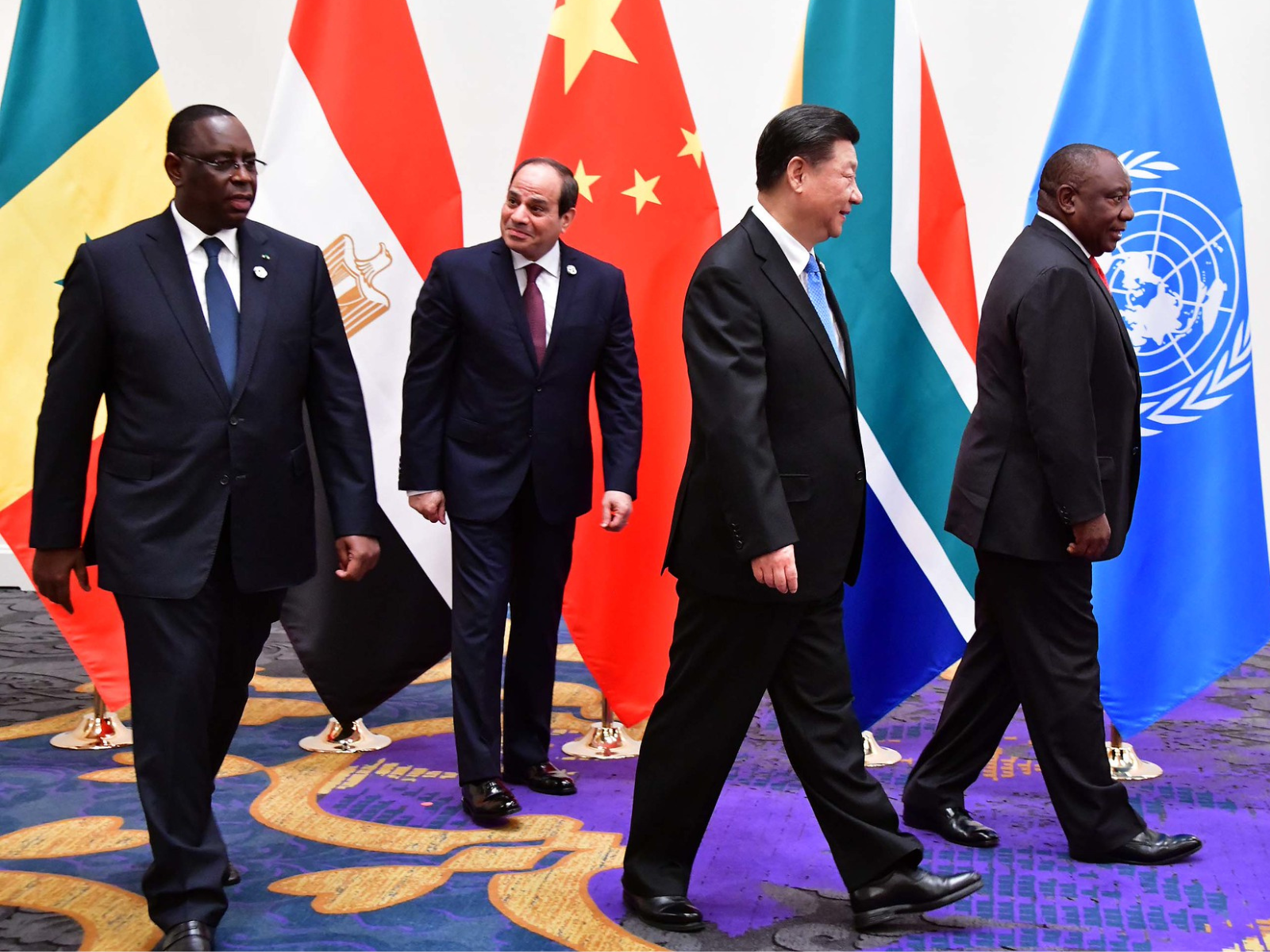
Clean cooking was the only G20 energy priority negotiated outcome led by the Department of Electricity and Energy during the Energy Ministerial in October 2025 that received unanimous support among all member countries. Image credit: Government of South Africa
Next steps
The next phase of the programme will expand community-level LPG micro-depots, roll out additional training programmes, and prepare formal monitoring and evaluation systems to assess health impacts, fuel-shift behaviour and economic outcomes. Government and international agencies are also considering potential fiscal support for clean cooking fuels, including targeted VAT adjustments and expanded carbon credit systems for low-income households. Teslim is cautious about declaring victory early. “Impact can only be measured after five years of implementation,” he says. “But the early indications show that if you make clean cooking accessible, affordable, and available, the possibilities for people and communities are unlimited. The behaviour follows the access.” South Africa’s clean cooking programme is still in its early stages, but it represents a vital combination of technical design, community engagement, and global collaboration. While challenges around governance and coordination remain, the programme has generated unusual momentum in a sector known for slow implementation.“This work must outlive the people who started it,” Teslim says. “Clean cooking should become part of South Africa’s energy DNA, not a once-off initiative.”As the country prepares to scale the model, its success may hinge on the same principles that guided its initial phase: accessibility, local ownership, and practical design. If these hold, South Africa could become a continental leader in an area where progress has been historically slow but increasingly urgent.