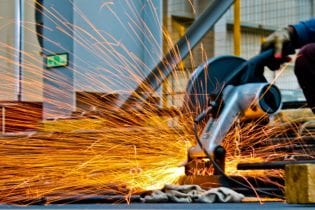
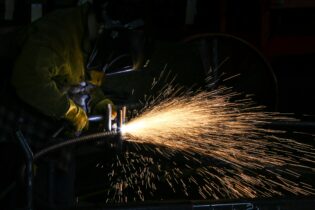
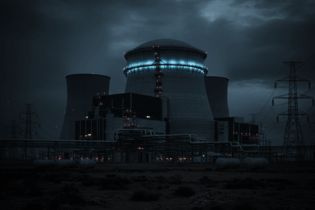
As South Africa prepares to advance its nuclear new-build programme, the country faces a critical challenge: a shortage of highly specialised welding, inspection, and non-destructive testing (NDT) skills required to deliver the safety-critical infrastructure nuclear power demands. These welds and inspections must meet some of the toughest integrity standards in global engineering, making the strength of the national skills pipeline a decisive factor in the success of the programme.
The Southern African Institute of Welding (SAIW), one of the continent’s oldest and most recognised training and certification bodies, has spent the past year strengthening its capabilities in anticipation of this requirement. Working closely with Necsa, the SAIW recently completed advanced upskilling of its internal specialist NDT team as part of preparations for the future Necsa Centre of Excellence for NDT, a key component of building South Africa’s nuclear-readiness. As SAIW President Joseph Zinyana notes, “The nuclear new-build programme requires highly specialised skills, especially in advanced NDT and high-integrity welding. We have therefore initiated upskilling of our NDT training team with Necsa, and we are primed to take this programme forward in the new year.”A year of renewal and operational stability
This renewed focus on nuclear capability comes at the end of a watershed year for the SAIW. Entering 2025 with operational instability, staff shortages, and a need for strategic renewal, the SAIW began the year with several interventions to restore credibility and stability. “We ended last year in disarray, needing to make some urgent interventions to secure the sustainability and credibility of the Institute. I am pleased to say that this process has been largely successful,” says Zinyana. A major component of this turnaround has been improving the student experience, for many years a pressure point for both learners and industry. Long delays in exam results, certificate issuance, and student support were addressed through the appointment of additional lecturers and the short-term hiring of contractors to support delivery.“We needed to drastically improve our interaction with students in terms of turnaround times between examinations, results being made available, and certificates being issued. This turnaround has been very successful,” explains Zinyana.As a result, student numbers have risen steadily since mid-year, and complaint volumes have decreased significantly, signalling that improvements are being felt across the system.

Modernising through digital transformation
Alongside these changes, the SAIW has made meaningful progress in modernising its digital infrastructure. A new website and student portal allow prospective students to browse and register for the full range of SAIW courses. The next phase will incorporate online payment, with digital results and certificates soon to follow. “We are now working on systems to provide same-day results through automated exam setting and marking,” says Zinyana. This digital transformation extends into certification services, where ISO 3834 Company Certification is now managed through an integrated digital platform, and personnel certification databases, including CP, IPE, NDT, and IIW, are being digitised. There is also strategic focus on digital efficiency, traceability, and modernisation as essential elements of the Institute’s long-term competitiveness. Training modernisation has also been a priority. The Institute continued its shift toward contemporary teaching tools, including virtual welding systems designed to accelerate learner readiness, while laser welding will be added to the curriculum in 2026 to support advanced manufacturing sectors.“Virtual welding and the introduction of laser welding extend our reach into industries such as automotive manufacturing and help make welding more exciting for the digital-age generation,” says Zinyana.
Positioned for growth
Looking ahead to 2026, the SAIW plans to scale its advanced NDT and nuclear-aligned training offerings, deepen partnerships with local manufacturing institutions, build stronger relationships with African institutions and international nuclear partners, strengthen its quality and ethics governance, and push further into digital transformation. Zinyana is confident about the road ahead:“Our initiatives are drawing interest, and this modern approach is what students want. We look forward to continuing this journey with the broader industry in the new year.”