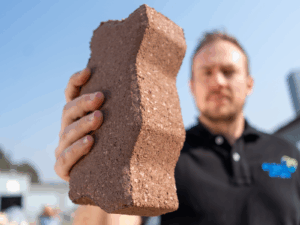
EWaste Africa has been awarded the GreenTag LCARate Level B Bronze Certification for their interlocking eco-pavers, a recognition that places the products among a small group of South African products that have undergone independent and science-based evaluation. The certification confirms that the company’s interlocking eco-pavers meet the requirements of the Green Building Council South Africa and have been assessed across multiple sustainability categories, including life cycle impacts, resource use, health considerations and social responsibility.
The accreditation is the result of a detailed life cycle assessment of the pavers, which examined the inputs, production process, durability and end of life considerations. For clients in construction, property development and government infrastructure, the rating provides a level of assurance that the material contributes to sustainable building practices without compromising technical performance. Dr Mark Williams Wynn, Chief Technology Officer at EWaste Africa, says the achievement reflects more than a single audit. He notes that it represents years of work to ensure that circular products can meet the rigorous standards expected by the built environment. “Earning a GreenTag rating is not something that happens overnight. It demands transparent data, independent testing and a willingness to open every part of the manufacturing process to scrutiny. We are proud that our pavers have met the criteria. It confirms that responsible manufacturing can support real engineering quality. It also gives our clients something they have been asking for, which is a verifiable sustainability credential backed by recognised experts.” GreenTag certifications are used widely by architects, engineers and specifiers who need products that can achieve Green Star credits. The LCARate level B Bronze level indicates that the pavers meet the core sustainability requirements set out in the GreenTag framework. This includes considerations such as greenhouse gas impacts, ecological effects, toxicity, resource efficiency and social responsibility in the supply chain. For a company that has built its reputation within the waste-to-value sector, the accreditation provides external validation of a philosophy the business has championed for more than a decade. EWaste Africa has established itself as a national leader in the ethical processing of electronic and lighting waste. The company works to recover materials that would otherwise go to landfill and return them to the local economy through engineered products.
Pravashen Naidoo, Founder and CEO of EWaste Africa, says the certification strengthens the company’s long-term vision.
“From the beginning, we wanted to show that circular manufacturing can support mainstream infrastructure. The market often assumes that sustainable alternatives are either too costly or not durable enough. This certification helps to change that perception. It shows that locally produced materials can meet recognised environmental standards while supporting jobs and industrial capacity in South Africa.”As municipalities and developers face growing pressure to build climate-conscious and resource-efficient infrastructure, demand for independently verified products is increasing. The GreenTag rating gives EWaste Africa a clear advantage when materials are evaluated for public procurement, green building submissions or engineering specifications that require documented environmental performance. The company plans to incorporate the certification into all product documentation, tenders and technical submissions. Further research and development work is already underway to expand the range of circular products that can undergo the same level of independent assessment. For clients, the certification represents a practical step forward. It offers a credible alternative to imported materials and aligns with the national focus on greener infrastructure, job creation and responsible industry growth. For the broader sustainability sector, it signals that South African companies can compete at the highest standards when given the opportunity to innovate and invest in cleaner processes.