South Africa is on a path towards net zero, or is it carbon neutral? What about the circular economy? Climate jargon is filling the atmosphere as much as greenhouse gases are, and with a plethora of seemingly interchangeable words, it is important to actually decode what they mean.
While the words themselves can be confusing, they can also be insincere. It is important that the framework is backed by data. Businesses employing climate jargon are communicating to their customers that they care about the environment in some capacity, which can leave us with a warm and fuzzy feeling. If there is no data to back up their claims, then we may just feel fuzzy.
The Circular Economy
The circular economy is an economic system designed to eliminate waste and maximise the continuous use of resources. Instead of the traditional linear model of “take, make, dispose”, the circular approach prioritises designing products for durability, reuse, repair and recycling.
Materials are kept in circulation for as long as possible, minimising the extraction of virgin resources and reducing environmental impact. In a circular economy, waste becomes a resource, industries collaborate across value chains, and economic growth is decoupled from resource depletion.
Zero Emissions
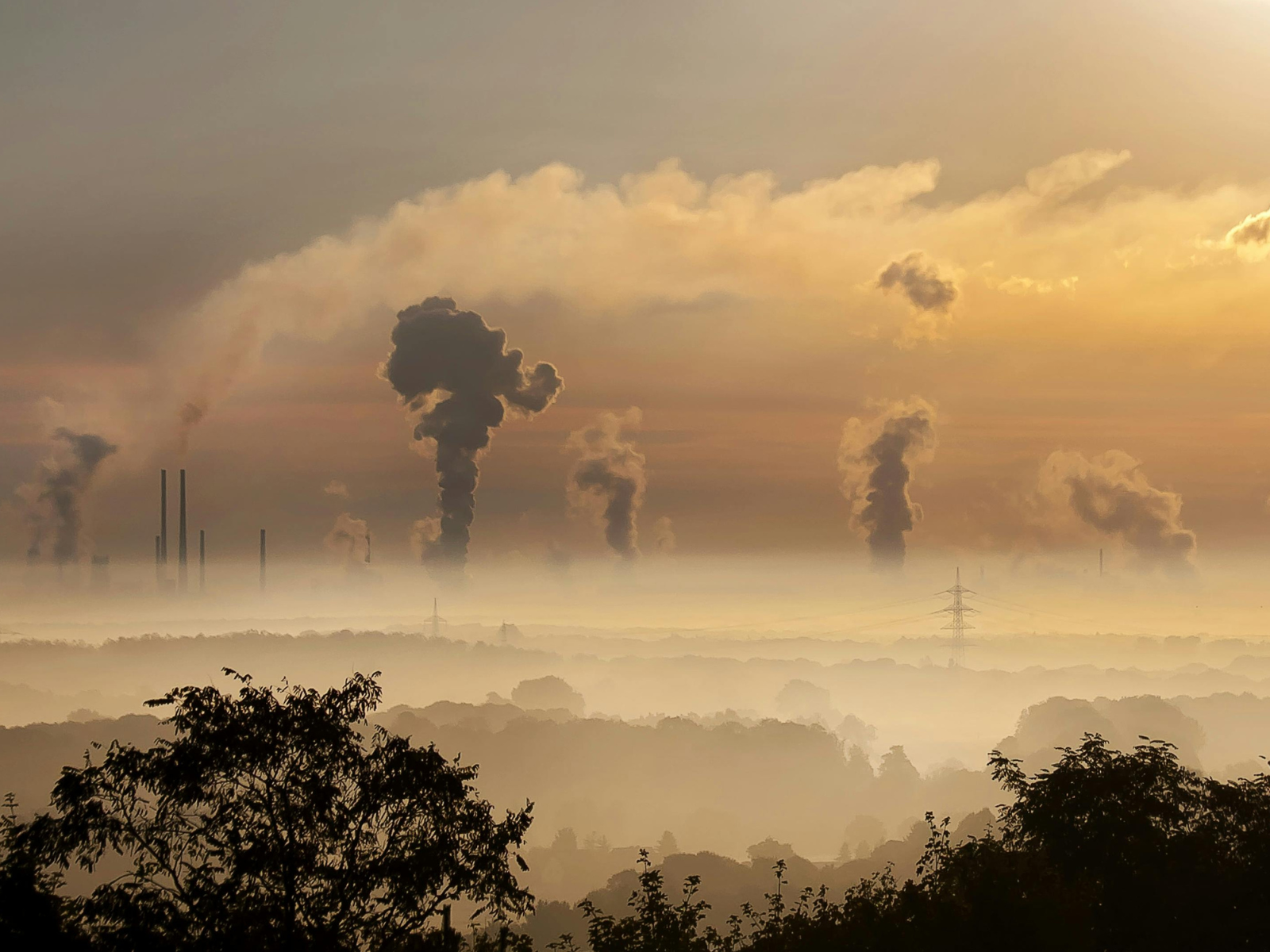
The days of uncontrolled emissions and endless resource use are ending
Zero emissions refers to activities, processes or systems that release no greenhouse gases into the atmosphere. This means that no carbon dioxide, methane or other climate-warming gases are produced during operation. Zero-emission technologies, such as solar PV, wind turbines or electric vehicles powered by renewable energy, do not add to the global greenhouse gas burden. The term plays a key role in climate policy, indicating the need for sectors to operate without contributing to atmospheric pollution.
Net Zero
Net zero is a state in which the total greenhouse gases emitted by an organisation, country or system are balanced by an equivalent amount of gases removed from the atmosphere.
Achieving net zero does not necessarily mean eliminating all emissions; some sectors, such as agriculture or heavy industry, may still produce unavoidable emissions. However, these must be offset through carbon removal measures such as reforestation, carbon capture technology or verified carbon credits. Net zero is the central global target for limiting global warming to 1.5°C.
Carbon Neutral
Carbon neutrality refers to achieving a balance between carbon dioxide emissions produced and carbon dioxide removed or offset. An organisation, event or product is considered carbon neutral when it measures its carbon footprint, reduces it where possible, and offsets the remainder using credible schemes such as renewable energy certificates or carbon sequestration projects. Unlike net zero, carbon neutrality typically focuses only on CO₂ and does not always require deep, long-term emissions reductions.
Greenwashing
While it would be great to just rely on the words of others, anytime these words come up, they should be backed by data and justified. Some organisations will deliberately obscure the facts in a practice called greenwashing.
Greenwashing is the practice of presenting an organisation, product or policy as more environmentally friendly than it truly is. It involves misleading claims, selective reporting, vague language or exaggerated marketing designed to create the impression of sustainability.
Companies may highlight minor environmental initiatives while ignoring significant environmental harm, or use terms like “eco-friendly” without evidence. Greenwashing undermines consumer trust, distorts markets and hampers genuine sustainability efforts by creating confusion and misinformation.