The Department of Water and Sanitation (DWS), the Western Cape Provincial Government, and Witzenberg Local Municipality convened a constructive engagement on 24 December 2025, with the Witzenberg Justice Coalition (WJC) to deliberate on measures aimed at addressing water quality challenges in Tulbagh.
This engagement follows reports of water quality concerns, including unpleasant odours from tap water and post-treatment brownish discolouration, as well as a noticeable smell in the final treated water. Western Cape Minister of Local Government, Environmental Affairs and Development Planning, MEC Anton Bredell, emphasised that access to both adequate water quantity and quality is enshrined in the Constitution of the Republic of South Africa.“As Government, we have an obligation to ensure that water supplied through our systems is of good quality and safe for human consumption,” said MEC Bredell.The DWS Western Cape Provincial Head, Ms Ntombizanele Bila-Mupariwa, reiterated that DWS is primarily responsible for the provision of bulk water supply to municipalities and other users, and further supports municipalities through various grants for infrastructure upgrades.
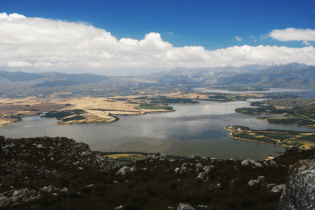
“Government will pull out all the stops to ensure that sustainable and amicable solutions are implemented to address these challenges,” said Bila-Mupariwa.Witzenberg Local Municipality indicated that it has two main water sources, namely the Tulbagh Dam and the Waverenskroon Dam. However, current water quality challenges are attributed to increased demand exceeding supply, largely due to the growth of informal settlements, coupled with the fact that only four of the six sand filters at the treatment works are currently operational.

The Municipality further advised that turbidity levels, currently averaging between 1 and 3 NTU, are not at alarming levels. Despite the reported odour concerns, Witzenberg Local Municipality assured residents and visitors that the water supplied in Tulbagh remains safe for consumption and fully complies with SANS 241, the South African National Standard for Drinking Water Quality.
Ms Naomi Betana, Convener of the Witzenberg Justice Coalition, welcomed Government’s interventions, particularly the deployment of water tankers.“As the Witzenberg Justice Coalition, we are satisfied with Government’s commitment and will continue to monitor the implementation of interventions,” she said.
Short- to Medium-Term Relief Measures
The following interventions were agreed upon and are currently being implemented:- Procurement of two additional sand filters
- Regular flushing of the water distribution system
- Deployment of water tankers for a period of seven (7) days
- Temporary halt of supply from the Waverenskroon Dam for a few days
- Construction of a new reservoir, to be commissioned within eight (8) months
- Exploration of alternative water treatment methods.