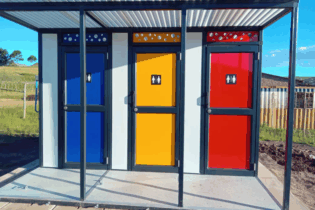
In an ironic twist, a community protest about water shortages almost prevented me from attending the opening of the new, safe toilets and handwashing facilities for Ivory Park Primary School.
Despite the blockade, the situation was calm, and I managed to find a back road to Ivory Park Primary School. The principal – Poppy Ngwenya – explains:
“Ivory Park has long struggled with intermittent water supply. Households often endure days without running water, forcing residents to rely on communal taps, water tankers, or unsafe alternatives – making water and sanitation shortages one of the community’s most pressing daily challenges.”
Home to more than 2 360 learners and close to 100 teaching and school staff, Ivory Park Primary School is among the largest in Gauteng.
“This school size is equivalent to that of a small South African town. These water shortages have therefore turned what should be a place of learning into a daily struggle for health and dignity. In order to prevent learners from getting sick, we have had to halt schooling for the equivalent of 40 full days this year,” adds Ngwenya.
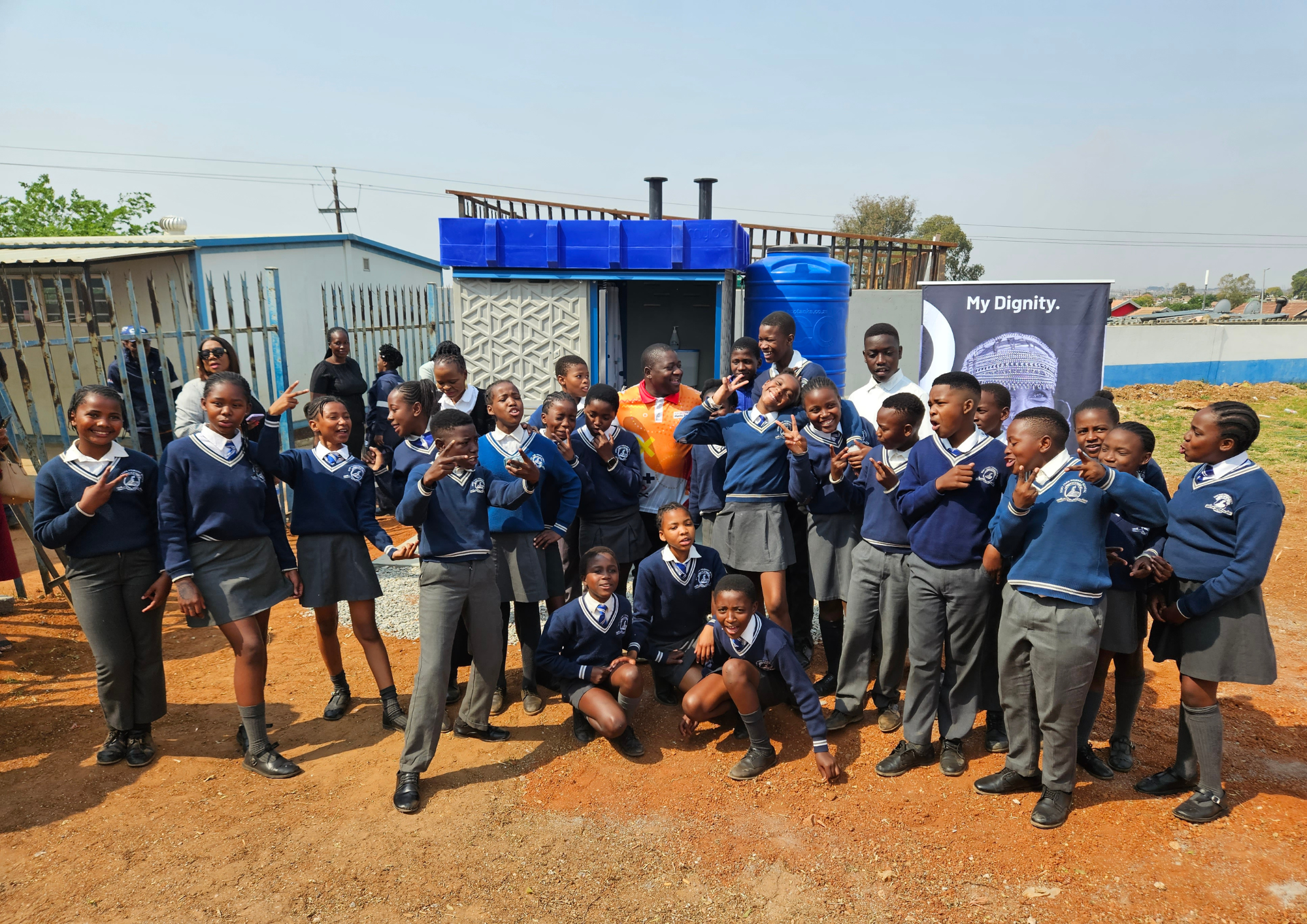
School children and teachers at the
opening of the new, safe toilets and
handwashing facilities
Children miss their daily school meals, wander the streets hungry, and parents, struggling to make ends meet, often cannot be there to care for them. Teachers are left in an impossible position, never knowing if tomorrow’s school day will happen.
“Essential for survival, water can just as easily become a leading cause of death. More people die from unsafe water than from all forms of violence, including war. Water related diseases like cholera, typhoid, dysentery and diarrheal diseases cause 3.5 million deaths a year. The bulk of these deaths are children under five years old. This is equivalent to a jumbo jet aeroplane carrying children crashing every hour. Diarrheal disease caused by unsafe water and poor sanitation kill more children than AIDS, war, Malaria and Measles combined,” states Shelley Humphreys, CEO,
Save Our Schools Non-Profit Organisation (SOSNPO).
Joining forces to make a difference
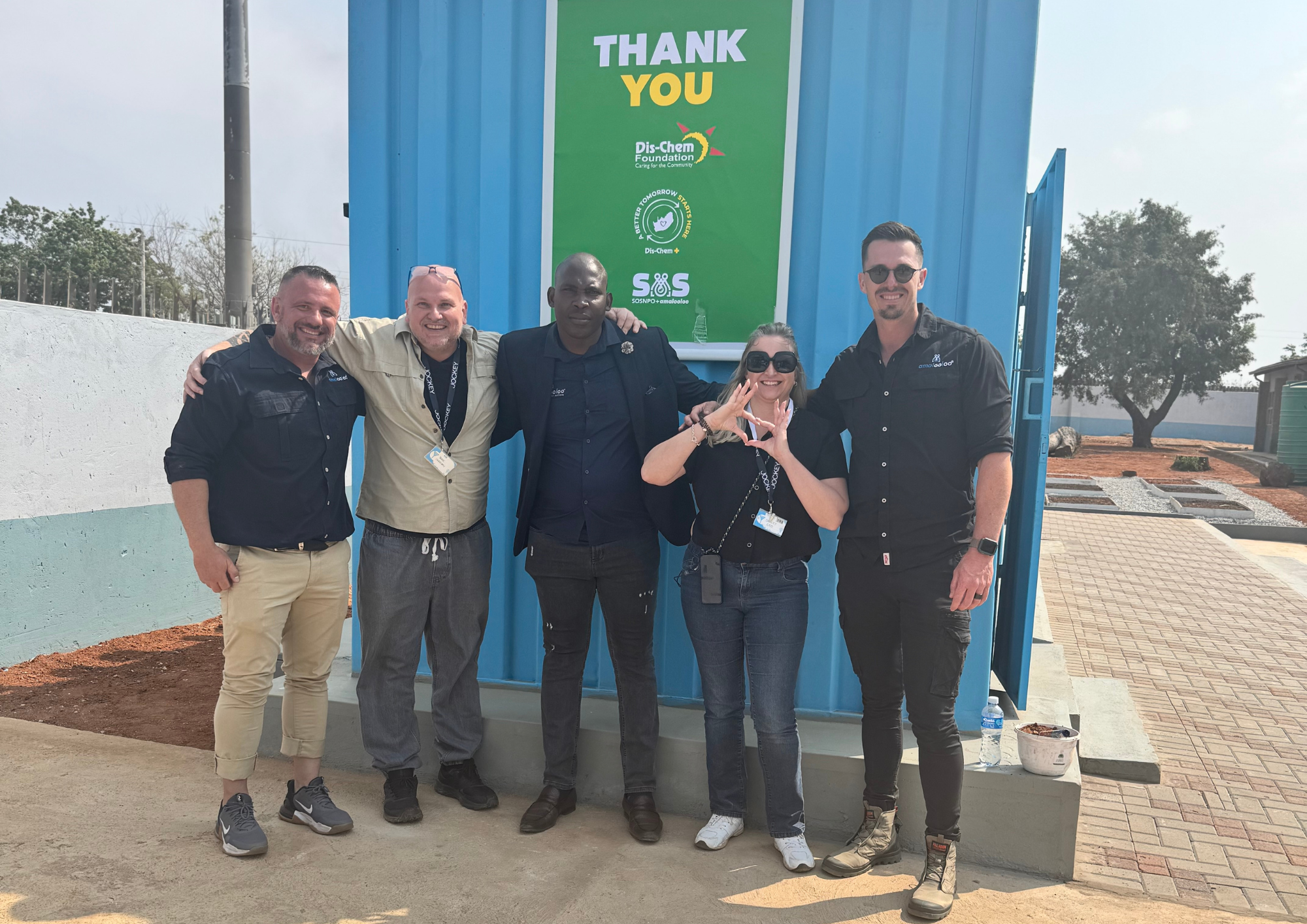
The SOSNPO and Amalooloo team (from left to right): Dylan de Klerk, Rene Frank, Rocky Malebogu, Shelley Humphreys and Lumar Fourie
Founded during Cape Town’s 2017 Day Zero crisis, SOSNPO was created to assist government and municipalities with water and sanitation needs in under-resourced schools and communities.
While working on a sanitation project in Makause Informal Settlement near Germiston, SOSNPO heard from its residents about how many of their children were missing schooling at Ivory Park Primary School due to lack of water.
In this case, SOSNPO mobilised private stakeholders to take action and construct a new water and sanitation system for the primary school. Comprising Amalooloo, Infinite Industries, KSB Pumps, Dischem, PDJF (Grundfos Foundation) and SOSNPO, the partnership installed safe, containerised sanitation and handwashing facilities, repaired the school’s borehole and also introduced a dignity hub.
Rene Frank, the chairman of SOSNPO addressed the school children at the launch:
“This partnership between business and civil society formed a movement, Out Of The Blue, which is more than a project – it’s a promise of care. We all have a shared vision for dignity, education, and sustainability. We want each of you to have the strongest possible start to your future and that begins with something simple, yet powerful: consistent access to clean water and dignified sanitation.”
Sanitation technology

Amalooloo’s WASH Hub at Ivory Park Primary closes the loop by turning diverted urine and solid waste into fertiliser and eco-char
is at the forefront of addressing sanitation challenges in urban, peri-urban and rural areas, which is why SOSNPO selected the company as its strategic research and development partner.
“Working largely in rural communities with minimal infrastructure, SOSNPO recognised that there is seldom a ‘one-size-fits-all’ sanitation solution. This led to the signing of a memorandum of understanding between the two organisations, built on a shared vision to uplift communities and restore dignity,” explains Lumar Fourie, operational director, Amalooloo.
He adds that Amalooloo supplies a range of sanitation technologies, including low-flush, waterborne and dry sanitation systems, with its flagship solution being the MyLoo dry sanitation system implemented at Ivory Park Primary School.
“MyLoo is an aerobic, natural composting sanitation system that safely treats human waste at source: solids fall into a lined vault or container while liquids are diverted to a soakaway, preventing odours and reducing groundwater risk. A vent pipe with a solar-powered extraction fan significantly increases natural airflow, which dries and decomposes the waste while keeping insects out. Once the organic waste has dried out, it can be safely removed and further processed into biochar or fertiliser. By reducing the moisture content of waste by 85%–95%, the system prevents faecal-sludge generation and eliminates the need for costly transport and disposal. This is a huge advantage because faecal sludge is extremely difficult to transport and poses a real threat to the health of the learners.”
Engineered in line with ISO 30500, the MyLoo pedestal features a patented automatic flap that opens and closes as the user sits and stands, ensuring hygienic and dignified separation of urine, faeces and common incidentals such as toilet paper, sanitary products and nappies. The system operates entirely without water, apart from handwashing for hygiene.
At Ivory Park Primary, The Out Of The Blue Movement’s containerised WASH (water, sanitation and hygiene) Hub extends this circular model by diverting urine and containerised hard waste for conversion into fertiliser and eco-char used for cooking and heating. The urine/water diversion system is piped beneath food gardens to support crop growth, giving learners practical environmental education opportunities, while supplying fresh produce for school meals and the surrounding community.
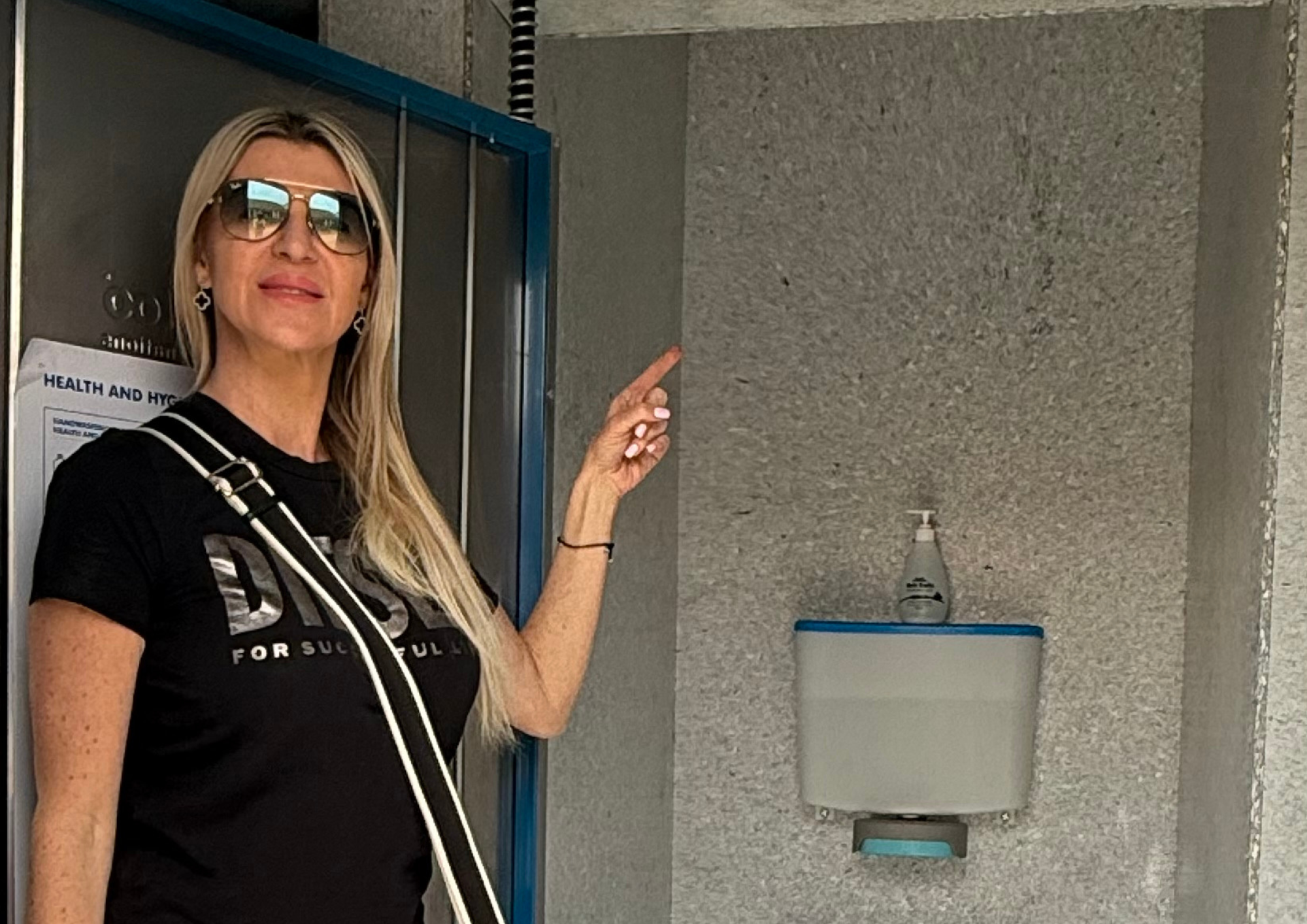
Maggie Infante, cofounder, Infinite Industries
“We have also formed a unique partnership with Kohler, a company that operates in more than 50 countries and is considered one of the most influential brands in bathroom and sanitation design. As seen at Ivory Park Primary, Kohler’s innovative cleanse handwashing solution can be integrated into Amalooloo’s MyLoo sanitation system. This pairing combines water-efficient handwashing with waterless toilet technology, making every drop count while improving hygiene,” states Fourie.
In addition to the toilets, Amalooloo also supplied a Dignity Hub. “I am extremely excited about this project. Sanitation is not just about toilets — it’s about people, their dignity and wellbeing. We have, therefore, also built a dignity hub that includes water storage of up to 1200 litres, a rainwater harvesting system as well as an integrated shower facility. There are many hard-working people in this country that have to wake up at three in the morning and wash themselves in a room that is shared with numerous other people. Our Dignity Hub provides people with privacy and respect,” maintains Fourie.
Recycled plastic
Amalooloo supplies a range of technologies, including Non Sewered Sanitation (NSS) low-flush and no-flush systems, with its flagship
solution being the MyLoo dry sanitation system that was implemented at Ivory Park Primary School
With the desire to make the WASH Hub as environmentally friendly as possible, SOSNPO also partnered with Infinite Industries – a company that converts waste products into recycled environmentally friendly products, such as recycled plastic boards and roofing sheets for low-cost housing, cable and pipe protection covers, as well as school desks and benches.
An old container was refurbished and clad with recycled boards, which were also used for all the flooring and internal partitioning. “The boards are manufactured by repurposing difficult-to-recycle materials such as toothpaste tubes, toothbrushes, washing powder bags, long-life milk cartons and multi-layered packaging – items that typically end up in landfills. Nearly one million discarded toothpaste tubes, washing powder bags and long-life milk cartons were repurposed to build the WASH Hub – material that would otherwise have ended up in landfill,” explains Maggie Infante, the cofounder of Infinite Industries.
Infinite Industries also runs the Infinite Indloo project, which offers a private, insulated, ventilated and self-composting toilet solution that can be installed almost anywhere. “We have already built structures for more than 60 toilets using our recycled boards,” says Infante. “These boards are flame-retardant, water and UV-resistant, and highly durable. Their strong thermal insulation ensures that the structures remain comfortable — staying cool in summer and warm in winter,” says Infante.
The boards undergo rigorous testing, including UV, fire and water resistance assessments, as well as flexural and strength tests to confirm their performance and reliability.
“There is little value in installing sanitation systems that use minimal or no water and support circular-economy principles, if the structures housing them are not made from recycled, sustainable materials. Infinite Industries closes this gap by designing units built from high-recycled-content boards that are durable, insulating and environmentally responsible – making them the ideal partner for truly circular, dignified sanitation solutions,” she adds.
Restoring a borehole
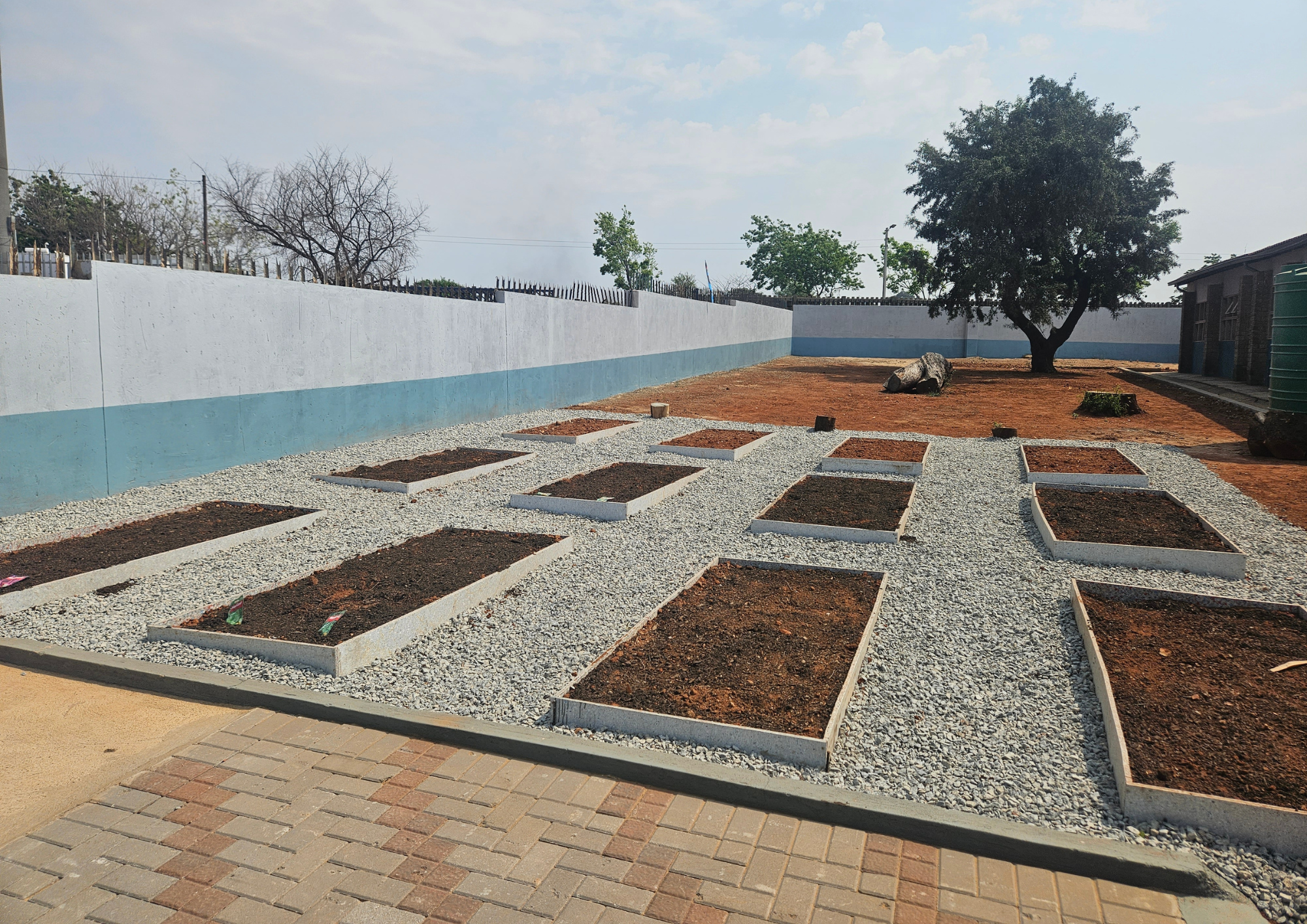
The urine/water diversion system is piped beneath food gardens to support crop growth, giving learners practical environmental education opportunities, while supplying fresh produce for school meals and the surrounding community
restored a long-dormant borehole and supplied a new pump system to supply consistent water to the school. KSB Pumps worked closely with their sales partner, Matthews Msiza from Sanitation and Projects (S&P), who installed and connected everything. A multistage vertical high-pressure centrifugal pump (Movitec), as well as a submersible borehole pump, solar panels and filters were supplied.
“Making a lasting difference to children and communities is something that we do not take lightly. This is a powerful reminder of what is possible when corporations and communities come together with a shared purpose. Water is one of our most valuable resources – yet it’s often taken for granted until the moment it’s no longer available,” explains Hugo du Plessis, market area manager: Water, Wastewater and Irrigation,
KSB Pumps & Valves.
For Ivory Park Primary, these interventions are more than infrastructure upgrades – they restore dignity, stability and opportunity for over two thousand children. With clean water, safe toilets and community-driven support, the school can finally focus on learning rather than survival.
“The key ingredient to a school’s success is a good principal. Poppy is extremely invested in the school and students. It has been refreshing to see the school acting like a partner and participant and not a beneficiary. Thanks to the dynamic principal and dedicated school governing body, I knew from the very beginning that this project would be a success,” concludes Humphreys.
“Essential for survival, water can just as easily become a leading cause of death. More people die from unsafe water than from all forms of violence, including war. Water-related diseases like cholera, typhoid, dysentery and diarrheal diseases cause 3.5 million deaths a year. The bulk of these deaths are children under five years old. This is equivalent to a jumbo jet aeroplane carrying children crashing every hour. Diarrheal disease caused by unsafe water and poor sanitation kill more children than AIDS, war, Malaria and Measles combined.”