Deputy Minister of Water and Sanitation David Mahlobo
South Africa’s bulk water sector enters the 2025 – 2030 planning cycle facing a convergence of operational resilience and systemic fragility. While water boards continue to deliver potable water at scale and meet regulatory standards, their financial sustainability is increasingly undermined by municipal non-payment, inherited liabilities and ageing infrastructure.
This tension is evident across recent five-year plans and oversight assessments, which collectively point to a sector that remains technically capable but structurally exposed.
Speaking to the Water and Sanitation Committee parliament group, Deputy Minister of
Water and Sanitation David Mahlobo frames the state of the sector through a differentiated risk assessment of the country’s water boards. He indicates that Rand Water is assessed as “low to no risk”. At the same time, Vaal Central Water is categorised as “high risk”, primarily due to liabilities inherited from the dissolution of the former Sedibeng Water. Amatola Water, he says, is assessed as “medium to high risk”, although recent operational improvements are encouraging.
Mahlobo stresses that water boards must be evaluated against their statutory functions as defined in the Water Services Act. He confirms that all three boards submit compliant corporate plans and acknowledges Parliament’s role in reinforcing accountability and governance discipline.
“The Department appreciates the consistent support it receives from the Committee,” he says.
He highlights the establishment of special purpose vehicles as a key reform instrument, describing the launch of Rand Water’s SPV as “an important milestone for sector transformation”. However, he cautions that not all municipalities are positioned to participate. “Some municipalities may not be able to participate because of internal governance and operational challenges,” Mahlobo notes.
The Deputy Minister also reports progress on infrastructure delivery, citing the commissioning of a new water treatment plant that unlocks previously stalled public investment. While welcoming good rainfall, he warns that weather variability introduces new risks, particularly flooding in settlements located in flood-prone areas. Addressing these risks, he says, requires close coordination with municipalities and the South African Weather Service.
Department of Water and Sanitation overview: Aggregate performance and risk
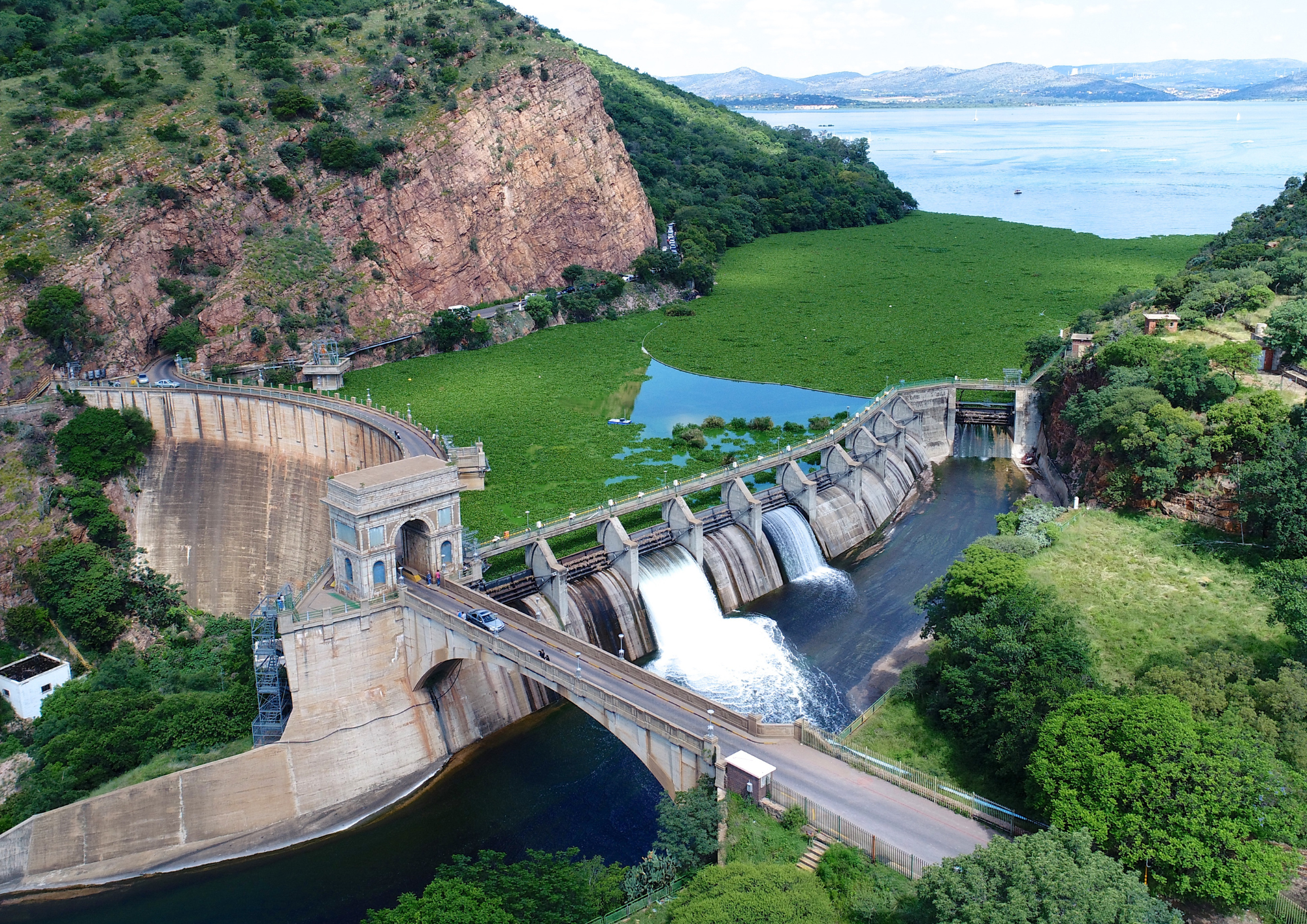
The Department of Water and Sanitation is estimated to spend R21 billion over the next 3 years
Providing an institutional overview, chief director for Institutional Oversight, Thoko Sigwaza, outlines the Department’s regulatory and financial oversight framework, anchored in the Water Services Act and the Public Finance Management Act. She confirms that all water boards submit plans that comply with legislative requirements and align with the national priorities set out in the National Development Plan and the National Water and Sanitation Master Plan.
Sigwaza points to measurable achievements across governance, audit outcomes, strategic planning and infrastructure investment.
“There are strong achievements in governance and infrastructure delivery,” she says.
However, she emphasises that these gains are uneven and remain vulnerable to external pressures.
From a financial perspective, water boards project total revenue of R117.3 billion over the medium term, with capital expenditure of R21.75 billion planned between 2025 and 2028. Despite this scale, Sigwaza identifies municipal non-payment as “the single largest threat” to financial sustainability. Under-capacitated entities, particularly those affected by amalgamations and inherited debt, face heightened risk exposure.
She cautions that funding constraints persist, especially where section 63 interventions are required to stabilise distressed boards. Without improved payment discipline downstream, she warns, capital investment and operational resilience will remain constrained.
Rand Water: Operational strength amid escalating financial exposure
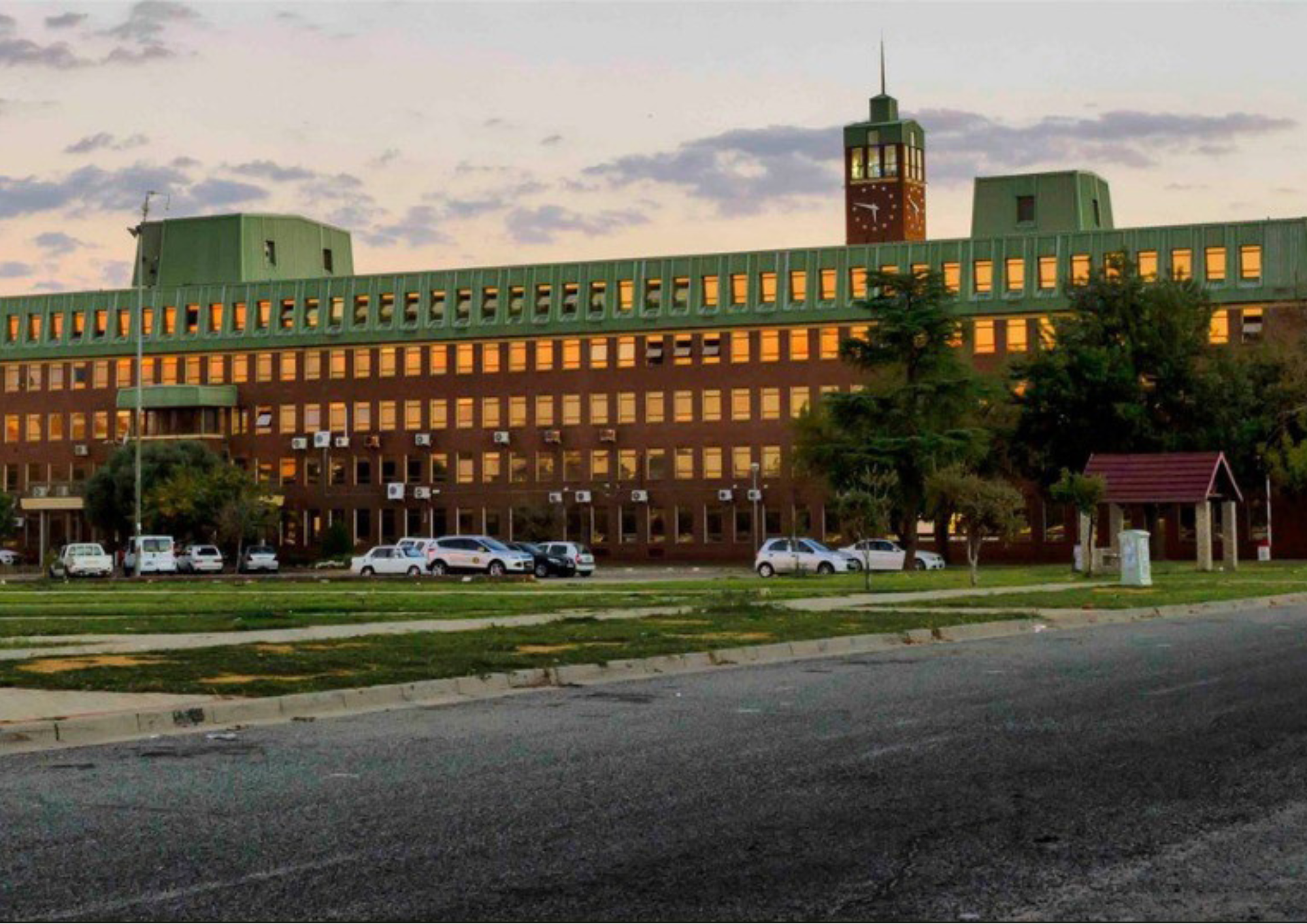
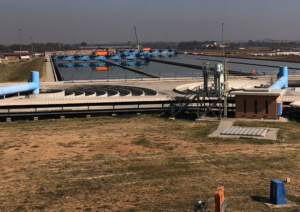
Matjhabeng Local Municipality, supplied by Vaal Central Water, defaulted on payments, placing further financial pressure on the cash-flow-stressed water board
Rand Water’s five-year outlook reflects the profile of a technically robust institution operating under increasing financial strain. Strategy executive Vusi Kubheka outlines strong performance across water quality compliance, infrastructure reliability and governance indicators. The entity continues to operate as Africa’s largest bulk water supplier, supplying millions of consumers across a vast geographic footprint.
Kubheka reports full compliance with all statutory water quality requirements and confirms that no unplanned supply interruptions occurred during the reporting period. Major infrastructure milestones include the commissioning of a new purification facility and continued progress on system augmentation and refurbishment projects.
Financially, Rand Water projects steady revenue growth over the planning horizon, supported by capital investment of approximately R27 billion. While key financial ratios remain stable, Kubheka flags receivables as a growing concern. “Debtors’ days stand at 125, significantly above the 70-day target,” he says. Municipal debt has risen to R8.7 billion, placing pressure on cash flow and long-term capital certainty.
Municipal non-payment is described as the organisation’s most significant risk, with a small number of municipalities accounting for a large share of arrears. While Rand Water continues to deliver services, Kubheka acknowledges that delayed payments undermine infrastructure investment and increase reliance on borrowing.
Beyond finance, he highlights operational risks, including infrastructure vandalism, illegal mining, servitude encroachment and electricity instability. Project delivery performance also remains uneven, with only half of capital projects completed within planned timeframes.
At the same time, Rand Water continues to pursue diversification and regional engagement. International operational partnerships and the establishment of SPVs aimed at stabilising distressed municipalities are positioned as part of a broader strategic response.
Amatola Water: Stabilisation and service continuity under constraint
Amatola Water’s medium-term outlook reflects cautious consolidation in a challenging operating environment. Chief Financial Officer for Amatola Water, Jonathan Jackson, outlines a strategy focused on maintaining supply continuity, strengthening governance and improving operational efficiency, while preparing for potential institutional reconfiguration.
Jackson confirms that Amatola Water maintains compliance with national water quality standards and retains South African National Accreditation System accreditation for its laboratory services. Governance improvements have translated into better audit outcomes and enhanced performance monitoring across the organisation.
Strategic partnerships form a central part of Amatola’s approach. Collaboration with the Department of Water and Sanitation, municipalities and sector education bodies supports skills development, technical cooperation and institutional capacity building. Community engagement and environmental compliance initiatives continue alongside core service delivery.
Nevertheless, Jackson acknowledges persistent challenges. Ageing infrastructure remains the primary operational risk, contributing to system failures and service disruptions. Project implementation delays and stakeholder dissatisfaction persist in some areas, particularly where infrastructure degradation limits emergency response capacity. While recent operational stability is viewed positively, Amatola’s financial and asset constraints continue to shape a conservative investment posture going forward.
Vaal Central Water: inherited liabilities and acute financial risk

Chief Executive of Vaal Central Water, Luvuyo Ntoyi
Vaal Central Water presents the most structurally fragile outlook of the three entities. Chief Executive Luvuyo Ntoyi situates the organisation’s current position within the disestablishment of the former Sedibeng Water, which he describes as insolvent and unable to service its obligations. The subsequent amalgamation process, he says, was not funded, leaving the new entity to absorb assets, staff and liabilities without capital support.
At amalgamation, inherited liabilities amounted to approximately R6 billion. Since then, municipal debt has escalated to around R10 billion. “This represents a major sustainability risk,” Ntoyi says, attributing the increase to chronic non-payment, high indigence levels and weak municipal revenue collection.
Vaal Central Water supplies bulk water across three provinces through 13 water treatment works with a combined capacity of 854 Ml per day. Despite this footprint, financial stability is severely undermined by customer concentration. Mangaung Metropolitan Municipality accounts for up to half of total water sales, while Matjhabeng Local Municipality contributes up to 40%. The default of Matjhabeng, Ntoyi says, has had a “severe impact” on the organisation’s finances.
Governance improvements, including unqualified audit outcomes and strengthened internal controls, are offset by persistent liquidity weakness. While solvency ratios improve following debt write-offs by the Department, liquidity remains below healthy norms.
Operational pressures include infrastructure backlogs, rising water losses estimated at 20%, and escalating electricity and chemical costs. Non-payment has resulted in deferred maintenance, postponed capital projects and difficulties settling raw water accounts.
Ntoyi details the severity of municipal breaches, particularly in Matjhabeng, where recovery rates range between 15% and 25% against monthly costs far exceeding payments received. Similar patterns are evident in Kopanong and Phokwane municipalities, despite restrictions, legal action and intergovernmental interventions.
National Treasury, he notes, has warned that repeated bailouts are unsustainable. Conditional debt relief, stricter enforcement of payment behaviour and deeper municipal turnaround interventions are increasingly viewed as unavoidable.
Systemic risk beyond individual performance
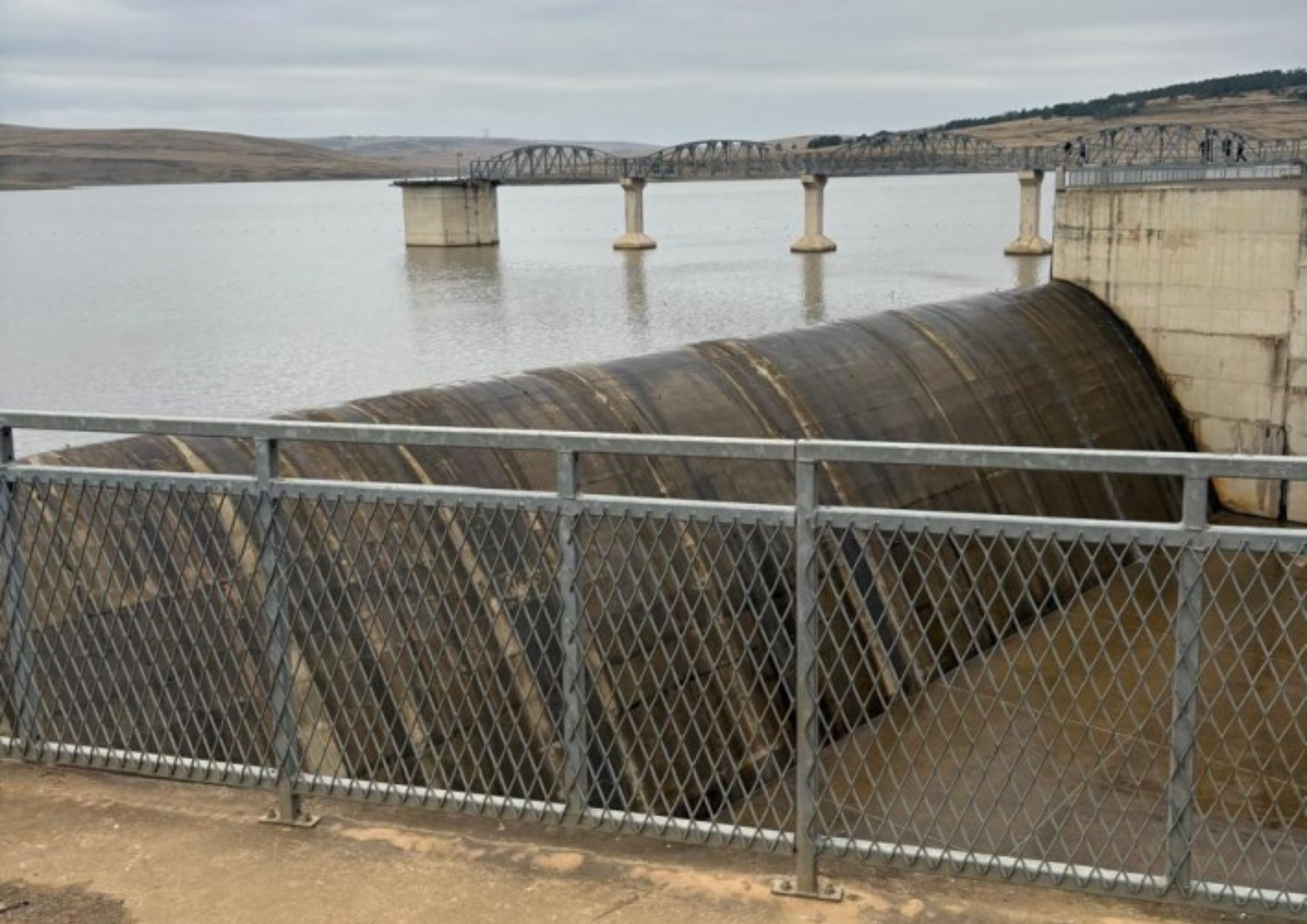
Ludeke Dam, one of the dams that Amatola intends to take on from Umngeni, illustrates their collaborative approach by involving DWS and Umngeni in the process
Taken together, the presentations reveal a sector that continues to perform its core technical functions, but within an increasingly unstable financial ecosystem. Governance reforms and operational excellence at the water board level mitigate risk, but cannot substitute for payment discipline, infrastructure protection and effective municipal administration.
As climate pressures intensify and infrastructure continues to age, water security becomes ever more dependent on coordinated action across the entire water services value chain. Without decisive intervention, the strain reflected most acutely at Vaal Central Water risks spreading further across the system, threatening the reliability of the bulk water supply in multiple regions.
The coming years will test whether reform instruments, enforcement mechanisms and cooperative governance can translate into sustainable outcomes, or whether structural fragility continues to erode even the strongest institutional foundations.