Calgro M3 shows how recycling in construction can cut costs, reduce waste and support South Africa’s climate goals through a proven, award-nominated model.
The construction industry is a cornerstone of global economic growth and a pivotal sector within South Africa. It is also one of the largest producers of waste. However, there has been a shift and companies like Calgro M3 are reshaping this narrative by integrating recycling into their core operations.
Construction waste is diverse and complex, encompassing materials such as concrete, metals, plastics, glass, wood, e-waste, used oils, and hazardous fluorescent tubes. When mismanaged, these materials contribute to overflowing landfills, environmental contamination, and greenhouse gas emissions. In South Africa, where landfill space is increasingly scarce and environmental regulations are tightening, the need for effective waste management has never been more urgent. Yet, implementing recycling programs on construction sites faces significant hurdles, including limited awareness among workers, inadequate access to recycling services, space constraints for waste segregation, perceived cost increases, and challenges in tracking waste diversion. Despite these obstacles, Calgro M3’s award-nominated recycling initiative proves that they can be overcome. Being a finalist for the Environmental Excellence Award has elevated Calgro’s profile, signalling to employees, investors, and the public that sustainability is integral to its operations, not merely a compliance exercise.South African legislation and climate change context
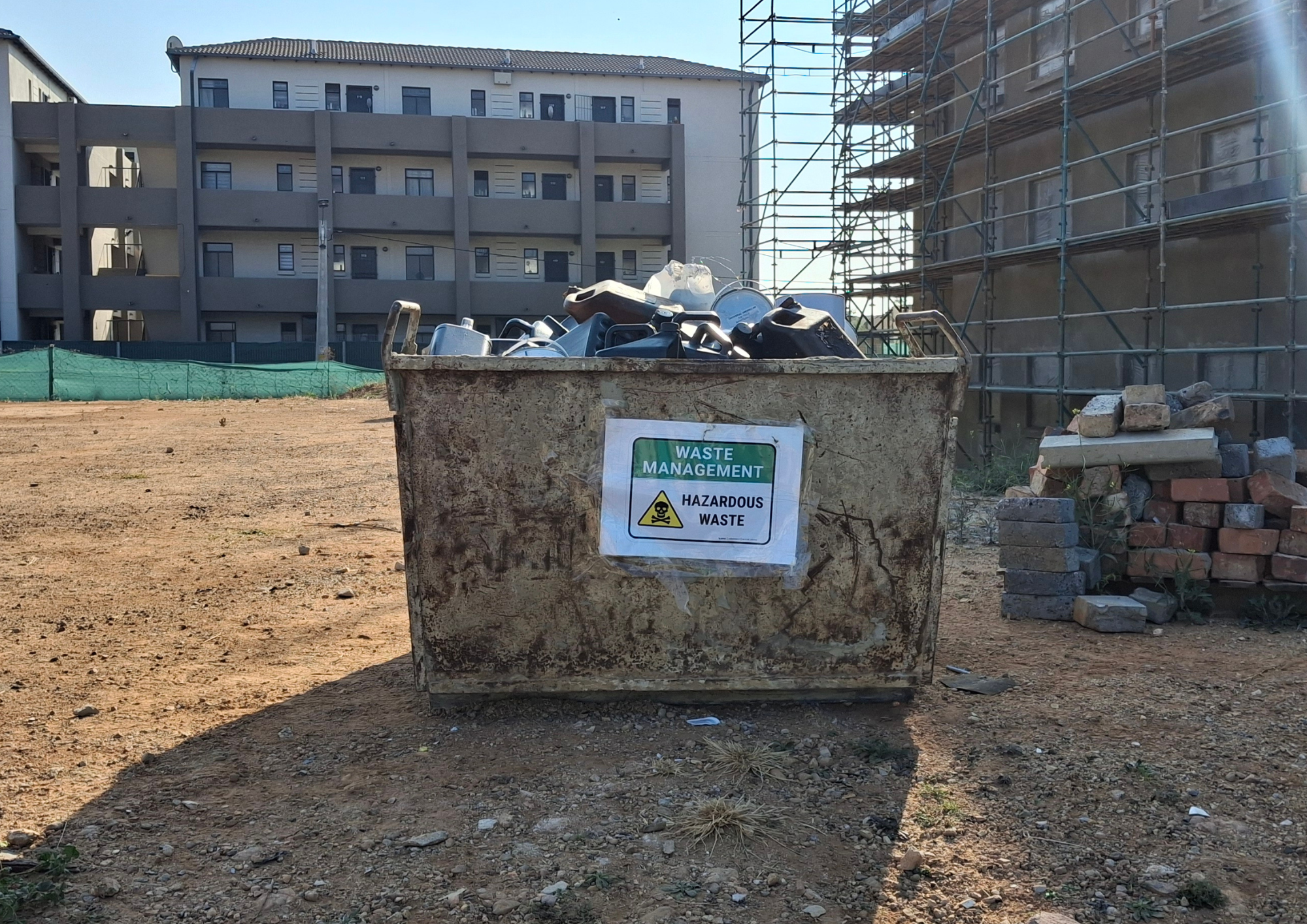
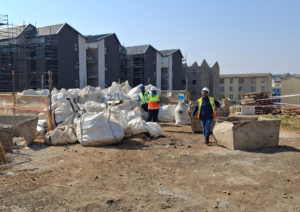
Construction debris should be handled separately from other waste streams
Calgro M3’s recycling model
When Udesh Sewduth joined Calgro M3 in 2020, the company’s recycling efforts were minimal, confined to basic practices at its head office. Recognising the environmental and financial costs of this approach, Udesh has spearheaded a company-wide transformation to turn construction waste into a valuable resource. What began as an ambitious goal to recycle 55% of construction waste quickly surpassed expectations, with Calgro achieving a 62% recycling rate across all active sites. This success earned the company a finalist spot for the Environmental Excellence Award, marking its first formal recognition for environmental leadership. In recent months, Calgro M3 has diverted around 30 tons of waste from landfills, saving approximately R70,000 in disposal costs, and generated R13,000 in revenue from recyclable materials. Over the past few years, the company has recycled around 46 tons of metals, 3,000 kg of plastic, 10 tons of paper and cardboard, 1,032 kg of glass, 2,400 litres of used oil, 1,288 kg of e-waste, and 417 kg of fluorescent tubes. These figures represent more than just statistics; they signify a fundamental shift in how the construction industry can view and manage waste.
Calgro M3’s recycling success stems from a combination of strategic approaches.
First, visionary leadership has driven the program, aligning it with long-term environmental and business goals, making sustainability a core operational value. Second, the persistence of HSE team members like Monicca Madzivhe and Linky Mashimbye has been instrumental. Their tireless efforts to engage contractors and staff ensure that recycling practices, such as waste segregation and proper bin usage, remain a priority across all sites. Third, Calgro’s holistic waste mapping system tailors recycling processes to specific materials, collaborating with specialised service providers to handle metals, e-waste, oils, and more efficiently. Finally, by embracing circular economy principles, Calgro transforms waste into a commodity, generating income from recycled metals and plastics while responsibly managing hazardous materials like used oil and fluorescent tubes to meet environmental standards.Lessons for the construction industry
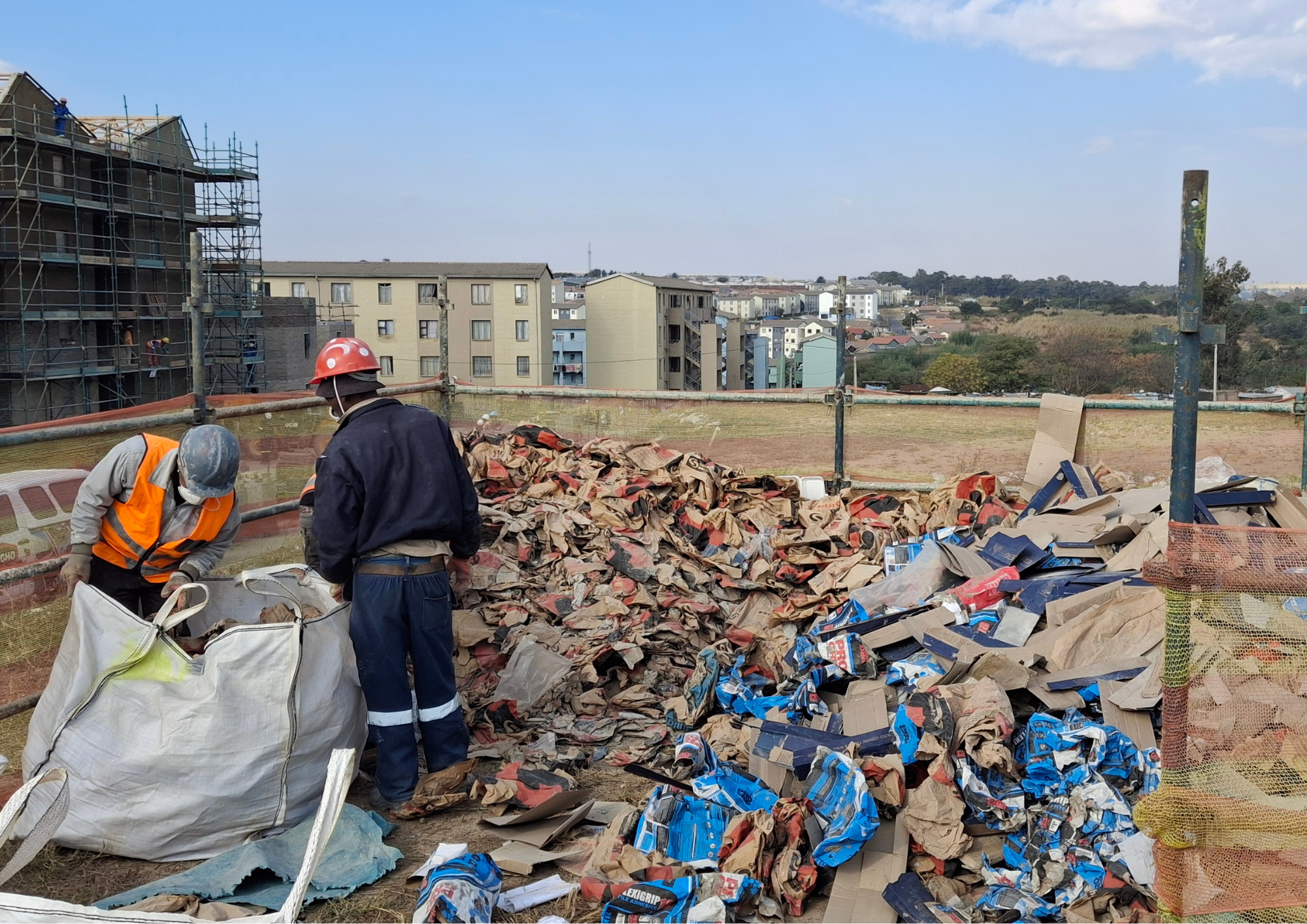
Calgro M3’s recycling success stems from strategy, planning is essential to getting recycling right and without a strategy there is no path forward
Practical tips for recycling in construction
Calgro M3’s model offers actionable strategies for construction companies aiming to implement effective recycling programs. Here are key practices to adopt:- Develop a clear Waste Management Plan: Create a detailed plan specifying which materials, such as cardboard, plastics, bricks, and metals that will be recycled. Avoid vague or overly broad recycling goals; focus on materials that can be realistically collected and processed to ensure efficiency and clarity for all involved.
- Partner with Local Recycling Companies: At the start of a project, connect with local recyclers who can collect materials, often at no cost, and sometimes provide small revenue streams for high-value recyclables like metals. These partnerships streamline waste removal and support local economies.
- Provide ongoing Staff Training: Due to high staff turnover in construction, continuous training on waste segregation is essential. Educate workers on identifying and sorting recyclables, and assign dedicated staff to monitor recycling areas, conducting regular inspections to ensure compliance.
- Use Clear Signage: Simplify recycling by placing clear, visible signs on bins to guide workers on proper waste segregation. Well-designed signage reduces confusion and encourages adherence to recycling protocols.
- Enforce Accountability: Issue warnings or corrective measures for workers or contractors who fail to separate waste correctly. This reinforces the importance of recycling and maintains program integrity.
- Start Small and Scale Up: Begin with pilot programs at a single site to build confidence and refine processes before expanding company-wide.
The road ahead

Udesh Sewduth, environmental manager at Calgro M3