South Africa generates between 110 to 125 million tonnes of waste annually, of which 2.5 million tonnes is plastic waste, with a mere 10% recycled or recovered, while the country’s plastic waste consumption annually is almost double the global average*.
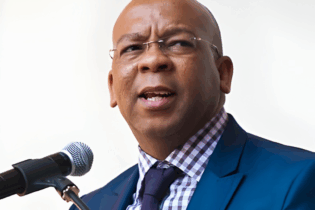
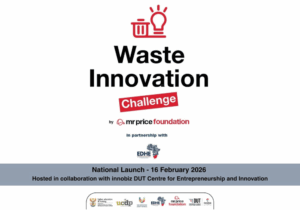
A first-of-its-kind Mr Price Foundation x EDHE Waste Innovation Challenge is determined to reverse these statistics and is calling for students, alumni and researchers across all 26 public South African universities to design commercially viable start-ups that convert waste into green economic opportunities. Total prize money is R255 000. However, even more beneficially, participants will receive national exposure, mentorship, business development support, technical and sustainability training and a platform to pitch to investors and partners. The initiative – which was officially launched this week at the Midlands Indumiso campus of the Durban University of Technology in Pietermaritzburg – is a partnership between the Mr Price Foundation and Universities South Africa (USAf), through its Entrepreneurship Development in Higher Education (EDHE) programme which is to strengthen the development of student entrepreneurs and advance the strategic pillars of entrepreneurship development, education and skills development. Speaking at the event, Octavius Phukubye, Executive Director of the Mr Price Foundation, said this new partnership, worth R1.3 million, aimed to encourage innovators to search for new ideas, new solutions and new products.“Waste is not just an environmental crisis; it’s an untapped business opportunity. By engaging youth to transform plastic waste into viable products, services, or technologies, this competition tackles two of the biggest challenges we face, unemployment and environmental degradation. This programme is exclusively designed for young people and we believe it is a pathway that will connect real economic opportunities and drive real solutions while enabling entrepreneurial capability and giving those capabilities real market opportunity.”He emphasised that the challenge was looking for new businesses that are scalable, sustainable and that would make an impact where it truly matters. “South Africa’s biggest environmental crisis may also be the biggest missed opportunity as we are sitting on an under-leveraged economic opportunity of national significance. The Mr Price Foundation sees itself as more than just funders. We see ourselves as catalytic investors and ecosystem architects. Our purpose is to create lasting economic opportunities for young people by building skills, strengthening employability and enabling entrepreneurship. Universities, he believes, strengthen the critical bridge between education, enterprise and economic participation, and this was the reason for the partnership with USAf. “For us, universities are not just academic institutions but innovation ecosystems with an infrastructure that allows its students to fail fast and fail safely before figuring it out and building something that truly matters.

“This is an open door into the green economy, one of the fastest growing global markets in the next decade. We want universities to become the national launchpad for green economies, where plastic waste is transformed into durable material, digital platforms, climate tech tools and circular products and where South Africa becomes a continental leader in ways to value and drive innovation.”
Speaking at the event, Dr Phethiwe Matutu, CEO of USAf which is the umbrella body representative of the 26 public universities in this country, said that the innobiz hub at DUT Indumiso campus was specifically chosen for the launch because of where it is situated within a township. “It is in areas such as these that the need (of the community) and entrepreneurship, driven by inclusive innovation, intersect. The campus has also long been involved in waste recycling initiatives and has an Institute for Water and Wastewater Technology, which addresses key environmental challenges, including water sustainability and plastic waste,” she said. “South Africa continues to face the triple challenges of poverty, unemployment and inequality. Within this context, the higher education sector’s role is to ensure improved economic participation and social involvement of our youth and produce and exploit knowledge for economic and societal benefit. Entrepreneurship is one of the areas within higher education that has been identified for getting our graduates to be able to be employers in today’s environment which has very low economic growth and a high unemployment rate. Entrepreneurship plays a crucial role in driving economic growth and fostering innovation, while also contributing to social change and community development,” she concluded. Dr Edwell Gumbo, Director of Entrepreneurship at USAf, said that he was delighted that the competition had clearly struck a chord with 950 expressions of interest already received.“We are seeking a diverse range of innovations, but ultimately we seek solutions that demonstrate creativity, feasibility, scalability and measurable environmental and social impact. In a well-designed system, nothing should be wasted and everything should have value.”The Mr Price Foundation x EDHE Waste Innovation Challenge is open to all university students, alumni and researchers, aged between 16 and 34 years who hold a South African identity number and who come from one of South Africa’s 26 public universities. Those interested can enter as individuals or as a team of up to four members. The challenge focuses on environmental impact, particularly in plastic waste management, green technologies, and circular-economy ventures. Entries close on February 27 this year. Following a 6-week capacity-building programme for 400 waste innovators, students will be invited to submit their innovations addressing plastic waste and the top 20 proposals will be announced at the end of June. These innovators will then participate in an intensive national bootcamp to further strengthen their concepts and prepare them for market entry. The top five winners will be announced at the EDHE Awards in November and receive cash prizes (first place R100 000, second place R75 000, third place R40 000, fourth place R20 000 and fifth place R10 000) and investment-readiness support to transform their solutions into scalable green enterprises. *Based on findings from the International Union for Conservation of Nature (IUCN) and the World Wide Fund for Nature (WWF), South Africa generates approximately 41 kg of plastic waste per person annually, which is significantly higher – nearly 40% to over double in some metrics – than the estimated global average of 29 kg per person annually. Janine Greenleaf Walker is a contract writer for Universities South Africa.