The Special Investigating Unit (SIU) and the Department of Water and Sanitation have launched the Water Sector Anti-Corruption Forum (WSACF) as an arm in the fight against corruption in the water sector.
The establishment of the forum follows the findings from 16 Special Investigating Unit (SIU) proclamations related to the Department of Water and Sanitation. With nine investigations completed and seven still active, the need for a coordinated anti-corruption response in water management has become urgent and undeniable. The WSACF is anchored in Pillar Six of the National Anti-Corruption Strategy (NACS), which focuses on protecting vulnerable sectors and strengthening integrity systems. By adopting a risk-based approach, the forum will drive investigation, prevention, and enforcement measures to ensure that South Africa’s water resources, vital for sustainable development, are shielded from corruption and mismanagement. The WSACF is a strategic intervention aimed at developing tailored solutions to address corruption risks in the water sector. By adopting a risk-based approach, the forum will focus on investigation, prevention, and enforcement to safeguard South Africa’s water resources, which are essential for sustainable development. The WSACF also aligns itself with the goals of the National Development Plan (NDP) 2030, which focuses on water security and sustainable development. It also supports the United Nations Sustainable Development Goal 6, which aims to ensure the availability and sustainable management of clean water and sanitation for everyone. This initiative aligns with what the NACS terms as the whole-of-society approach, which seeks to enhance and mobilise the inclusive participation of the public sector, private sector, civil society, and academia to prevent and combat corruption.Key Objectives of the WSACF
- Support anti-corruption initiatives in the water sector.
- Foster collaboration among stakeholders to combat corruption effectively.
- Co-ordinate law enforcement efforts to enhance investigative capacity.
- Ensure tangible outcomes, including prosecutions, civil recoveries, and administrative actions.
- Implement prevention measures to mitigate fraud and corruption risks.
- Promote accountability within anti-corruption agencies through multi-stakeholder oversight.
A Whole-of-Society Approach to Corruption Prevention
The WSACF embodies the National Development Plan (NDP) 2030 vision of a corruption-free South Africa while supporting Sustainable Development Goal (SDG) 6, which ensures access to clean water and sanitation for all. The forum brings together a broad coalition of stakeholders, including:- Law Enforcement Agencies
- Chapter 9 Institutions
- Civil Society Organisations & Water Activists
- Private Sector Representatives
- Public Sector (Government Departments, Municipalities)
- Regulators
- Traditional & Religious Leaders
- Organised Labour
- Water Conservation & Environmental Groups.
A Proven Model for Fighting Corruption
The WSACF builds on the success of other sector-specific anti-corruption forums, including:- Health Sector Anti-Corruption Forum (HSACF) – Launched by the President on 1 October 2019
- Infrastructure & Built Environment Anti-Corruption Forum (IBACF) – Launched by Minister De Lille on 25 May 2021
- Local Government Anti-Corruption Forum (LGACF) – Launched by Minister Dlamini-Zuma on 20 September 2022
- Border Management & Immigration Anti-Corruption Forum (BMIACF) – Launched by Minister Dr Leon Schreiber on 25 March 2025.
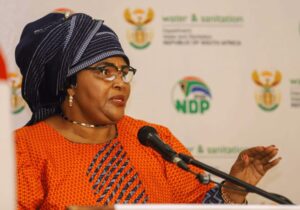
Speech By The Minister Of Water And Sanitation, Ms Pemmy Majodina On Occasion Of The Launch Of The Water Sector Anti-corruption Forum
Programme Director, Acting Head of the Special Investigating Unit, Mr Leonard LekgethoNational Director of public Prosecutions, Adv Andy Mothibi
Representatives of law enforcement agencies,
Chapter 9 institutions,
Civil society,
Organised labour,
Traditional and religious leaders,
Distinguished guests,
Ladies and gentlemen, Water is life. Sanitation is dignity. When corruption infiltrates the water sector, it does not simply manipulate procurement processes or inflate invoices. It dries up taps. It delays dams. It contaminates rivers. In a water-scarce country such as South Africa, corruption is not a victimless crime. It is a direct assault on human dignity and development. It steals dignity from the poor. It robs women and children of time, safety and opportunity. It is therefore not coincidental that we launch the Water Sector Anti-Corruption Forum during National Water Month and Human Rights Month. These commemorations remind us that access to sufficient water and dignified sanitation is not a privilege. It is a constitutional right. When corruption diverts resources meant to secure that right, it becomes more than a financial crime. It becomes a violation of human rights.

Section 27 of our Constitution guarantees everyone the right to have access to sufficient water. Yet we know that in many communities, taps run dry, wastewater systems collapse and infrastructure projects are delayed. The effects of corruption are not theoretical. We see them in the lived experiences of South Africans, especially the poor, women and girl children who walk long distances to fetch water when systems fail.
In a water-scarce country such as South Africa, we cannot afford such betrayal. We already face structural constraints such as limited rainfall, climate variability, ageing infrastructure and rising demand. Every rand lost to corruption is a rand not spent on repairing leaks, upgrading treatment works or expanding supply to underserved communities. Corruption compounds scarcity. It deepens inequality. It undermines human dignity. But let us also be clear: South Africa has demonstrated a firm and measurable commitment to confront corruption across all sectors of our society. Through strengthened investigative capacity, improved consequence management and closer coordination among law enforcement agencies, billions of rand have been recovered for the state. Senior officials and private actors alike have been subjected to investigation and prosecution. Institutions have been reformed, oversight mechanisms enhanced, and accountability systems tightened. The message is unmistakable: Impunity is being dismantled. The collaboration between the Department of Water and Sanitation and the SIU is itself evidence of this resolve. We are not waiting for crisis to overwhelm us. We are acting decisively to prevent, detect and enforce the law. The establishment of specialised anti-corruption structures, lifestyle audits, digital procurement reforms and strengthened internal controls reflects a state that is learning, correcting and strengthening its anti-corruption measures. These actions should give South Africans confidence that government is not retreating from the fight. We are intensifying it. The decision to establish the Water Sector Anti-Corruption Forum follows a corruption vulnerability risk assessment conducted by the SIU, which identified the water sector as particularly exposed to fraud and corruption risks. That finding demanded decisive action. Today, we are demonstrating our resolve to act decisively. This Forum is rooted in the National Anti-Corruption Strategy, which calls for a whole-of-society approach to combating corruption. It aligns with the Department of Water and Sanitation Anti-Corruption Strategy and advances the vision of the National Development Plan 2030 — a capable, ethical and developmental state. It also reinforces our commitment to Sustainable Development Goal 6: ensuring clean water and sanitation for all. The Water Sector Anti-Corruption Forum is not a symbolic platform. It is a strategic intervention designed to confront corruption across the entire water value chain.Corruption in this sector manifests in many forms such as inflated contracts and collusive tendering; manipulation of supply chains; diversion of maintenance funds; criminal syndicates that extort contractors and disrupt construction sites and illegal connections that weaken municipal finances. Each of these acts has real consequences. When a dam project is stalled, communities wait longer. When refurbishment funds are stolen, wastewater plants fail. When procurement is compromised, infrastructure deteriorates and costs escalate. We must state loudly and without ambiguity: There will be zero tolerance for corruption in the water sector. Zero tolerance because water is life. Zero tolerance because sanitation is dignity. Zero tolerance because corruption in this sector threatens both life and dignity. The objectives of this Forum are practical and measurable. We will raise awareness and build sustained support for corruption prevention initiatives. We will foster collaboration among stakeholders so that our response is coordinated and not fragmented. We will enhance investigative capacity through closer cooperation among law enforcement agencies. We will ensure effective consequence management, including asset recovery, prosecutions and disciplinary action. And we will implement prevention measures that mitigate fraud and corruption risks before they materialise. Importantly, this Forum embodies the principle that integrity cannot be outsourced. It must be embedded. Government cannot win this battle alone. We need business to reject collusion. We need public servants to refuse unlawful instructions. We need communities to report wrongdoing. We need civil society and the media to hold us accountable. We need every South African to stand on the side of integrity. Today, I want to encourage every citizen, every public servant and every leader to live and embody the true meaning of this pledge: “I pledge to be a responsible and honest citizen, neither pay nor take bribes, obey the law and encourage others around me to do the same, to treat public resources respectfully, never abuse any money entrusted to my care or position, act with integrity in all my dealings, in thought and action, and always act in the best interests of our country.” This pledge is not mere words. It is a moral compass. If each and everyone of us lives by it — in our offices, in our communities, in our daily decisions — corruption will find no fertile ground. We are under no illusion that the task ahead will be easy. Entrenched interests will resist reform. Criminal networks will not give up without a fight. They will attempt to intimidate and disrupt. But South Africa has shown before that when institutions act with courage and when society stands united, corruption can be confronted and defeated. The launch of the Water Sector Anti-Corruption Forum signals a new era of vigilance, coordination and shared responsibility. It signals that we will protect our water resources with the same determination with which we protect our democracy. Protecting water from corruption is both a constitutional duty and a moral obligation because it is life. It sustains our families, powers our economy and anchors our future.
Let us therefore move forward together, as government, business, labour, civil society and communities, to expose wrongdoing, strengthen systems and uphold integrity. Let us refuse complacency.
Let us demand accountability.
Let us act decisively.
Because water is life and life must never be compromised by greed.
Together, we will safeguard our water.
Together, we will defend human dignity.
Together, we will defeat corruption.
I thank you.