As water security moves to the centre of South Africa’s economic agenda, the strategic management of water resources has become critical for stakeholders in both the public and private sector.
A multi-year partnership between global woodfibre and forestry group Sappi and WWF South Africa can serve as a blueprint for securing the bio-economy through proactive catchment stewardship. While many of the current discussions around water focus on the infrastructure backlog, Sappi’s approach emphasises that infrastructure is only one part of the narrative. True water security requires effective water management – the active governance and restoration of the ecosystems that provide water to mills, farms, cities and citizens.“South Africa’s pressing water security and biodiversity risks demand collective action that extends beyond the capabilities of any one company,” says Graeme Wild, CEO of Sappi South Africa.“Recognising the need for trusted partnerships that bring both technical insight and environmental credibility, Sappi has partnered with WWF South Africa since 2021 to implement solutions that safeguard ecosystems while supporting sustainable economic activity.” A key focus of this partnership is the uMkhomazi catchment in KwaZulu-Natal. The uMkhomazi river is a vital resource for small towns, rural communities, industrial operations and growing urban centers like eThekwini. By investing in the proactive management of this resource, Sappi and WWF are working to ensure a sustainable balance between operational requirements and the needs of local communities.

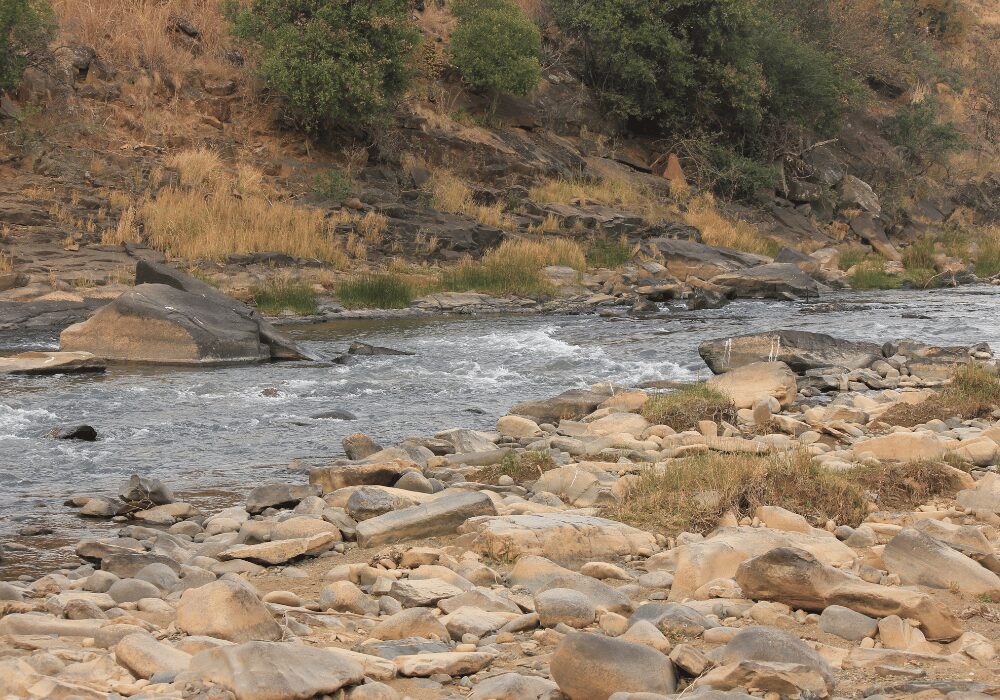
uMkhomazi catchment in KwaZulu-Natal
- Alien plant clearing: Through working with and empowering local communities within the uMkhomazi catchment, 191 hectares of invasive wattle species have been cleared.
- Land rehabilitation: Over 2,322 hectares of rangelands are now under improved management, with 30 hectares being actively rehabilitated with the help of local communities, with a focus on erosion control to prevent sedimentation in downstream water systems.
- Soil health innovation: A successful bioturbation trial was conducted in iNzinga. By using livestock to naturally break up compacted soil, the project has improved nutrient cycling and water infiltration, restoring the landscape’s ability to act as a natural reservoir.
- Citizen Science: Local “Citizen Scientists” have been deployed to collect baseline water-quality data across three sub-catchments, providing the empirical data necessary for effective water governance.
- Biodiversity protection: The partnership has identified over 20,000 hectares for potential protection through a new Biodiversity Stewardship Strategy, working alongside Conservation Outcomes and Ezemvelo KZN Wildlife.
Economic Impact and Future Skills
The success of these water management initiatives also opens doors for young South Africans. Stats SA reported a significant increase in people employed in Skilled Agriculture between 2024 and 2025, highlighting exciting opportunities for employment and innovation across rural South Africa. As technology and AI disrupt traditional sectors, agriculture and agro-processing stand out as job-intensive industries with strong multiplier effects for rural communities.Wild concludes: “As a water-scarce country, we face some tough discussions around water usage going forward. We need to work with reputable and experienced partners who will be able to inform both short-term requirements as well as long-term strategic goals for the benefit of all South Africans.”